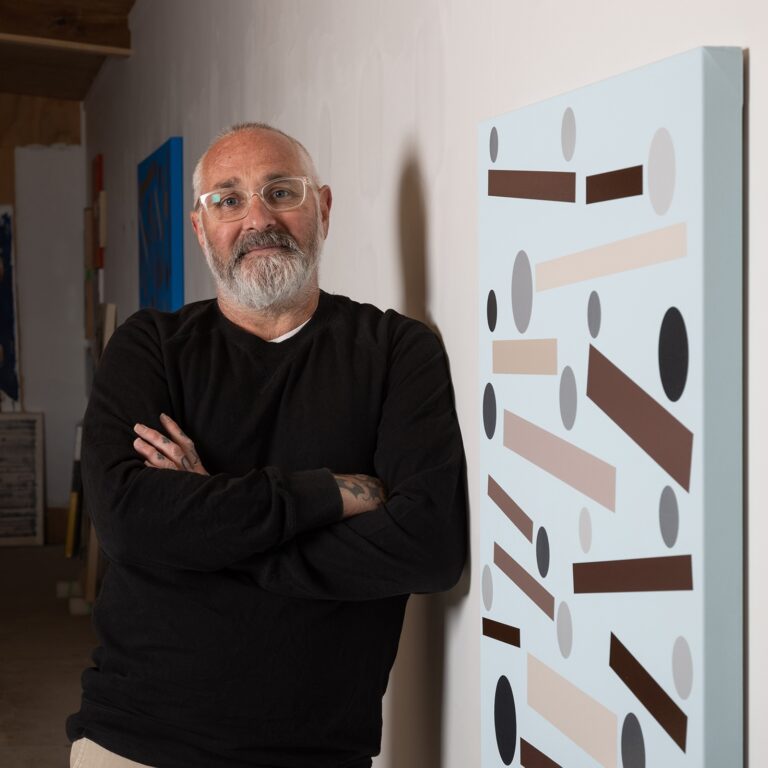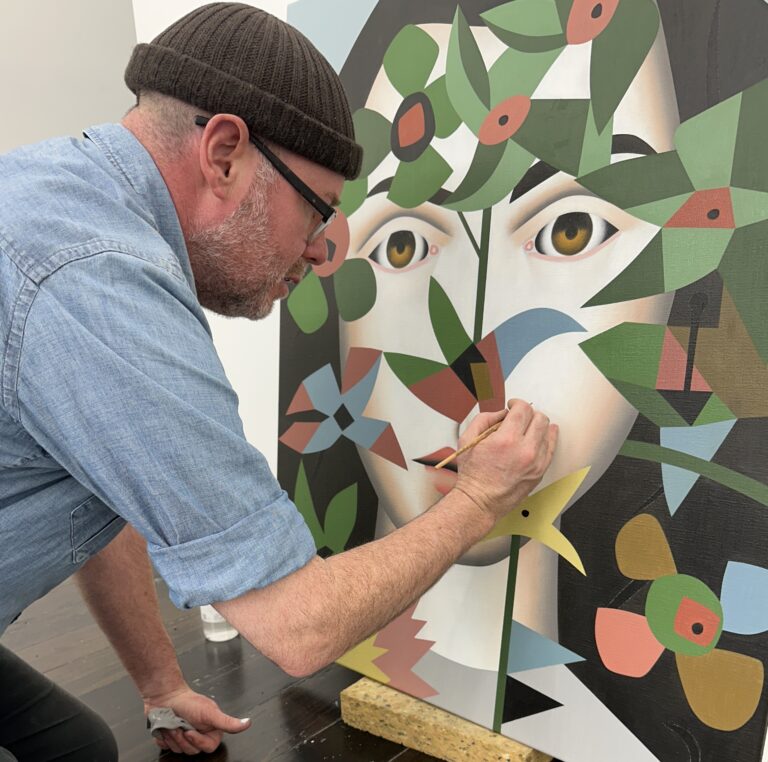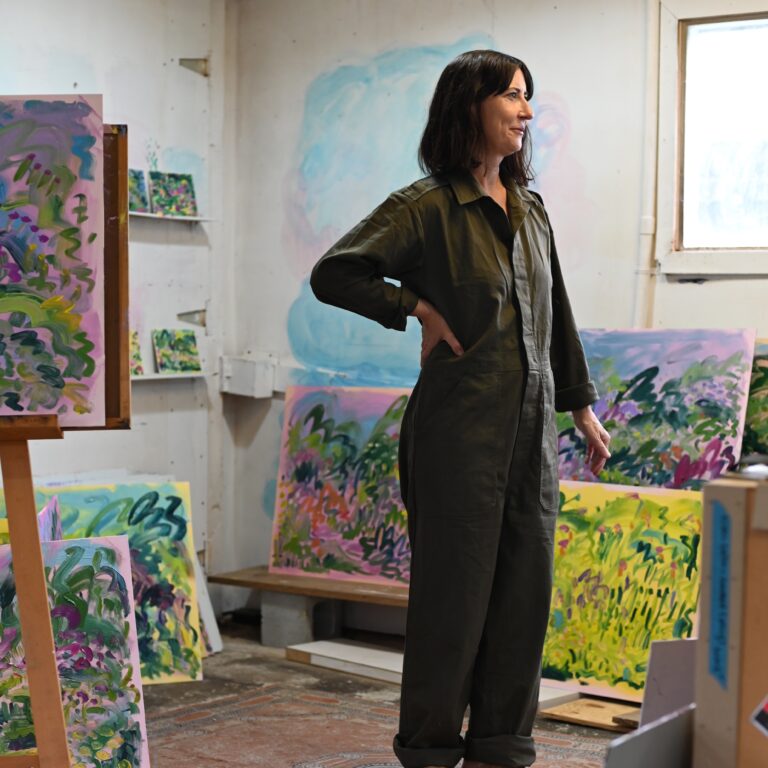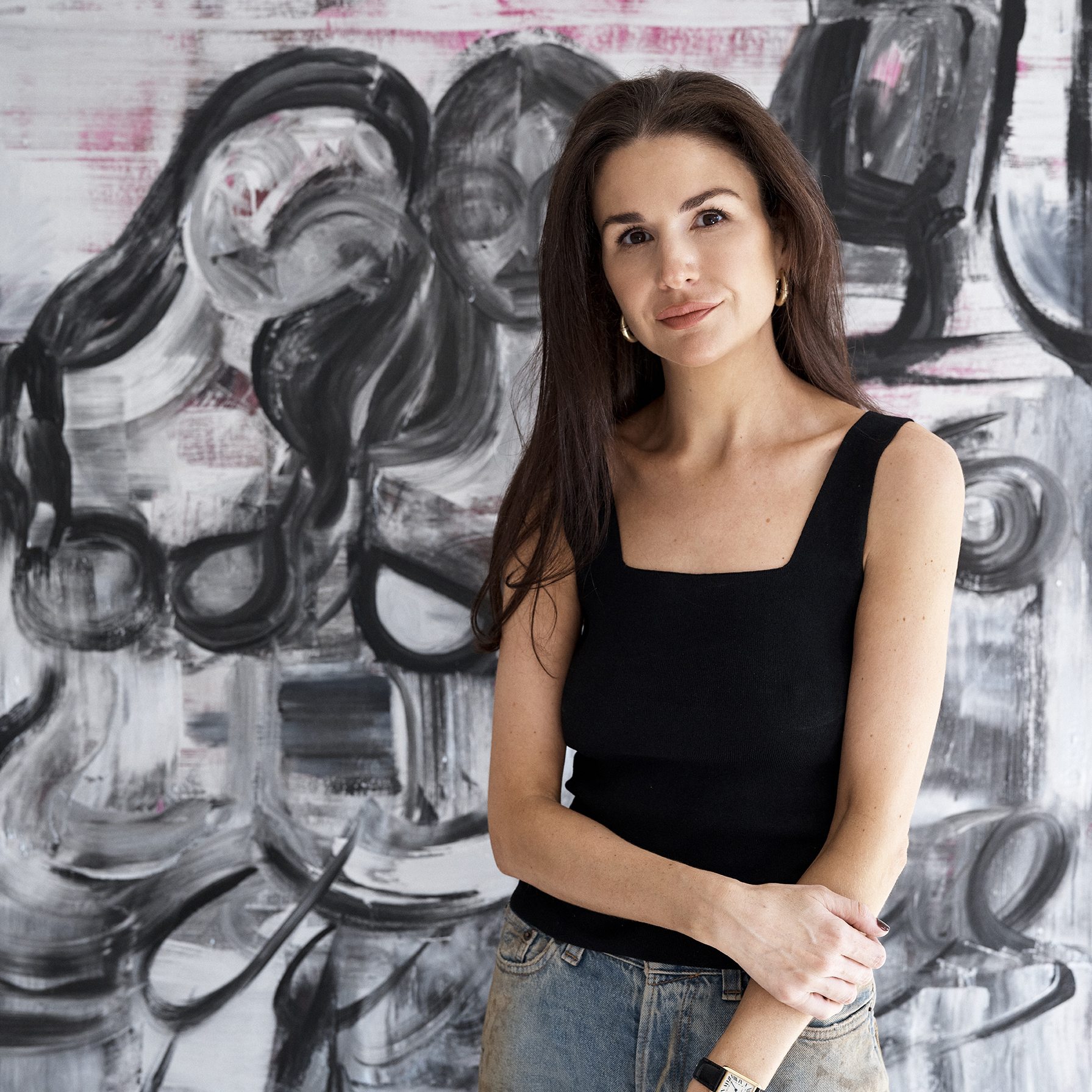
From an early age, Natasha Wright was drawn to creativity, a passion nurtured by her grandmother and expressed through a lifelong fascination with making and mark-making. What began as childhood sketches has evolved into a powerful practice centred on the female form. Wright explores strength, intimacy, and identity, reimagining historical portrayals of women and grounding them firmly in the present.
Wright’s solo exhibition is on now at SANDERSON, Tāmaki Makaurau Auckland until 9 November 2025. Learn more sanderson.co.nz.
__
What inspired you to pursue a career in art, and how has your journey as an artist evolved over the years?
My grandmother was the person who inspired me to be creative and art was always something I wanted to explore from a young age. I’ve been drawing and making things since I was little. My subject matter of the female form came instinctively to me but over time that has developed into a desire to explore the body as a way to talk about strength, intimacy, and identity. My recent work has become much more gestural and physical. I’m trying to push my mark-making even further and explore more complex compositions. In the last few years, I’ve started working on a much larger scale, but the linear qualities of drawing still remain a constant in my pieces.
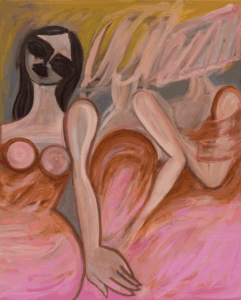
Image: Natasha Wright, Main Character, 2025
Your work reimagines the female figure as powerful and self-possessed. What draws you to reframing historical portrayals of women in art?
I’m drawn to the female form as a direct response to art history where women are often presented as passive, decorative or symbolic – usually seen through the male gaze. My subjects are complex and carry agency and an unapologetic presence. I draw on and reimagine familiar archetypes from classical paintings or myth. The females I paint are both vulnerable and powerful. They are not naive to the history and male subjectivity they inherit but claim their space to discover who they are on their own terms.
Your figures exist between the classical and the contemporary. How do you find that balance?
I’m really interested in the space where historical context and contemporary culture overlap. My paintings draw from a range of sources, including art history, as well as advertising, fashion, and social media. I see the history of art as a point of reference – something to engage with and reframe through a modern lens.
Before I begin painting, I usually work on a series of drawings. This process allows me to explore how classical motifs, digital aesthetics, and commercial imagery can coexist within a single composition. I’m drawn to the tension and dialogue that emerge from placing these elements side by side.
Ultimately, I’m trying to create work that feels grounded in the traditions of painting whilst also speaking to the visual and cultural language of the present.

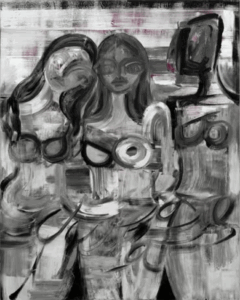
Image: Natasha Wright, Silver Sirens, 2025
Bold color and expressive brushwork give your subjects real presence. How does your process shape that intensity?
I think the intensity in my work comes from the physicality of working on such a large scale. When I start a painting, I usually work quickly and intuitively. There’s a certain immediacy and freshness in those first few decisions that I try to keep throughout the painting process.
Once I have a sense of the composition, I use a variety of tools including large, flat brushes that make broad, gestural marks. The directness of the brush strokes creates energy and speed in the work. I always want my paintings to have a sense of discovery through the act of making the work – one decision leading to another.
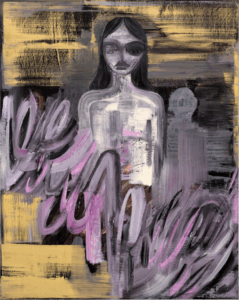
For me colour is something that can’t really be explained, it’s more of an emotional decision. I make a lot of my own paint because it allows me to control the intensity of the pigments, especially in my metallic pieces.

Image: Natasha Wright, Bias Cut, 2025
Where do you hope to see yourself, your practice, in 10 years?
I want to continue painting and pushing my work. I’m excited about taking on new and ambitious scales and projects. I’ve just done a mural at Sanderson. I’m now thinking about even larger billboard sized pieces. I love the physicality and the impact these larger pieces can have. I also want to have fun in the studio, I think that really shows in the work.
__
sanderson.co.nz
@sandersoncontemporaryart
@natashawrightstudio