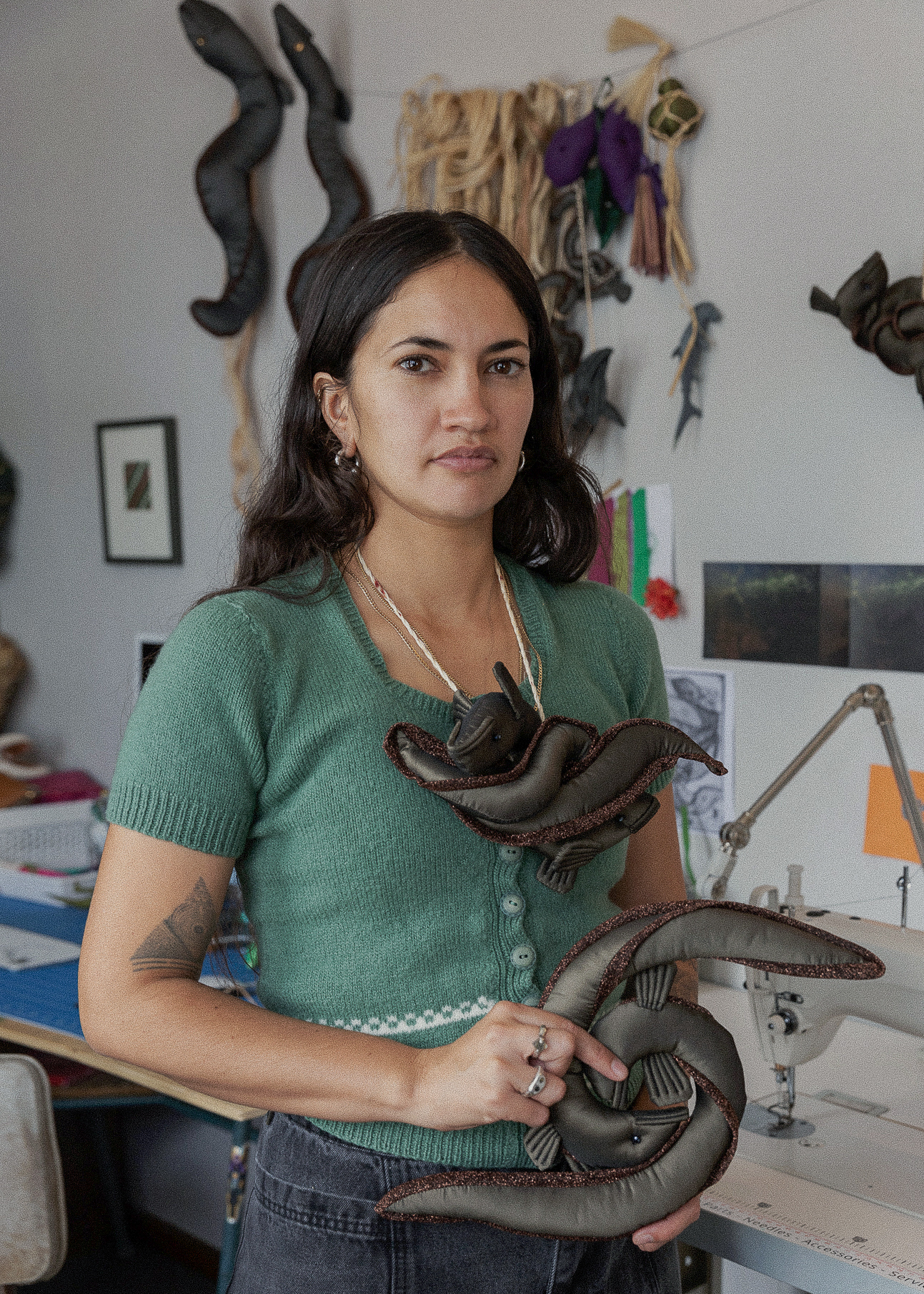
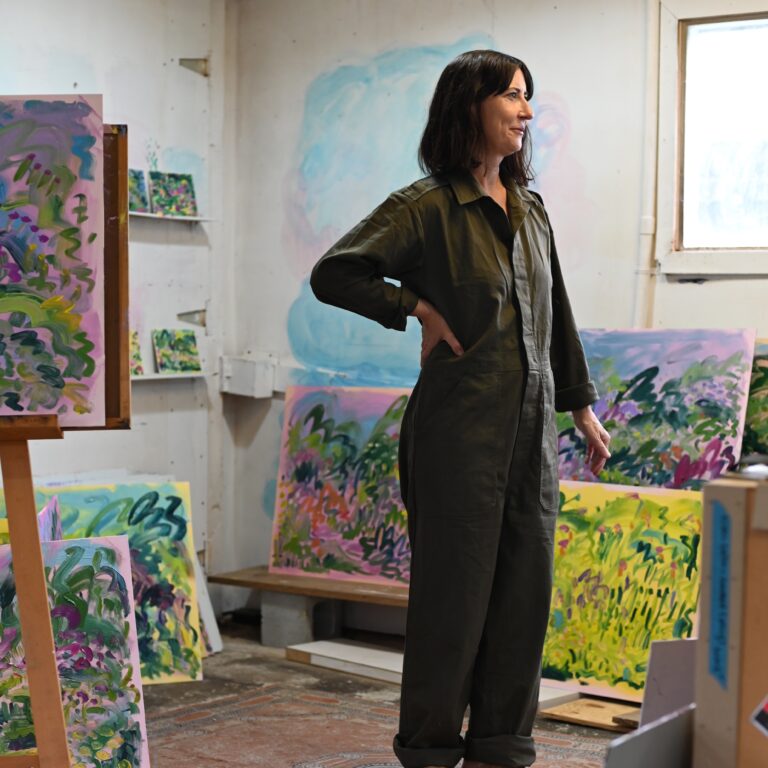
Pepi‑Joy Gilgen is a Waikato‑based textile artist whose work is shaped by the way her tamariki see the world.
Ahead of her presentation at the Aotearoa Art Fair with Artor Contemporary, we spoke to the artist about her practice encompassing whakapapa, pūrākau, and the responsibilities of motherhood told through tactile forms that connect story, environment, and belonging. Each piece carries themes of taiao, whakapapa, and kaitiakitanga, while also reflecting the possibilities that emerge through kotahitanga.
__________
Your practice is deeply inspired by the way your tamariki see the world, can you describe a specific moment with your children that sparked or shifted your work?
When we became parents, we committed to speaking Maaori to our babies. This encouraged us to have taonga Maaori available for them. I began making fabric poi with bells inside and poi piu as a rattle they could play with. Acknowledging orokohanga, taiao and atua when making has helped reshape how I think and how my tamariki experience the world. Over time, this led me to create a tactile plush mobile with motifs of taiao for Waawaahi Tahaa Collective (Maamaa group in Waikato) as a tool to learn pepeha in a kinaesthetic way. This was inspired from poi.
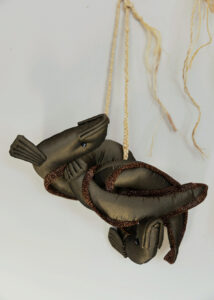
Image: Tuna pikipiki, tuna hekeheke, 2026
Textiles are such a tactile, intimate medium. Why textiles as the vessel for exploring te reo Māori and kōrero tuku iho?
Textiles have always been my chosen medium, shaped by my early training in fashion and my ongoing respect for the material. Although we interact with textiles constantly, we often overlook its importance in our everyday lives. Since having tamariki, te reo Maaori has become the foundation of our communication and learning, including transmission of koorero, whakapapa, and ways of being into our daily world. They are my teachers.
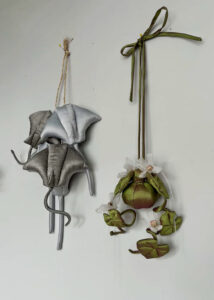
Image: Left: Te aitanga a Punga, 2026. Right: Huetahi, 2026
You describe your works as inviting people to “trace the threads of memory” . Whose memories are held in these pieces, and how do you navigate the personal alongside the collective?
These works hold the memories of our tuupuna, our mokopuna, and all those who have carried and revitalised our language, tikanga and Maaori worldview. My creative process draws from these collective threads and are a continuation of those who came before me.
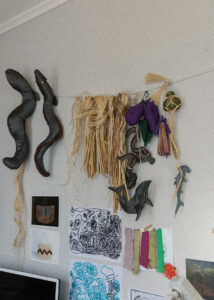
Image: Studio Image
How do you think about the next generation engaging with your work, what do you hope a child feels when they touch or experience these pieces? How they react/interact with these.
I hope those who interact with these works feel the mauri instilled within them. That it may prompt reflection of their own connection to identity and inspire those to learn the stories of their own ancestors.
Learn more about Artor Contemporary presentation at the Fair here
Aotearoa Art Fair returns to the Viaduct Events Centre from 30 April – 3 May. Tickets are on sale now.
All images credit by Rozenn Jang @rozennjang_