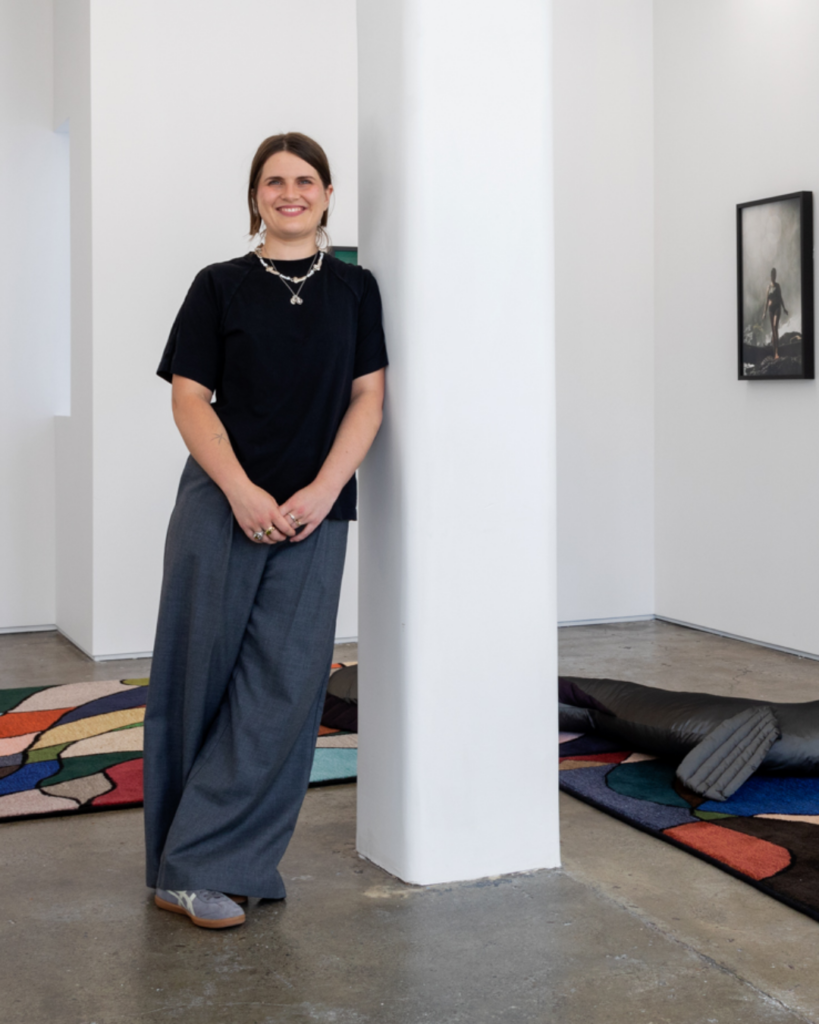
After stepping into ownership with the opening of PEG, Peggy Robinson brings a deeply considered, values-led approach to contemporary gallery practice. Building on years of experience working closely with artists and collectors, her transition from Gallery Manager to Gallery Owner marks not just a shift in title, but a thoughtful redefinition of how a gallery can operate, grounded in care, accountability, and connection.
Image Right: Portrait by Russell Kleyn
___
You opened PEG recently after a long tenure at another gallery – how was the transition from Gallery Manager to Gallery Owner?
I feel incredibly fortunate to have gained foundational experience from my previous role. Working closely with artists to develop exhibitions, introducing clients to practices with care, and nurturing meaningful, long-term relationships have all given me a deep understanding of what responsible gallery work entails.
Opening PEG required me to reflect carefully on my role, how I work, and why I do. As a Pākehā-led gallery, I am committed to upholding Te Tiriti o Waitangi and am continually learning how to do this more meaningfully. The gallery is shaped by this commitment, along with a dedication to forming meaningful relationships with artists and communities.
Ownership makes my kaupapa visible and accountable. There’s a vulnerability in that exposure, but it’s precisely what gives the work its meaning; it asks me to stand firmly in my values and show up with transparency, integrity, and care for the artists and community who place their trust in me. PEG operates within a framework called Te Raranga Pū Toi, which weaves together artistic practice, trust, and shared vision. This framework moves away from traditional models of representation, instead focusing on partnership and ongoing dialogue.
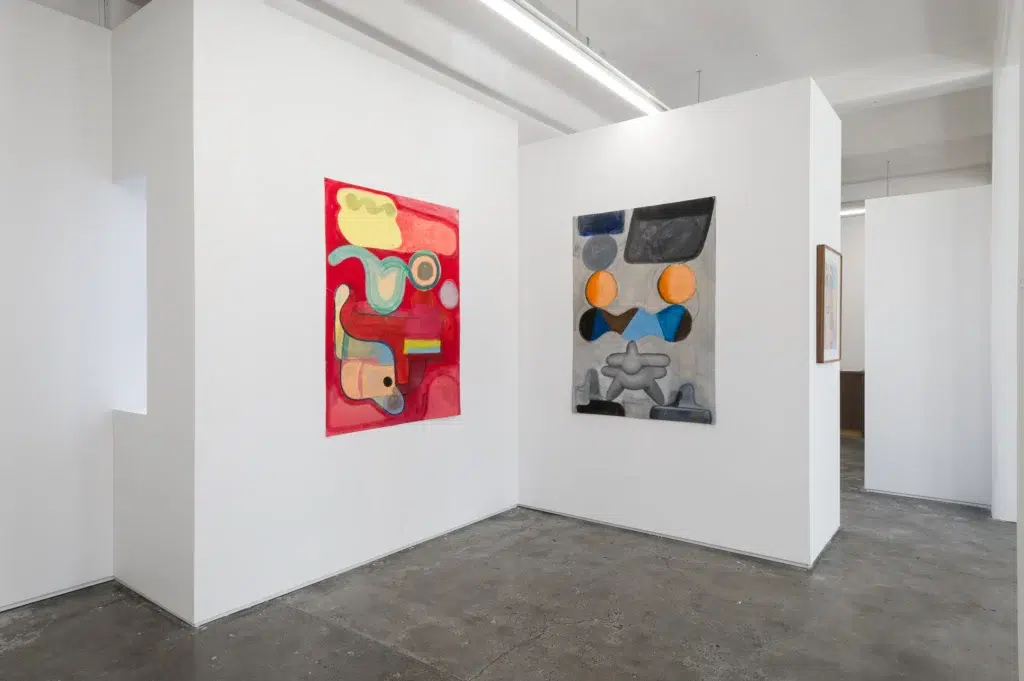 Reece King: Halfway to the Splits, installation view
How does the Wellington arts community influence the way you operate and present your gallery?
Wellington boasts an active, thoughtful, and caring arts community. I stay attuned to the conversations the city engages in and wishes to engage with, whether they concern public infrastructure, intimacy, ritual, or the social systems that shape our daily lives. There is space here for both seriousness and a touch of cheekiness to coexist.
Because the community is so interconnected, exhibitions serve as points of exchange rather than isolated events. The gallery isn’t separate from its surrounding ecology; it is part of an ongoing dialogue that fosters connection and inquiry. The support surrounding this new space has been energising and moving. The community has shown up in every way—through conversations, encouragement, and shared energy—shaping how the gallery feels and evolves.’
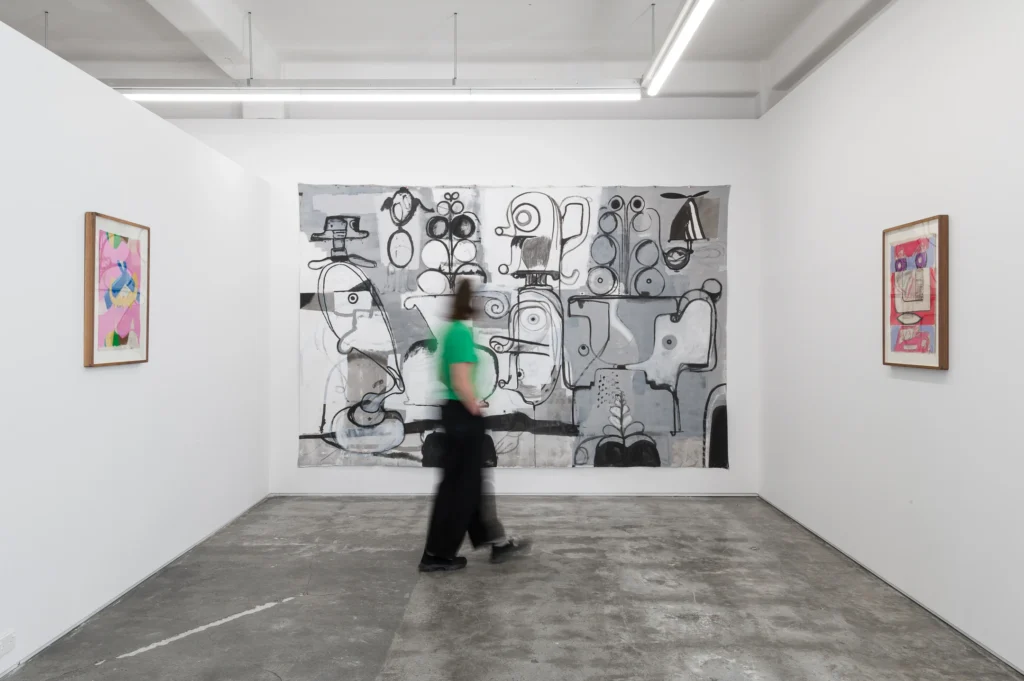 Reece King: Halfway to the Splits, installation view
How does PEG’s programme reflect your curatorial interests and advocacy for artists?
PEG is an exhibition-led space. Each show offers a chance to generate kōrero, often between artists who share a kaupapa or conceptual concern.
While solo exhibitions are important—providing artists with space to present substantial, cohesive bodies of work—I am equally dedicated to creating contexts where different practices sit alongside one another. Not necessarily as collaborations, but as forms of tautoko (support). Practices do not develop in a vacuum; they are shaped by their environment. Bringing practices into proximity makes that exchange visible and vibrant.
For me, advocacy involves creating conditions that allow that exchange to flourish. It’s about supporting ambitious production, thoughtful placement, and fostering communities centred around artists’ practices. Through exhibition-making, PEG aims to broaden not only audiences but also networks of shared learning and dialogue.
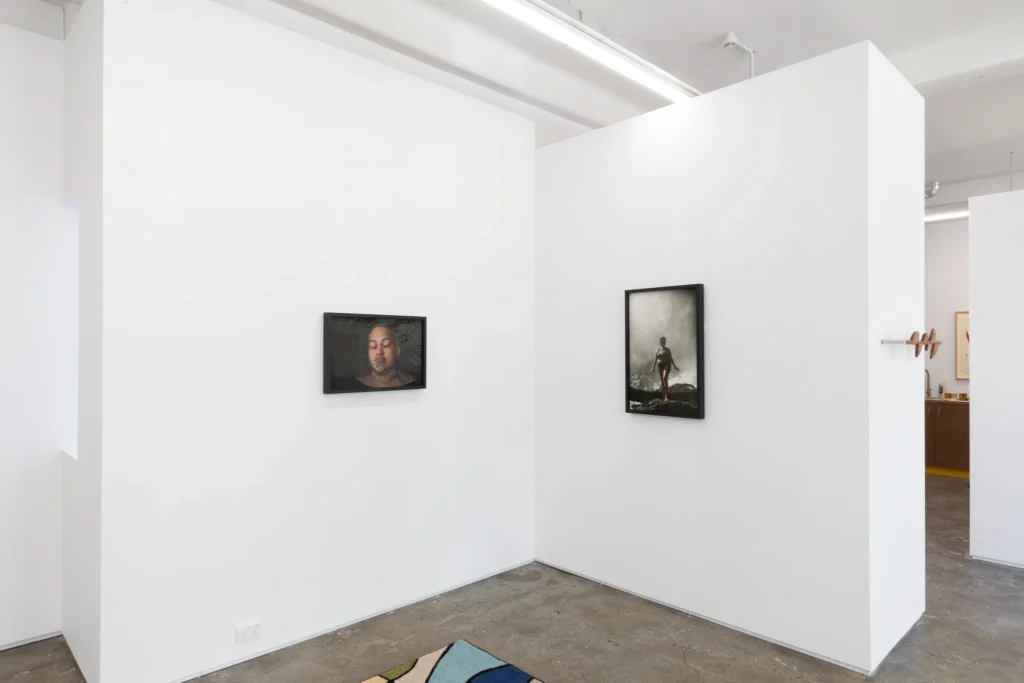
Installation View, Āhua wai: Olivia Asher, Megan Brady, Pepi-Joy Gilgen, Sara Tautuku Orme, 2026
Who are you showing at the Fair and why? Is there anything you think will surprise visitors?
We’re showcasing a selection of works by Ed Bats, Hannah Valentine, and Ben Pyne. All three artists create their work from their homes, which serve as studios, testing grounds, and living spaces simultaneously. This shared condition and a conceptual interest in the domestic realm shaped this presentation.
Their works include lights, shelves, furniture, impressions and sculptural objects. They reflect everyday objects, blurring the boundary between art and utility. There’s a sense of intimacy and tenderness, suggesting they belong in lived-in spaces.
Unlike the large, declarative gestures often seen at fairs, our booth will feel more characterful and homely. We aim for it to be welcoming and familiar, like stepping into someone’s thoughtfully curated living space. It’s an invitation to experience what it truly means to live with art, allowing it to become part of your daily life.
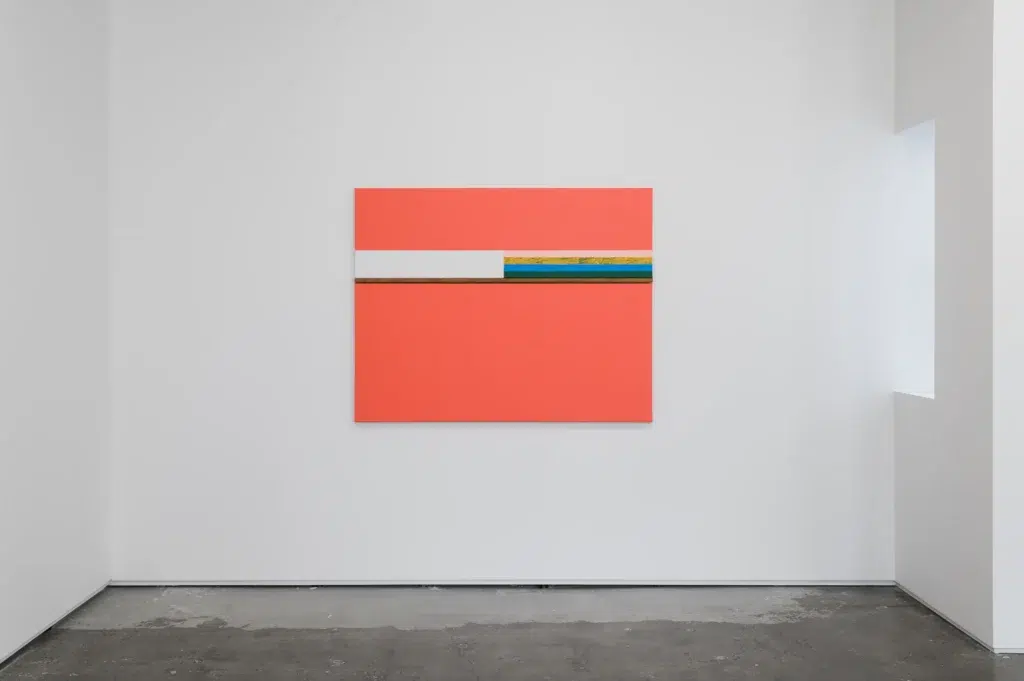
Ed Bats, Installation View, 2026
What’s your take on how art fairs help deepen conversations between artists and audiences?
Art fairs bring together artists, galleries, and audiences, enabling visitors to experience a diverse array of practices in one moment. For artists, much of their presence is mediated through their galleries. This makes fairs a vital opportunity for advocacy, enabling galleries to contextualise work, share knowledge, and discuss artists’ intentions and processes in depth. Audiences gain direct access to the artwork and to people who understand those practices intimately. Fairs act as catalysts for connection between artists and audiences, and equally between galleries and audiences. They provide a snapshot of what matters to our arts community at present, and, when approached thoughtfully, those initial conversations can develop into lasting relationships beyond the Fair.
Learn more about PEG Gallery’s presentation at the Fair here
Aotearoa Art Fair returns to the Viaduct Events Centre from 30 April – 3 May. Tickets are on sale now.