

Ruby Wilkinson approaches painting as both a sensory language and a form of observation, shaped by a lifelong instinct to document, gather, and translate the world around her. Rooted in personal memory, place, and an intuitive studio practice, Wilkinson’s paintings invite a slower kind of looking.
Ahead of her solo booth presentation with Jhana Millers at the Aotearoa Art Fair 2026, we spoke with Ruby about the early habits that shaped her, the shift from design into painting, and the routines, references, and pressures she’s navigating as an emerging artist finding her footing.
Profile Cover Image: Milly Bossley Hoyte
___
How did you get into art-making? Did you always want to be an artist?
I have been drawing and painting for as long as I can remember. When I was very young, I kept a book where I drew different birds as I discovered them. Each page showed a different bird drawn with crayons, labelled underneath. In primary school, I spent lunch times in the library drawing realistic pencil sketches of trains, copied from books and online photos. Each train took me several sessions to finish. I loved documenting and collecting my drawings in books, as well as showing them to people. I was lucky to grow up surrounded by artwork from my family—Geoff, Don, Suzanne Thornley, and Diana Halstead. My dad, Richard, is also an artist, and I remember painting Don Binney replicas with him on weekends. Artwork was always around. I enjoyed art and art history at school, though being an artist wasn’t always encouraged. I didn’t realise I wanted to be an artist until university. I began studying a Bachelor of Visual Communications Design, but quickly saw it wasn’t for me. Painting and drawing electives with Massey University lecturers Simon Morris and Gabrielle Amodeo changed everything. My world opened, and I couldn’t imagine doing anything else.

Ruby Wilkinson, Harbouring, 2025-2026, Jhana Millers
Your work often evokes sensory experience and atmosphere. How do you translate emotion into paint?
I attempt to build an emotionally charged language through paint, form, colour and gesture, which have been translators of emotion for decades. I don’t think what I am doing is anything particularly new. I do, however, feel as if the wider conversation and trajectory of painting abstraction is limitless and has only just begun. In the studio, I like to work from printed photographs taken on my phone and other gathered physical ephemera. I like to arrange the studio with certain visual source material items when leaving in the evening, so it is ready for the morning. I practice guided meditations before a painting session. I feel this allows me to quiet my mind from outside noise, even if just temporarily, while making. Sometimes I work listening to selected albums or NTS radio shows specific to genres/sensations/emotions I am trying to engage with in my work.
I find it essential to have room for the unexpected and ‘bad’ paintings. When working intuitively without the tools of preplanning, I cannot predict what the paintings will become. This allows for the marks and gestures to record the emotions held at the current time when working. Also within this leeway, I like to let paint dictate its own essence, to then have a conversation with its behaviour and reactions. Movement is essential behind my use of gesture. Before becoming an artist, I had an interest in becoming a contemporary dancer. Contemporary dancing and painting share similarities in being non-verbal forms of communication. Expressing without words.
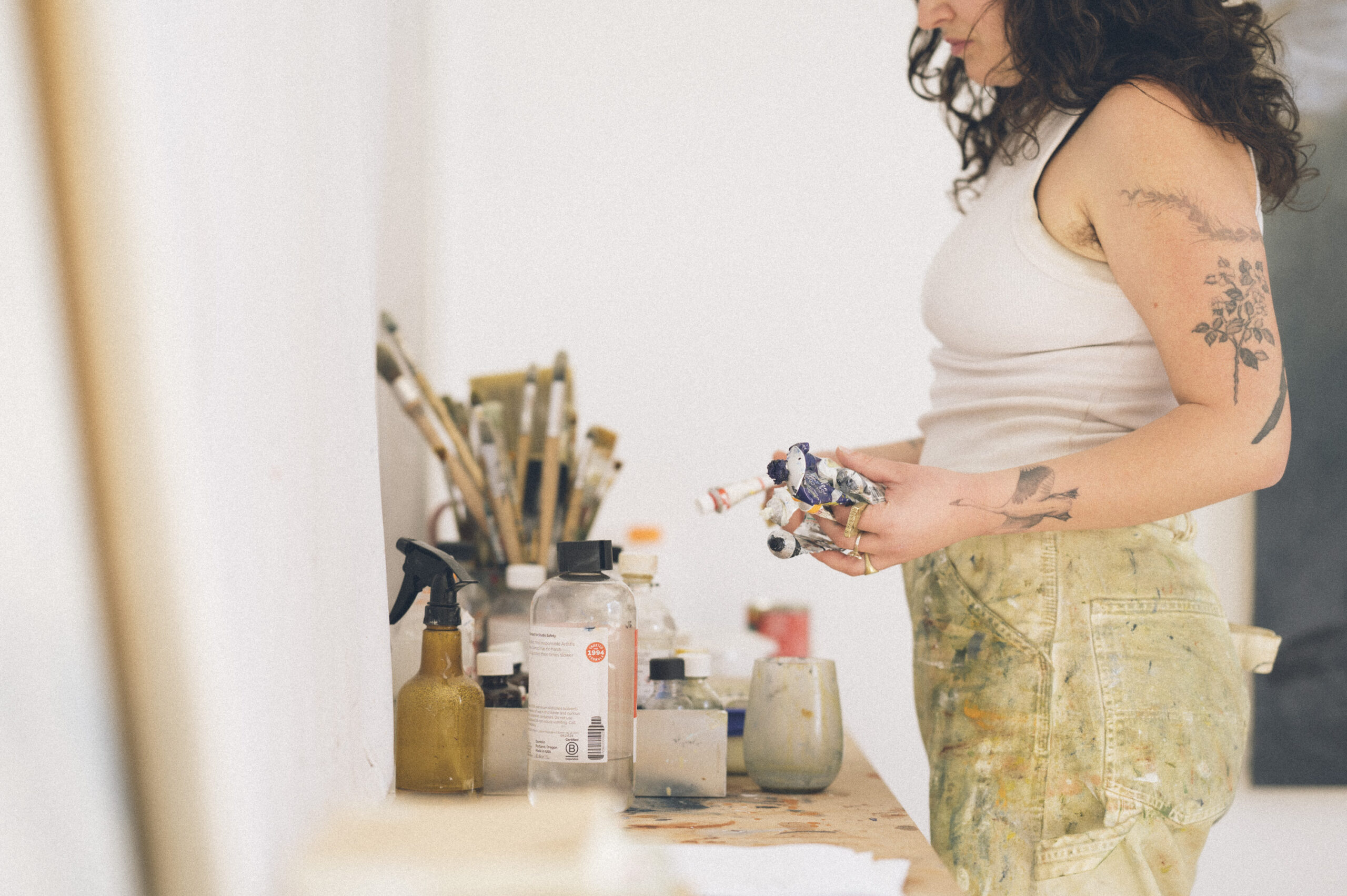
Photo by Adrian Vercoe
What are you exploring for your Fair presentation? Any new mediums or directions?
There are a few paintings in this work, Belle Plaine, that are almost figurative. This has been something I have been working with for a while now, the line between abstraction and figuration. I am interested in pushing and challenging the constructs that are placed onto artists, particularly those in early career stages. Sometimes I like to think of my work as aligning with impressionism. Belle Plaine is responsive to light in Tāmaki Makaurau. This was my first time making a body of work in Tāmaki – working from my south-facing studio in Onehunga and living in Titirangi has heavily shaped my use of colour, form and gesture. I am always seeking those peripheral influences that end up in the paintings; some do not become apparent until further down the line, and some remain unknown. On driving home around 7PM after a studio day via Hillsborough road – a road I have driven on countless times over my life; buildings, residential and commercial, come and go, but the ground remains still. There is a point on Hillsborough Road where the Waitākere Ranges become visible. Sprawling and holding the loudness of the West Coast behind. In the evening, it is common for violet greys and burnt oranges to dance the skyline as if the coast is trying to speak, and affirm my day’s labour. Belle Plaine holds that sentimental value of returning home, the importance of place, self, and associations.
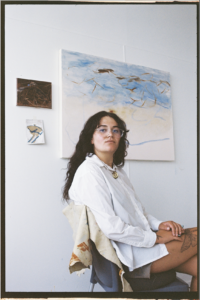
Photo by Milly Bossley Hoyte
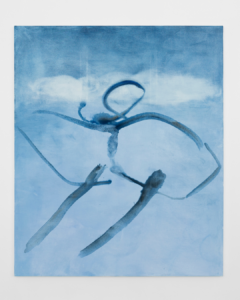
Ruby Wilkinson, Trek, 2026. Oil on canvas. 1500 x 1250. Jhana Millers
As an emerging artist, what does exhibiting at the Aotearoa Art Fair
mean to you?
The Art Fair offers a platform for artists and the public to view a diverse range of work in one location. We can’t be everywhere all at once. I often find myself missing certain exhibitions/openings during the year due to whatever location I am working from (currently Naarm). The Fair is a great way to see an abundance of work in one time and place, and to fill the cup. Having my work at the Art Fair allows me the opportunity to show my work alongside some of the greats; people who have influenced my practice and artists who have helped pave the way for me to be here today. I feel immensely grateful to be at the table.
For visitors unfamiliar with your work, what should they look for first when engaging with your new paintings?
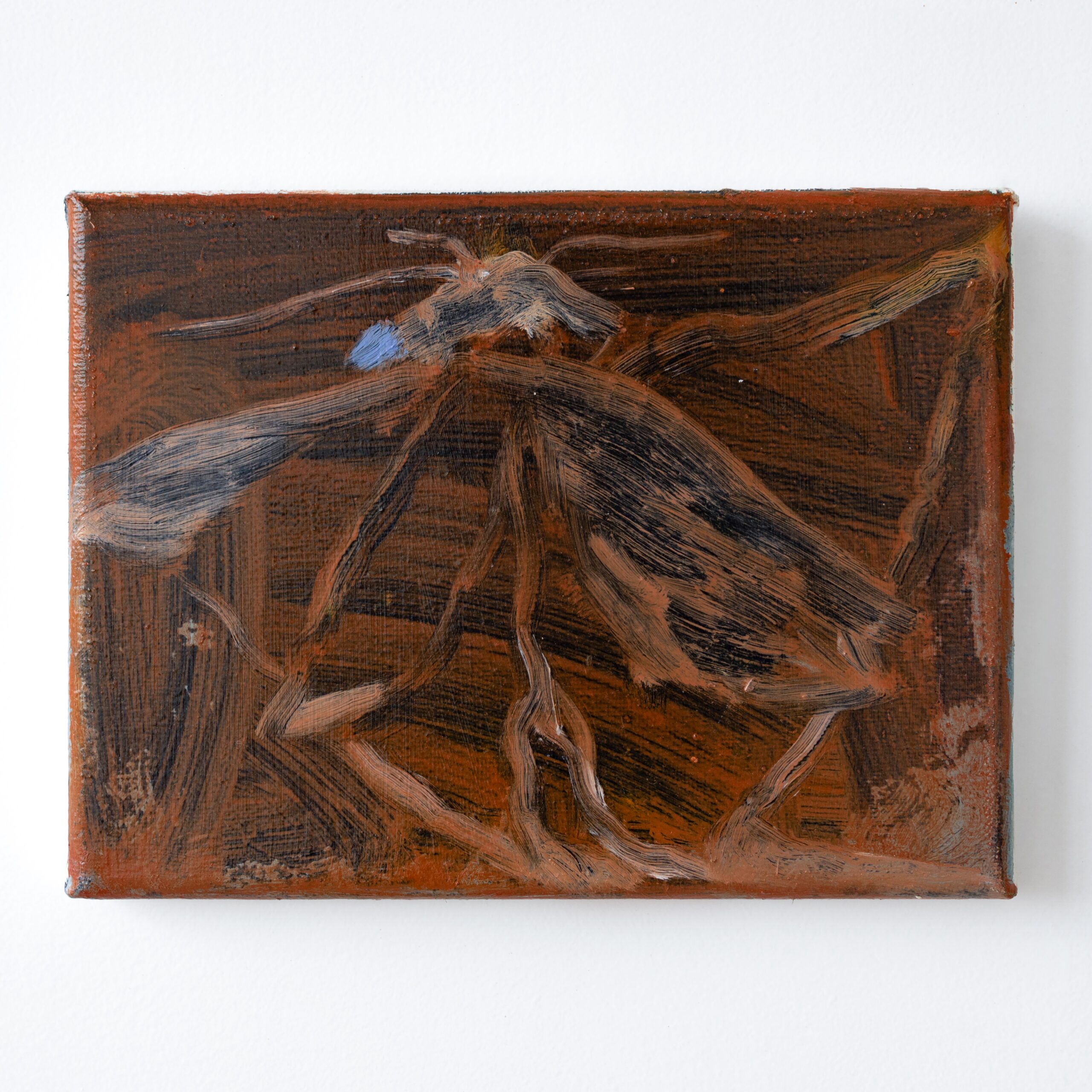
Some of the forms reference human knees, although these knees may not be visible at first, they are the connecting grounding ligaments across the work, returning the compositions to the weight of the body. Throughout Belle Plaine there is also a selection of moth impressions. Living in the Waitākere ranges while making this work, there is a wide range of native moths residing in the bush. To me, a visit from a moth can mean a visit from someone of the deceased, a ghost, or an ancestor. In my painting “Limbo”, I have painted a nimbus behind the moths, being a symbol used historically in painting; a luminous cloud or a halo surrounding a supernatural being or a saint. I hope my paintings can offer viewers a pause from the noise of the outside world, a space to reflect, mediate and be.
Where do you see yourself and your practice, in 5 years?
I can’t imagine ever putting down the paintbrush; it feels like a life necessity to me to be painting forever. Although I do hope to expand on the larger installation side of my practice, akin to my recent work Parade. The next two years will be spent studying my Master’s of Fine Arts at the Victoria College of Arts in Melbourne. I am looking forward to returning to academia and the art school environment and seeing what new perspectives I can bring to my work by being here. Whilst in Naarm, I will also be engaging in a cultural and linguistic reconnection with my Lebanese heritage as part of my study, which I am sure will have a deep impact on my practice.
Learn more about Jhana Millers’ presentation at the Fair here
Aotearoa Art Fair returns to the Viaduct Events Centre from 30 April – 3 May. Tickets are on sale now.


