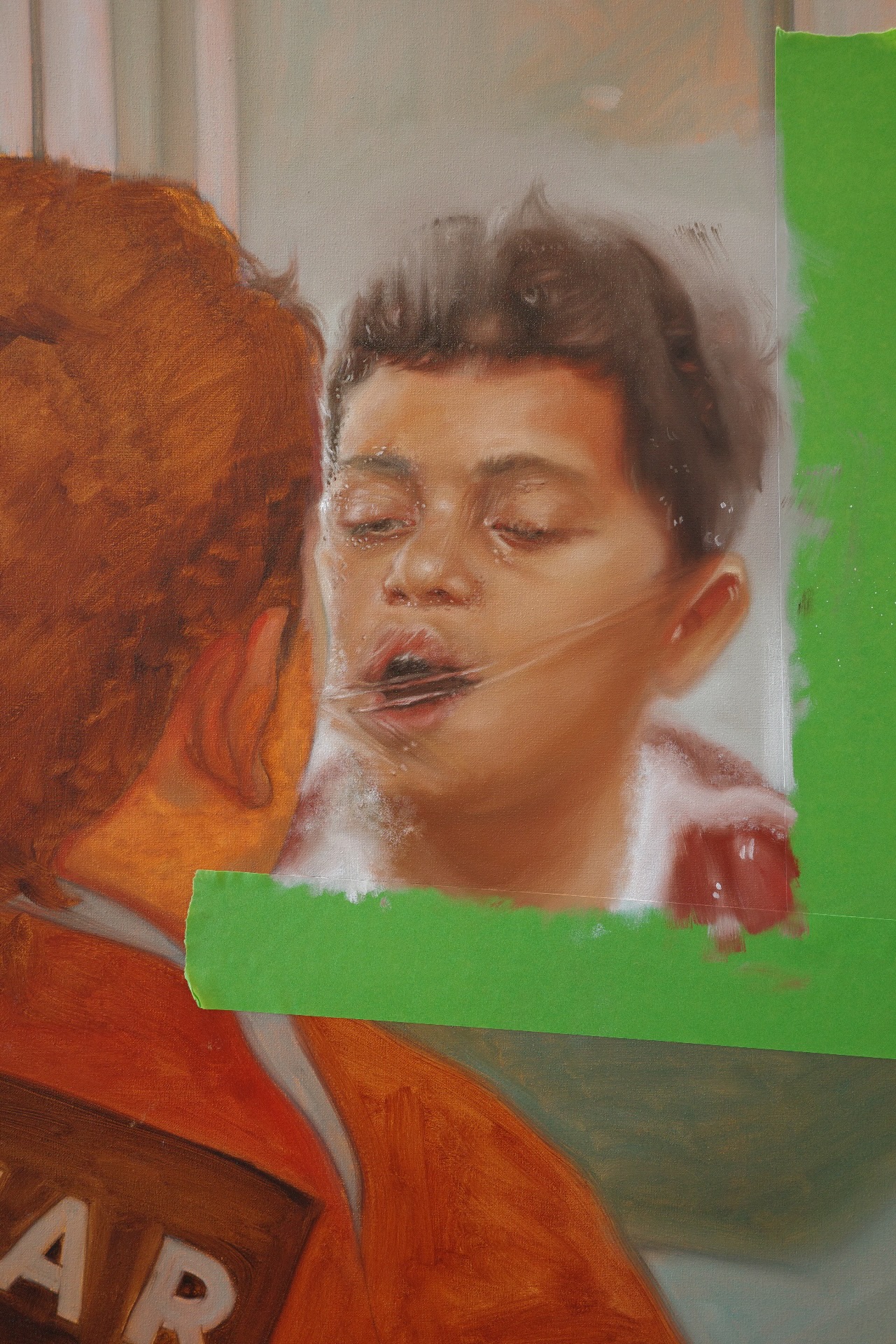
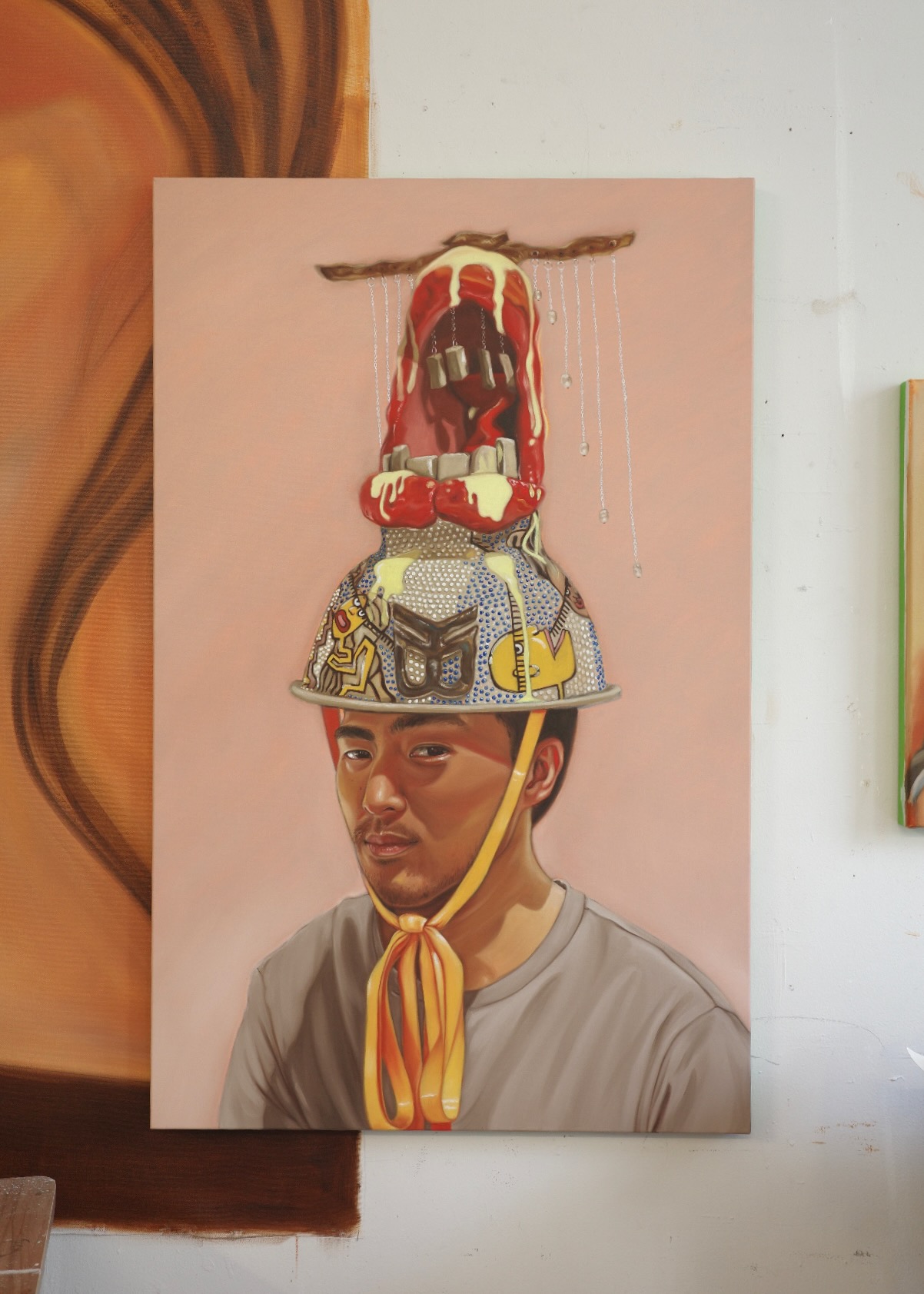
Henrietta Harris approaches portraiture as a space for subtle disruption, where familiar faces are unsettled through distortion and moments of visual “glitch.” What began as a resistance to tradition has evolved into an intuitive language that balances likeness with abstraction, while remaining grounded in close personal relationships that bring intimacy and psychological depth to her work.
Ahead of her presentation with Melanie Roger Gallery at Aotearoa Art Fair 2026, we spoke with Henrietta about the evolution of her visual language, the role of personal connection in her portraits, and the interplay between experimentation and instinct as her practice continues to expand.
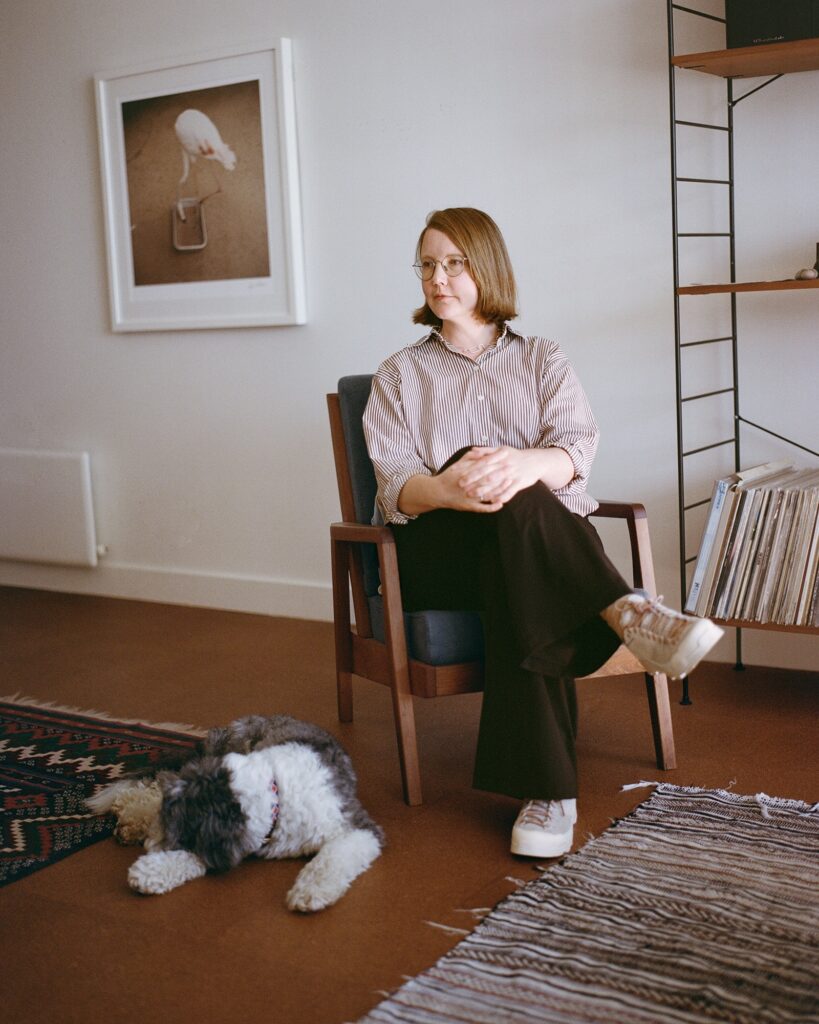
Profile Cover Image: Portrait Henrietta Harris, by Hannah Smith
___
Your portraits often play with subtle distortions – glimpses of faces fading, interrupted or mirrored. What interests you in the ‘disconnection’ in otherwise real, familiar faces?
It started when I was younger and didn’t want to simply paint traditional portraits. I spent a long time experimenting with warping and distorting the face, and many of my subsequent ideas have sprung from this initial experimentation. I’m interested in incorporating a bit of a glitch, an abstraction, some movement, into the paintings. I think originally it was to be a bit contrary but now it seems like second nature to me.
You’ve built a strong following both in Aotearoa and internationally, yet your paintings always feel deeply personal. How do you keep that intimacy intact when your work is so widely shared and collected?
I think it comes across on the canvas—my relationship with the sitter. For example, I’ve started a series of paintings of my nephews and have noticed a shift in the work; there’s a definite obvious connection there because we are so linked, their expressions seem more lively to me.
You often paint people close to you, capturing a kind of emotional honesty. Do you think of your work as documenting your own world, or more as creating entirely new ones?
It’s a bit of both, it’s natural for me to paint and draw the people around me and those who interest me but many of my paintings exist in a world all their own, suspended in time, which the background of the works dictates. Separating the somewhat realistic style of the paintings from photography is then more obvious, which is important to my practice.
You’ve worked across drawing, illustration, and music-related projects alongside your painting practice. How does moving between those different creative worlds shape the way you think about painting now?
I definitely enjoy switching it up, staying in one place forever doesn’t interest me. For example, the work I am making for the 2026 Aotearoa Art Fair will be a response to a residency I am taking part in, at Whakapapa Ski Fields at Mt Ruapehu. I’m really looking forward to doing my take on the landscapes and skyscapes up the mountain, and learning and reflecting on the impact climate change is having in this particular area of Aotearoa.
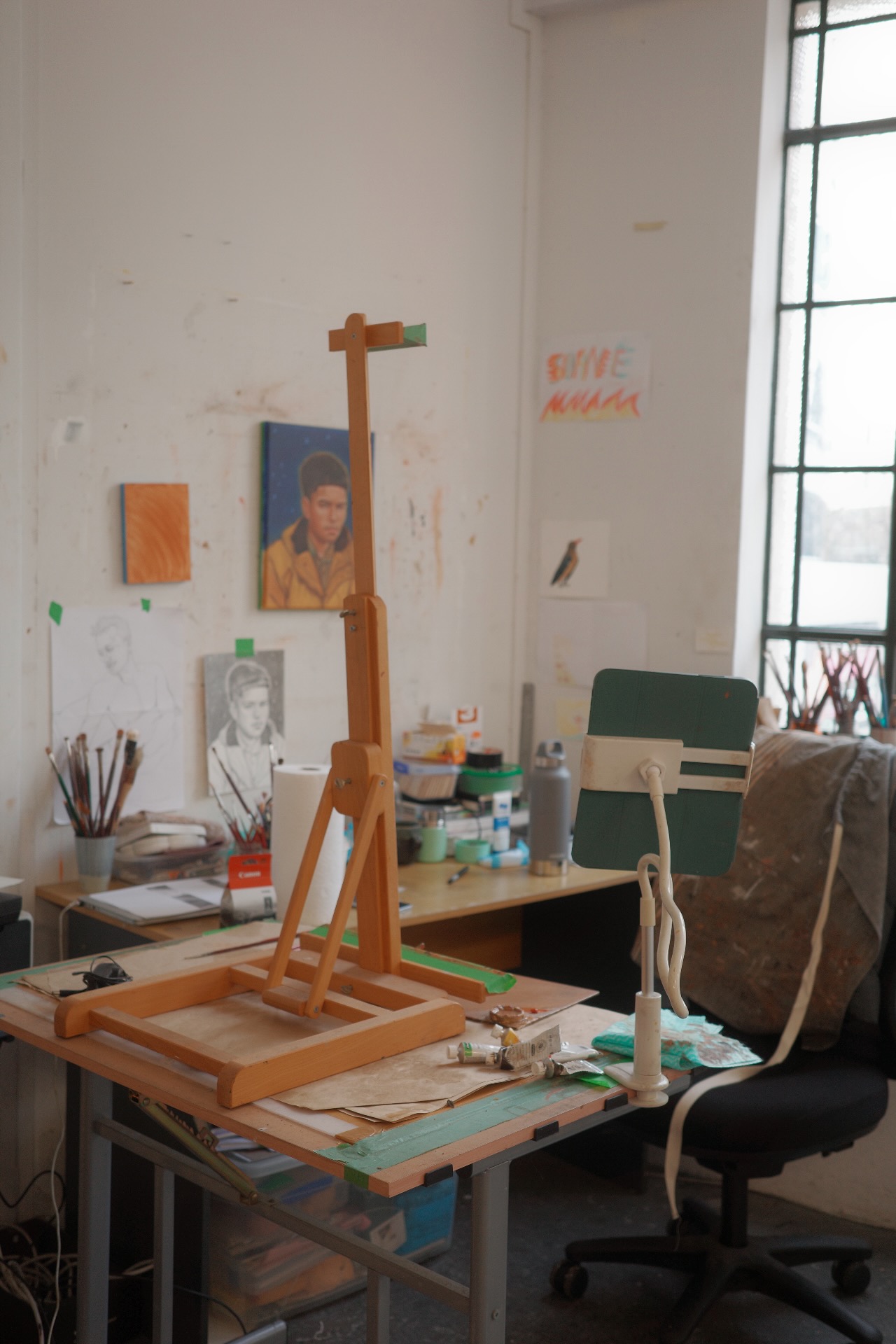
Photo – Scott Hardy
The Aotearoa Art Fair brings artists and audiences from across the region together in one space. What are you most looking forward to at the Fair?
Having attended several fairs worldwide, I definitely think the standard of the AAF is comparable to others globally. I look forward to seeing the wide variety of artworks up close- pieces I might not otherwise have the chance to view outside of a screen. I’m also looking forward to catching up with heaps of friends in the same place on the same night!
Learn more about Melanie Roger Gallery’s presentation at the Fair here
Aotearoa Art Fair returns to the Viaduct Events Centre from 30 April – 3 May. Tickets are on sale now.