Installations

THROUGHOUT THE FAIR

Large Scale Installations

Immersive, ambitious, and impossible to ignore, Installations throughout the Fair extend beyond the booth to reshape how art is encountered. From large-scale sculptural works to site-responsive interventions, 12 projects by leading artists invite you to slow down and look closer. Encounter moments of surprise, tension, and play as artists transform space, material, and perception throughout the Fair.
PRESENTED BY GALLERY SALLY DAN-CUTHBERT

Lisa Reihana, in Pursuit of Venus [infected], 2015–17

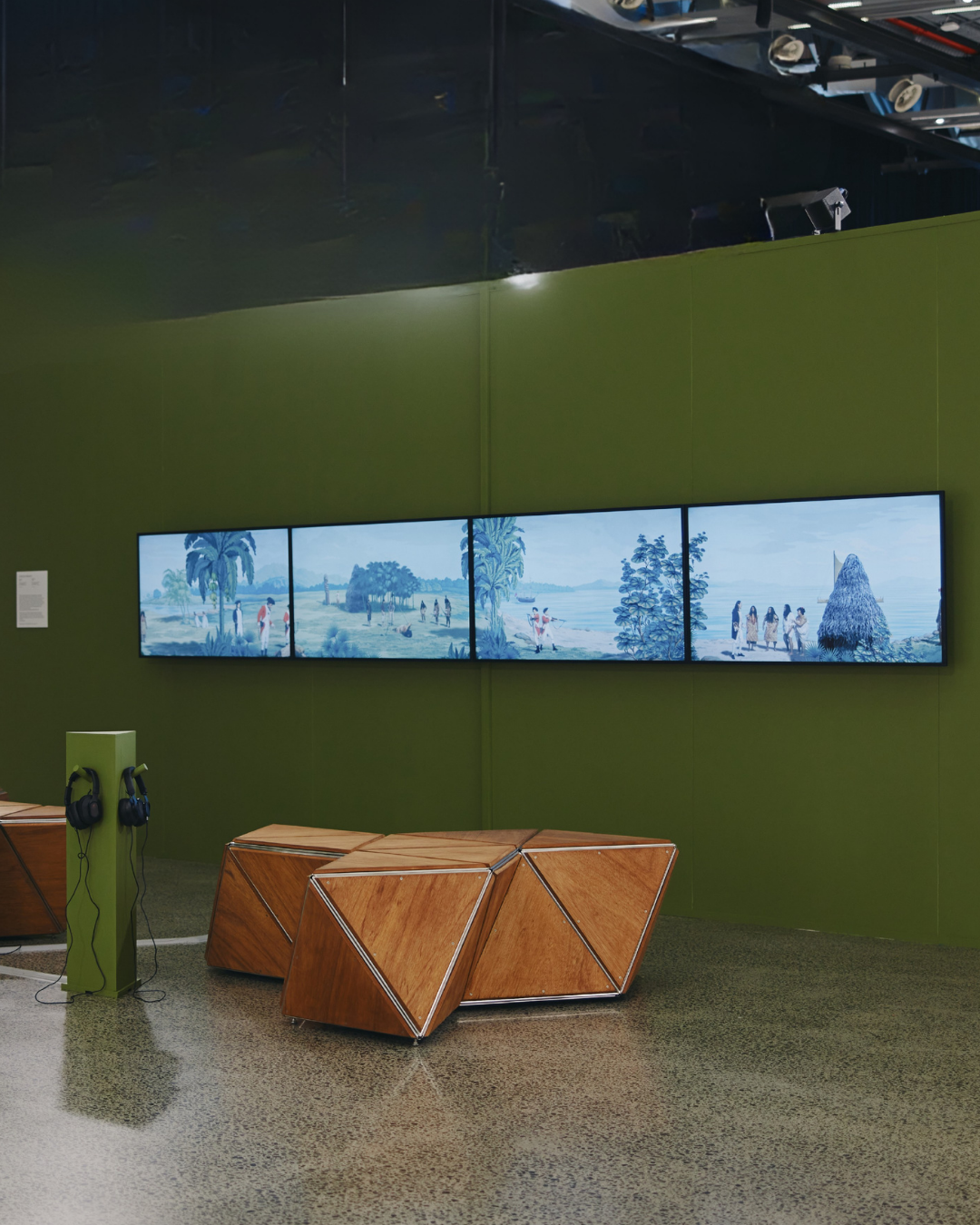
A decade in the making, in Pursuit of Venus [infected] is an iconic work by Lisa Reihana. This panoramic video reimagines the 1804 French scenic wallpaper Les Sauvages de la Mer Pacifique by Joseph Dufour et Cie. Although the wallpaper purported to represent Pacific peoples, it was a utopian composite of flora, fashions, and characters drawn from historic records and operatic fabulations.

Challenging historical stereotypes, in Pursuit of Venus [infected] returns the wallpapers imperial gaze with a speculative twist — disrupting notions of history, authenticity and beauty. This is not a historical explanation, it is an artistic re-imagining. Moving through eighty live-action vignettes set against a utopian Tahitian landscape, the work builds towards the violent climax – the death of Captain Cook in Hawaii in 1779. Reihana worked with indigenous actors and performers to reclaim narratives through a practice of “agreed representation” who at times determined the form and content of their own depictions.

Representing Aotearoa New Zealand at the 2017 Venice Biennale, this video featured in Emissaries, and has become a seminal artwork in this country’s art canon. It has exhibited at institutions including QAGOMA, Honolulu Art Museum; The Royal Academy; de Young Museum and Musee du quay Branly. It is currently showing at LACMA in Los Angeles and The Box in Plymouth, UK. This is the completed work shown for the first time in Auckland, and is presented alongside photographs relating to Emissaries.

Lisa Reihana is represented by Gallery Sally Dan-Cuthbert, Ground Floor, Booth 28

PRESENTED BY GOW LANGSFORD

Lee Bae, Brushstrokes, 2024

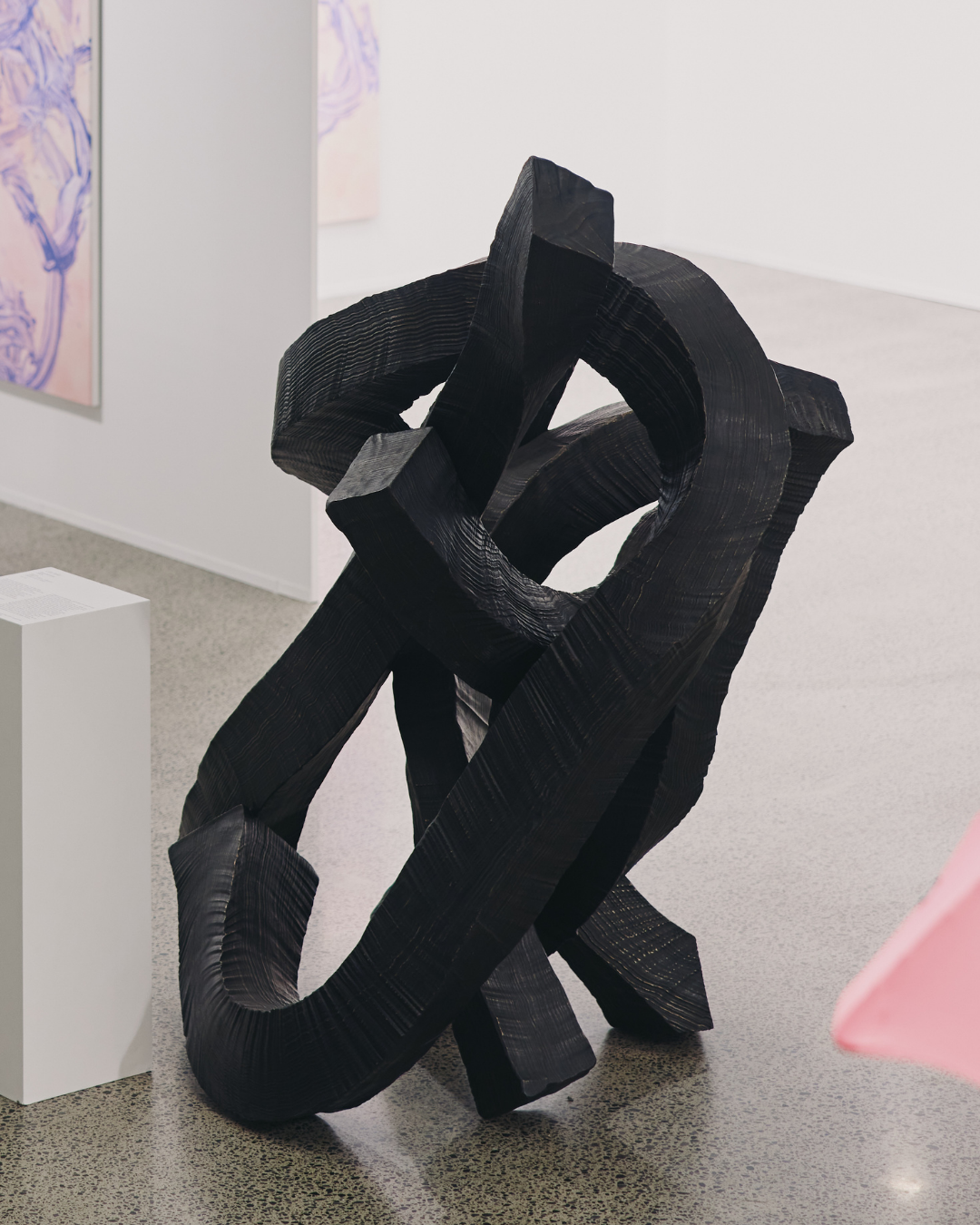
For more than thirty years, Lee Bae has explored the elemental, symbolic and material potential of charcoal. As an elemental substance forged in fire, charcoal is imbued with cultural memory, ritual and transformational properties. Subtly blurring the lines between drawing, painting, sculpture, and installation, Lee Bae transforms charcoal into large-scale sculptures, wall-mounted surfaces akin to paintings, and ink drawings that capture the physicality of the artist’s brush work.

Lee Bae’s practice is grounded in repetition, patience, and physical engagement. Each mark and surface holds evidence of time spent, decisions made, and the meditative process of building presence through the simplest of materials. At once intimate and monumental, these works affirm Lee Bae’s position as a leading figure in contemporary abstraction as he creates an immersive environment that foregrounds stillness, depth and the elemental power of the colour black.

Born in Cheong-do, South Korea in 1956, Lee Bae studied at Hongik University. He has lived and worked between Paris and Seoul since 1990. His work has been exhibited widely across Europe, Asia and North America including at the Phi Foundation (Canada), Wilmotte Foundation (Italy), MusĂ©e des Beaux-Arts (France), Indang Museum (Korea), and MusĂ©e Guimet (France), and belongs to major public collections such as the National Museum of Contemporary Art (MMCA), Seoul Museum of Art (SEMA), and Leeum-Samsung Museum of Art. He is the recipient of numerous accolades, including the Chevalier de l’Ordre des Arts et des Lettres (France, 2018). In 2024, Lee Bae presented his exhibition La Maison de la Lune BrĂ»lĂ©e as an official collateral event of the 60th Venice Biennale.

Lee Bae is represented by Gow Langsford, Ground Floor, Booth 24 and Level 2, Booth 50

PRESENTED BY MCLEAVEY GALLERY

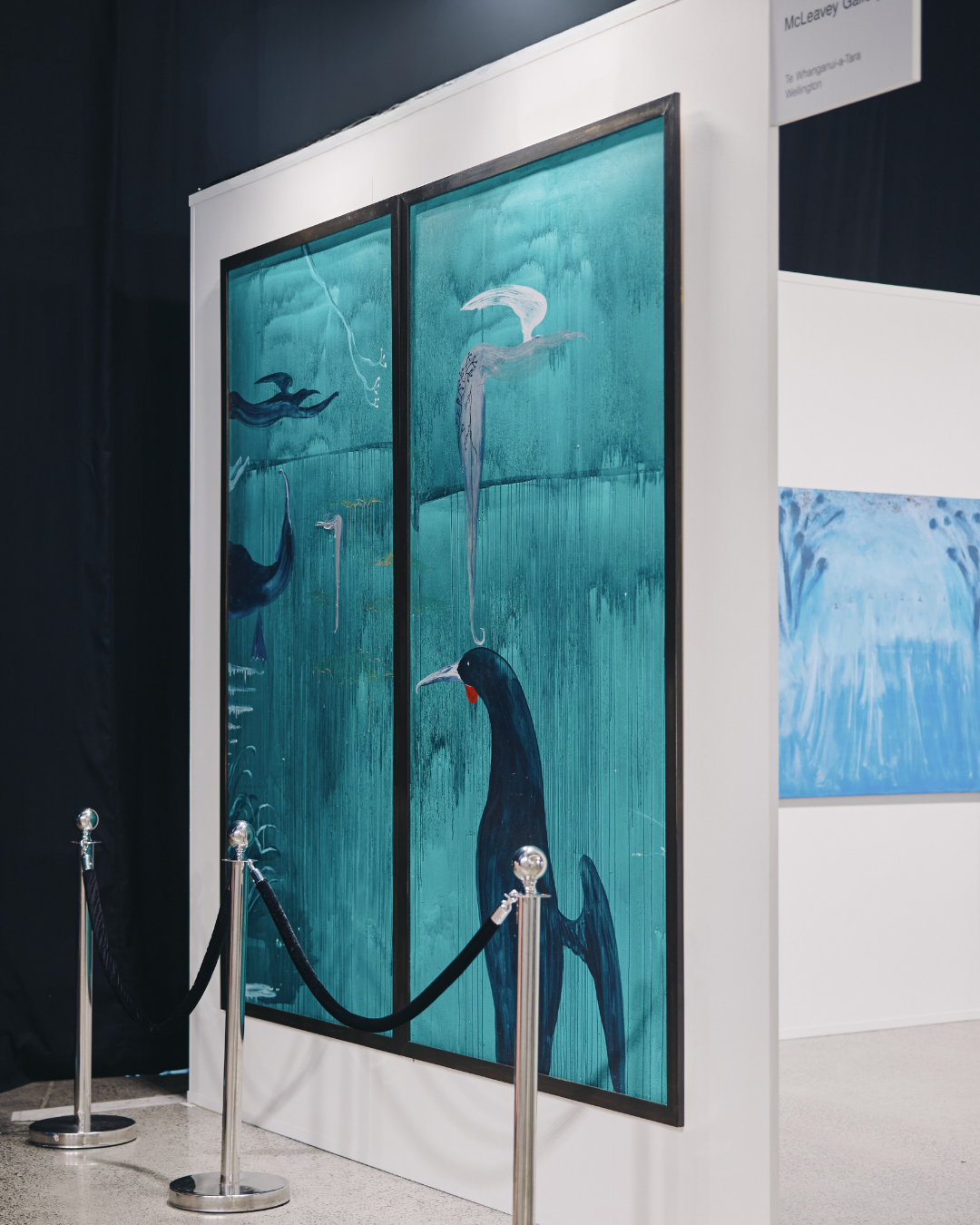
W.D Hammond, Untitled [Wainui work 1] and Untitled [Wainui work 2]

“Mornings were the best at Wainui. Fresh bush smell. The birds welcoming the new day with sweet chorus. And the light slowly moving across the bedroom wall, panning over the painted birds. Gold on gold and on to the curved beak and red wattle. Yes, we were in the garden too. How lucky was I to wake inside a Bill Hammond painting.” — Jane McBride

Imagine a little green house with a rusted roof, deep in Banks Peninsula bush. The inner walls and rafters covered in Bill Hammond’s compulsive creations. Around an old pot-bellied stove, hardly a surface spared.

These two paintings were made not for a gallery but for the walls of Hammond’s bach at Wainui — a personal retreat he had known since childhood, attending the Wainui YMCA camp in the 1950s before buying his own home there years later as a refuge from the world. For over two decades they hung unseen, only Bill and his wife Jane living among them. Hammond died in 2021. His tiny bach sold shortly after. These works were rescued from the walls.

Solace for Hammond was always found in the bush. Wainui was the perfect place to base himself — to create haunting dreamscapes exploring humanity’s relationship to nature, memory, and primordial history. The feeling of being somewhere untouched by human hands was fundamental to his practice.

A pivotal shift came in the early 1990s following a three-week voyage to the remote Auckland Islands — windswept, climatically extreme, and barely touched by human presence. Arriving on the rocky shore, silently watched by vast colonies of seabirds, Hammond was transformed. His recurring bird-people motif was born there and rarely left his practice ever after. Blending humour, beauty, and lyricism, his compositions offered a distinctive and deeply felt reflection of New Zealand’s own cultural landscape.

Stretching over 2.4 metres in height, these two rich surfaces reward close looking. Hammond painted with profound reverence for colour — deep emerald and gold washes dripping down the hardboard of his home. Where there is austerity, it is in his use of white: stark, luminous forms that root the dreamlike imagery back into the tactile world of the bush. Even in a cramped bach far from any gallery, Hammond’s technical virtuosity is fully present — totally in command of his surfaces, anchored always in his love of nature and place.

Critic William McAloon, reviewing Hammond’s work at the gallery around this time, described this period as the artist at “the height of his painterly powers.”

W.D Hammond is represented by McLeavey Gallery, Ground Floor, Booth 32

PRESENTED BY MARS GALLERY

Atong Atem, A Facet For Every Turn, 2023.

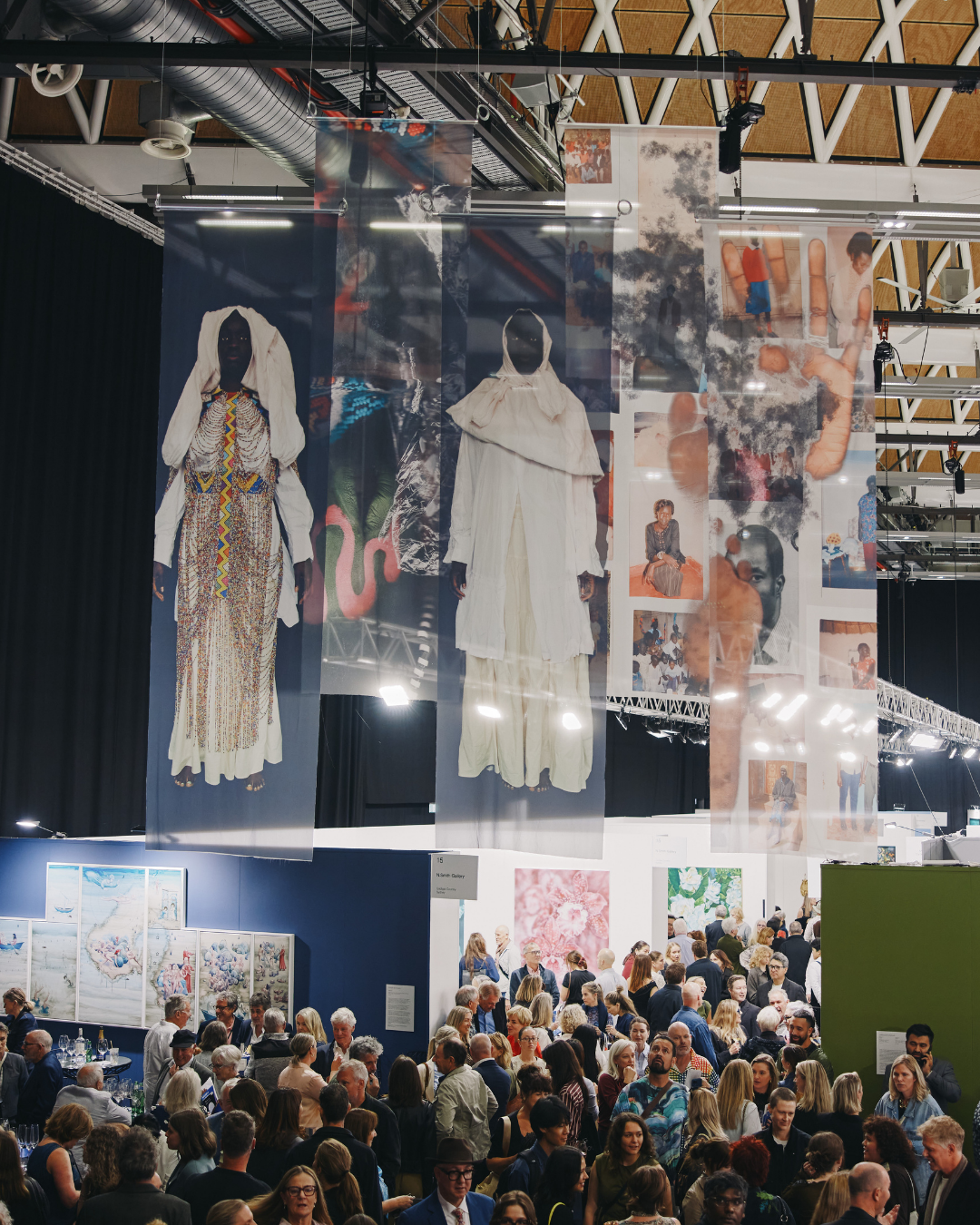
A Facet For Every Turn by Atong Atem is a photographic self-portrait installation that reflects on documentation and archiving as a cultural practice. Using familial photographs and referencing institutional practices, Atem positions herself within the complex histories of photography, migration and archiving. The work has been exhibited at Unseen Amsterdam, The National Portrait Gallery and ACE Gallery. This major work is printed on six silk panels at 5m tall. Through self portraiture, scans of hair cuttings and family photos, Atem references and interrogates the performance of identity and the inherent mythology of history.

The six panel work responds to the movement of audiences around it, inviting interaction beyond a simple gaze. The lightweight, sheer panels flow and layer over each other reflecting the layered histories and stories referenced in Atem’s broader practice. From colonialism to gender performance; migration to adornment, A Facet For Every Turn is a work that refuses to be simplistic.

Atong Atem is represented by Mars Gallery, Ground Floor, Booth 12

PRESENTED BY TWO ROOMS

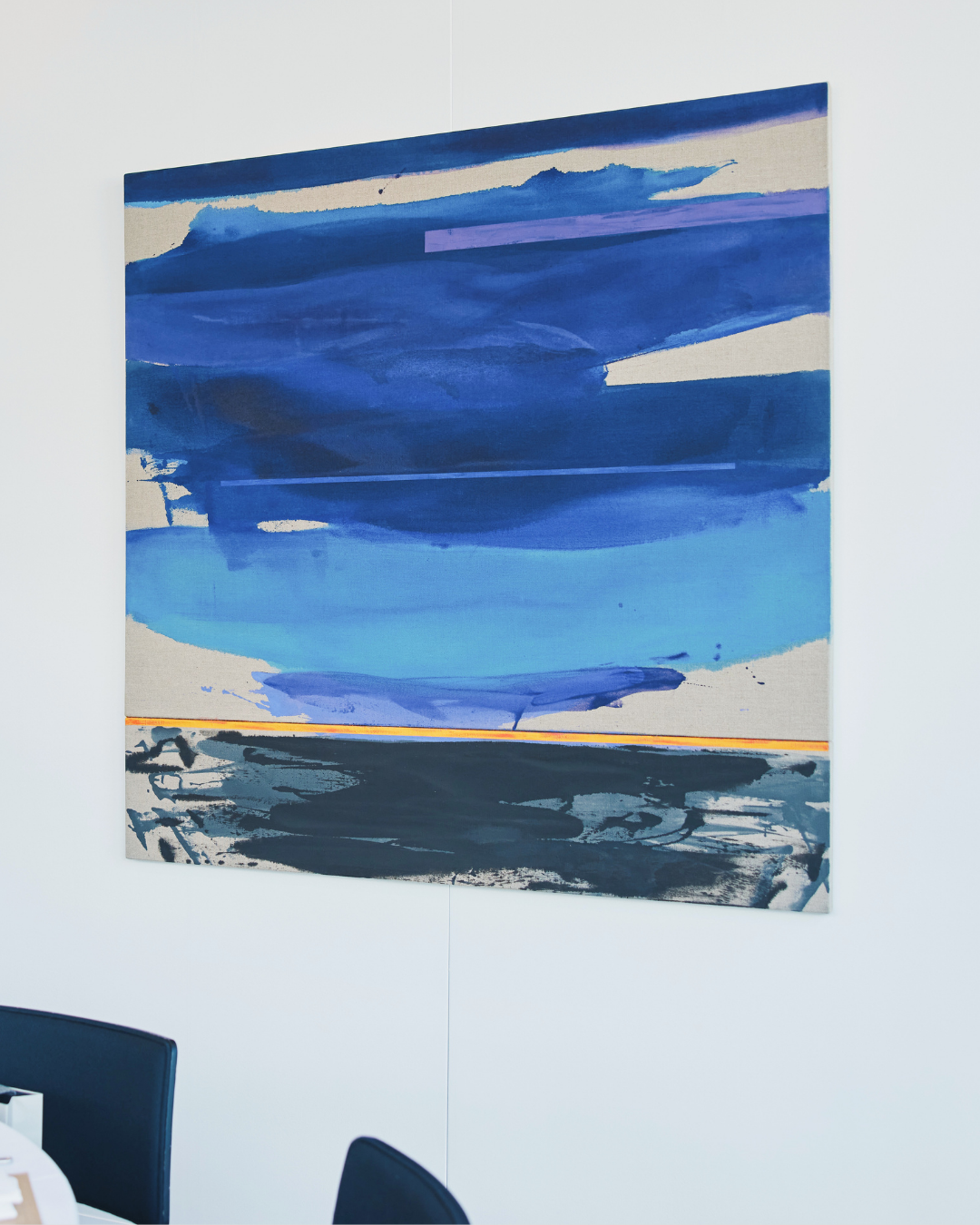
Gretchen Albrecht, Night Falling, 2023

As part of Aotearoa Art Fair 2026, Two Rooms will present a painting not previously exhibited in New Zealand by Gretchen Albrecht, Night Falling, 2023.

The painting by Gretchen Albrecht, a forerunner in the women’s art movement, speaks to a historical trajectory  of female sensibility in abstraction. The work is intellectual and expressionist – inward looking and out reaching at the same time. She continues to engage with some of the most pressing contemporary themes, strengthening the dialogue around current concerns brought about by the use and misuse of natural resources. Here Albrecht takes the opportunity to demonstrate  a broader  colour palette with a greater depth, with the building of stained and painted layers of various opacities on linen. It is a record of her reflection on the current universal concern around threatened environments and landscapes.

Gretchen Albrecht is represented by Two Rooms Gallery, Ground Floor, Booth 21

PRESENTED BY GOW LANGSFORD

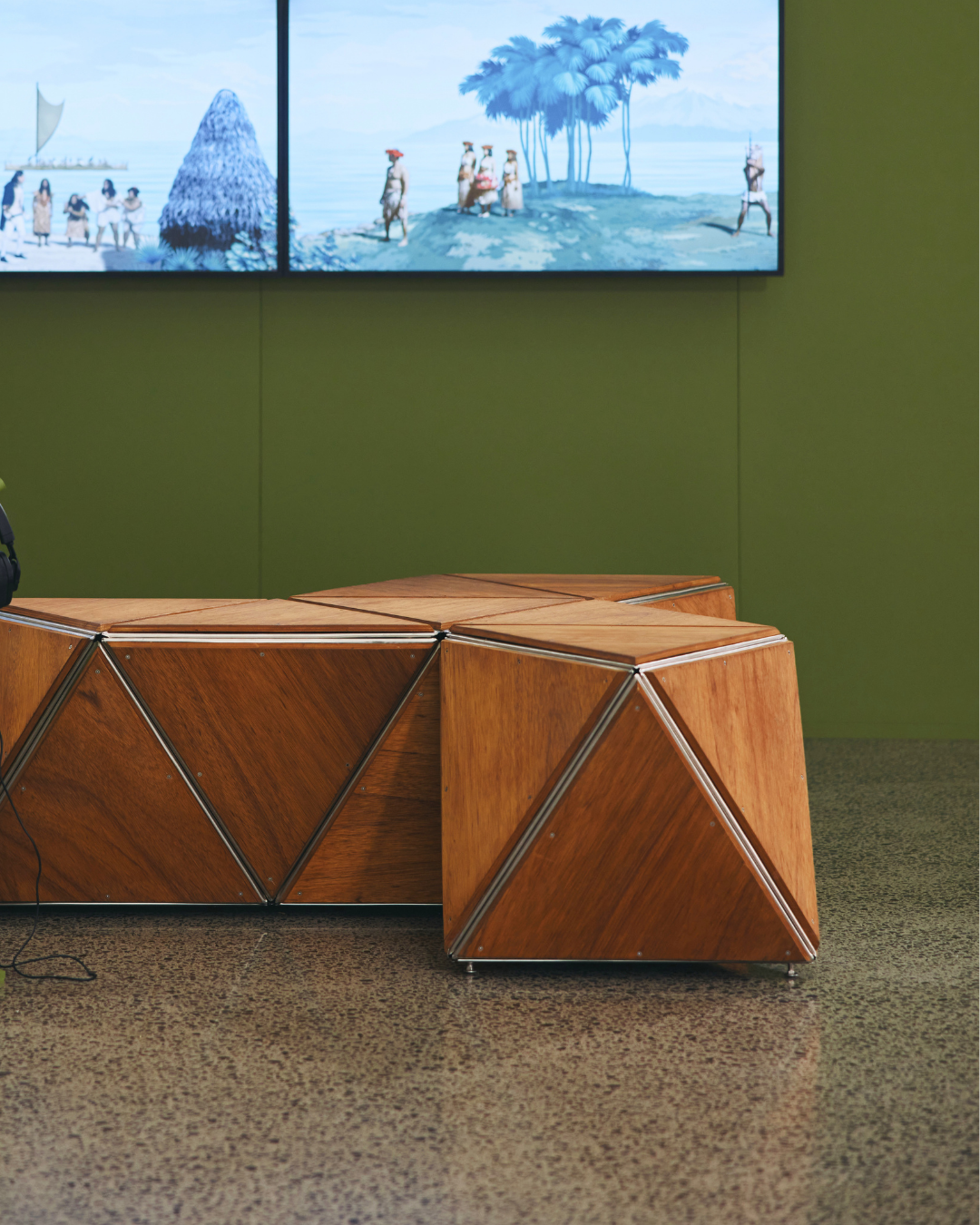
Gregor Kregar, Bench 1 & Bench 2, 2025

Gregor Kregar’s stainless-steel benches extend his exploration of geometric refraction and reflective surfaces into the realm of functional design. Polished planes catch and fragment their surroundings, shifting with light and movement, while the warm timber seating introduces a tactile, human counterpoint. Balancing precision and play, these works occupy a space between sculpture and utility. In merging industrial material with organic form, Kregar creates objects that are at once grounded and perceptually dynamic, transforming everyday seating into an experiential encounter with reflection, distortion, and the subtle choreography of the viewer within space.

Gregor Kregar is one of New Zealand’s leading contemporary sculptors, celebrated for his versatility across a wide range of mediums and materials. His work has been exhibited extensively throughout Australasia and Europe, and is held in significant public collections in New Zealand.

Gregor Kregar is represented by Gow Langsford, Ground Floor, Booth G24 and Level 2, Booth 50

PRESENTED BY MILFORD GALLERY

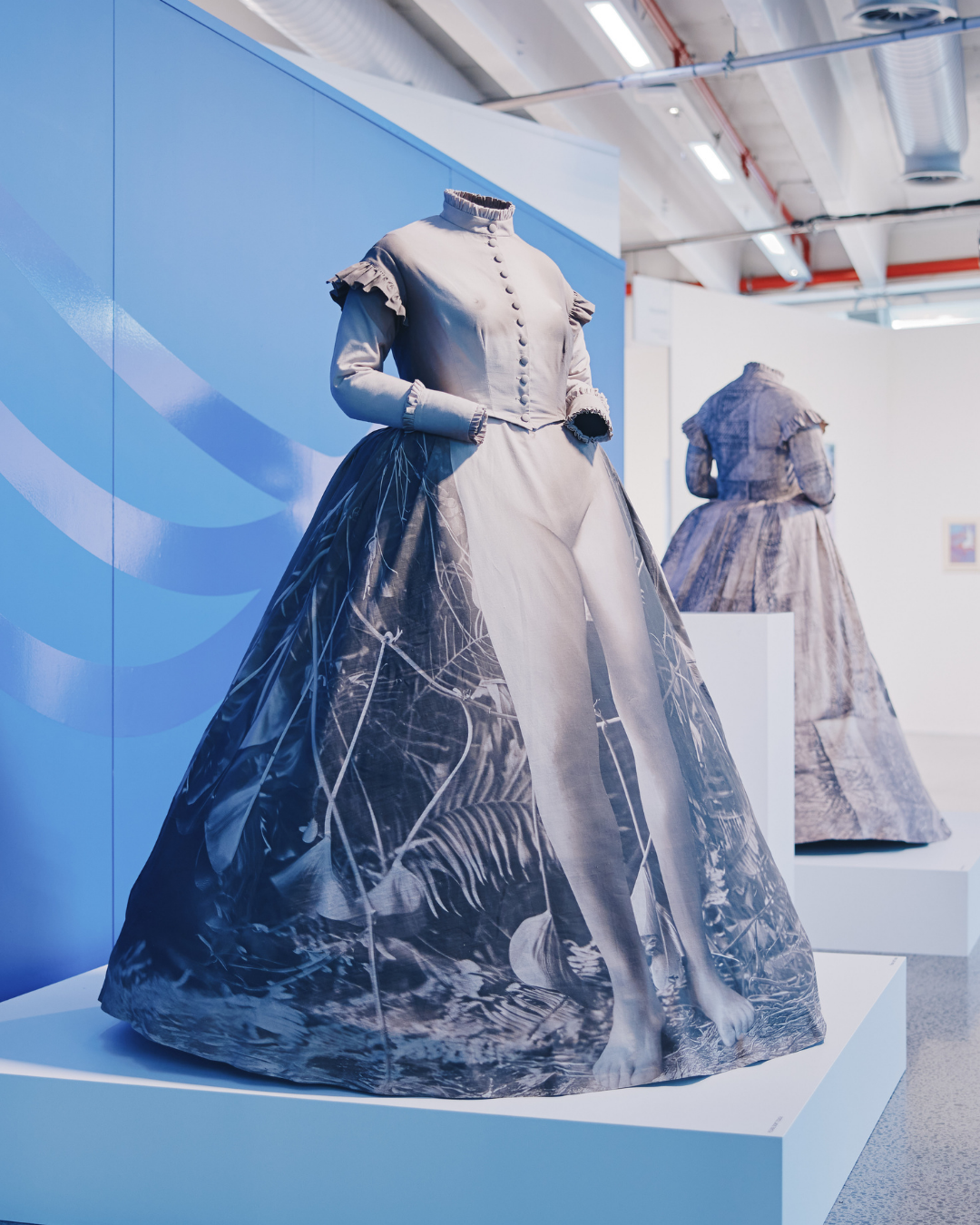
Yuki Kihara, Dresstories, 2026

Dresstories emerged from Yuki’s personal encounter with nude photographs of Sāmoan women taken by New Zealand colonial photographer Thomas Andrew (1855–1939), during his time in Sāmoa from 1891 until his death in 1939. These images, enlarged and transformed into life-size Victorian mourning dresses inspired by the same dress worn by my fictitious character of Salome, create a striking tension between exposed skin and the modesty of mourning attire. This tension became Kihara’s lens to examine the colonial gaze, revealing its dual nature of desire and discipline, spectacle and silence, visibility and erasure.

By re-staging these photographs as garments presented as sculpture, the work shifts the act of looking from passive consumption to a contested space of memory, agency, and refusal. Kihara’s research for this series began in 2012 at the American Museum of Natural History in Manhattan, New York, where she first encountered the nude studies of Sāmoan women – preserved under the authority of science. Over two decades, Kihara traced Andrew’s photographs held in the archives situated across Sāmoa, Aotearoa New Zealand, Australia, France, United Kingdom, Germany, and the Netherlands, uncovering their global circulation through periodicals and postcards.

The number in the title of each work in Dresstories corresponds to the registration number of the photographs held by the Museum of New Zealand Te Papa Tongarewa depicted on the dress’s surface. This choice underscores how such numbers reduce the photographs to catalogued artifacts, emphasizing physical tracking while neglecting their deeper, intangible significance. By using these numbers as titles, the work subverts the museum system, creating ambiguity between the title and the actual registration number. This challenges the system’s dependence on rigid categorization and invites a critique of its limitations.

What are the stories behind these women? By transforming these photographs into mourning dresses, the work enacts a dual purpose: mourning the violence of the colonial archive and re-clothing the women within a framework of visual sovereignty. The dress, as both skin and shield, interrogates who is allowed to look, who is asked to reveal, and who holds the power to decide. Dresstories is Salome’s ritual of mourning and repair, suturing image to garment and archive to body, urging viewers to confront the intimacy of colonial looking and imagine alternative ways of seeing, remembering, and being seen

Yuki Kihara is showing with Milford Gallery, Ground Floor, Booth 30

PRESENTED BY CHALK HORSE

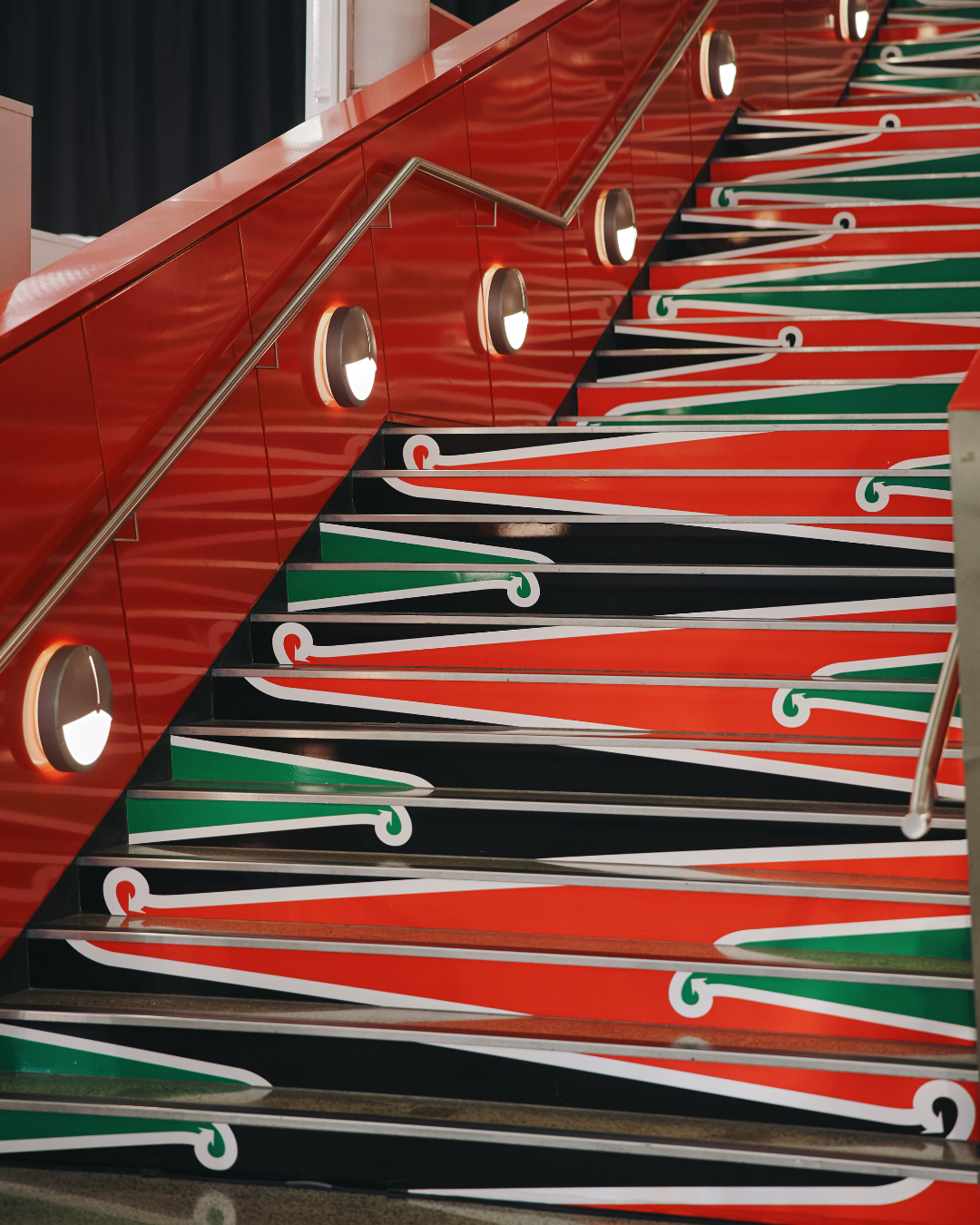
Kauri Hawkins, From the bush to Bunnings

Kauri Hawkins’ work From the bush to Bunnings follows a journey of ascent, not only through space but through whakapapa.

At the heart of the work is the puhoro design, a form drawn from Toi Māori that speaks to movement, flow, and agility. Here, it becomes a pathway, a visual current that carries the viewer upward, echoing the ways we move through time, knowledge, and our connections to each other. As the pattern ascends, it reflects the layers of whakapapa held by artists in Aotearoa, past and present, those who have paved the way so others could follow. Their presence sits within the work, not as something fixed in the past, but as something that continues to move with us.

This piece speaks to the understanding that we do not move alone. Every step upward is supported by those who came before, and every step forward carries a responsibility. Hawkins acknowledges the importance of honouring that lineage, keeping up the push, keeping up the creation, and upholding the mana of our work for those who will come after.

Kauri Hawkins is a Māori artist whose works comment on contemporary New Zealand issues through a Māori lens. Working with diverse materials and art forms, from road signs and sculptures to performance art and videography. Challenging the cultural significance of objects and colonial notions as a means of self-reflection and artistic expression.

Hawkins is from Muriwai, TĆ«ranganui-a-Kiwa, and has tribal affiliations with Ngai Tamanuhiri, Ngati Porou, Rongowhakaata, Ngati Pahauwera, and Pākeha. He also descends from the Island of Aitutaki in the Cook Islands. He was born in Palmerston North in 1995 and raised in Tūranganui-a-Kiwa (Gisborne), New Zealand. He currently lives and works in Auckland, New Zealand.

Kauri Hawkins is represented by Chalkhorse, Ground Floor, Booth 10

PRESENTED BY KURUTAI COLLECTIVE

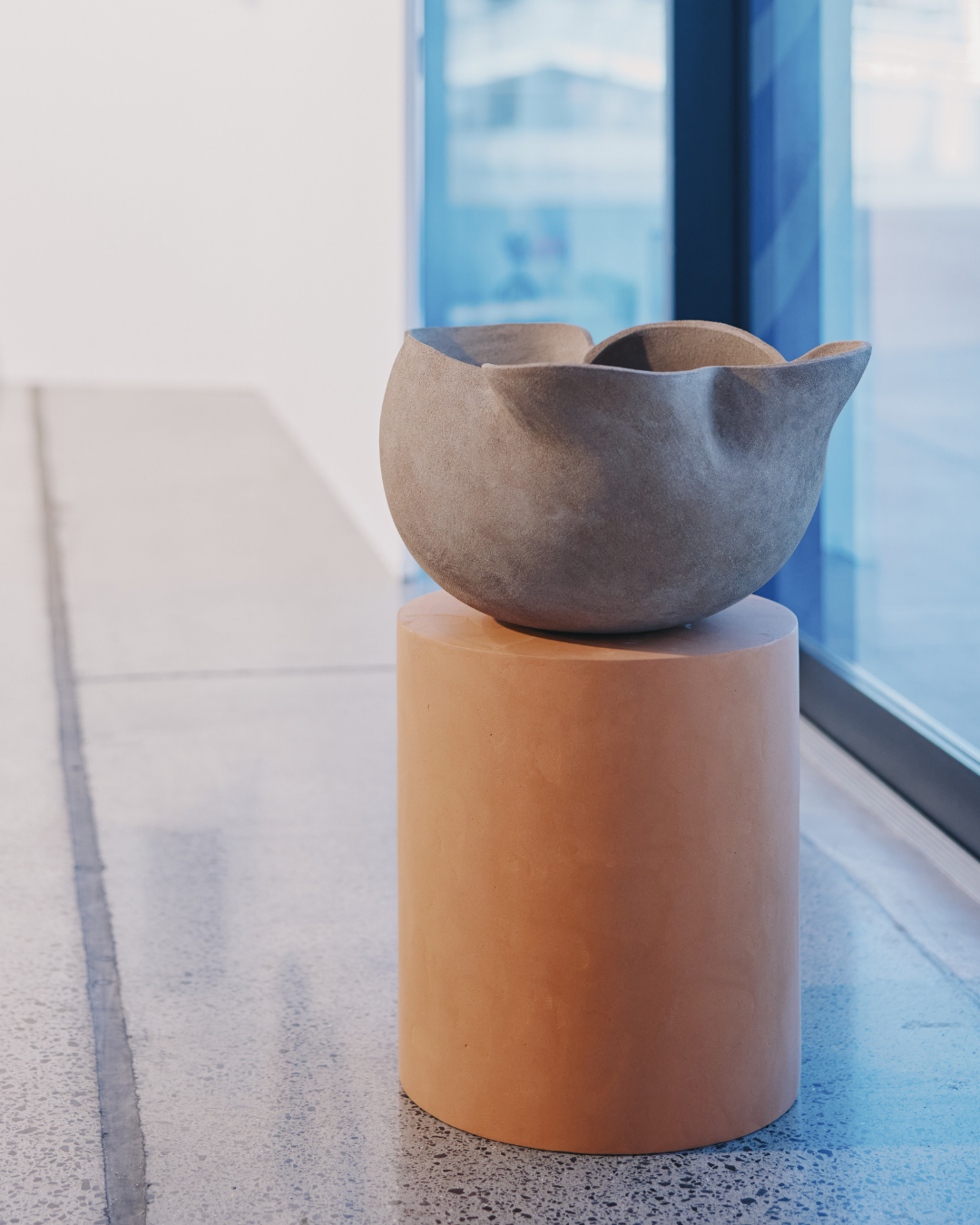
Dorothy Waetford and Graham Tipene, Puna Waihanga, 2026

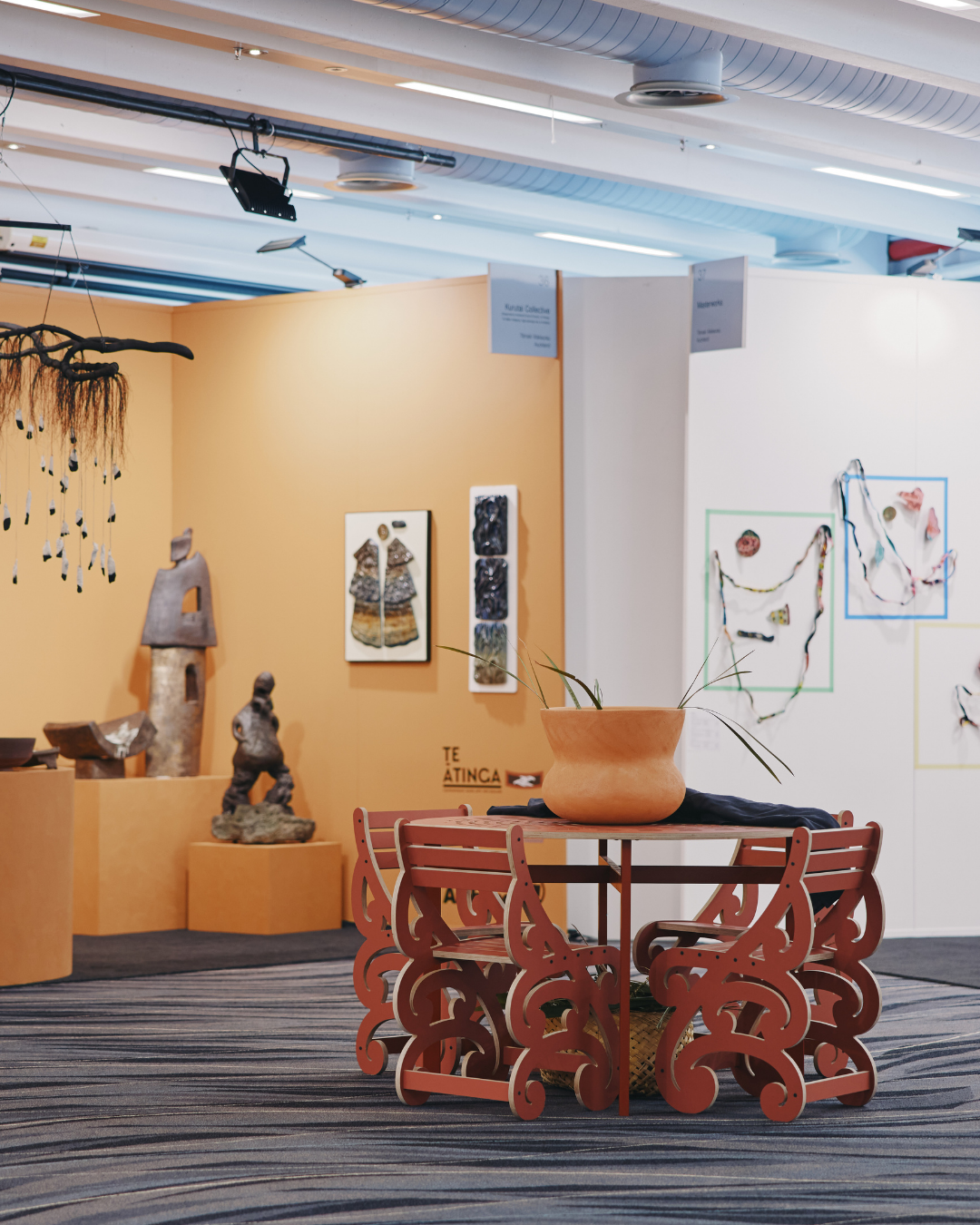
Shaped from earth and fire, this water vessel Puna Waihanga is imbued with the enduring symbol of tiki – a guardian figure representing life and ancestral ties – and stands as a threshold of connection at the entrance of the Aotearoa Art Fair. The work invites audiences to pause and acknowledge the powerful inner dimensions at play: the interconnectedness of the waters we all come from, the deep pool from which creativity flows, and mauri – the life force energy, that animates all things.  Mauri ora!

Dorothy Waetford and Graham Tipene are showing with The Kurutai Collective, Level 1, Booth 36

PRESENTED BY SEASON

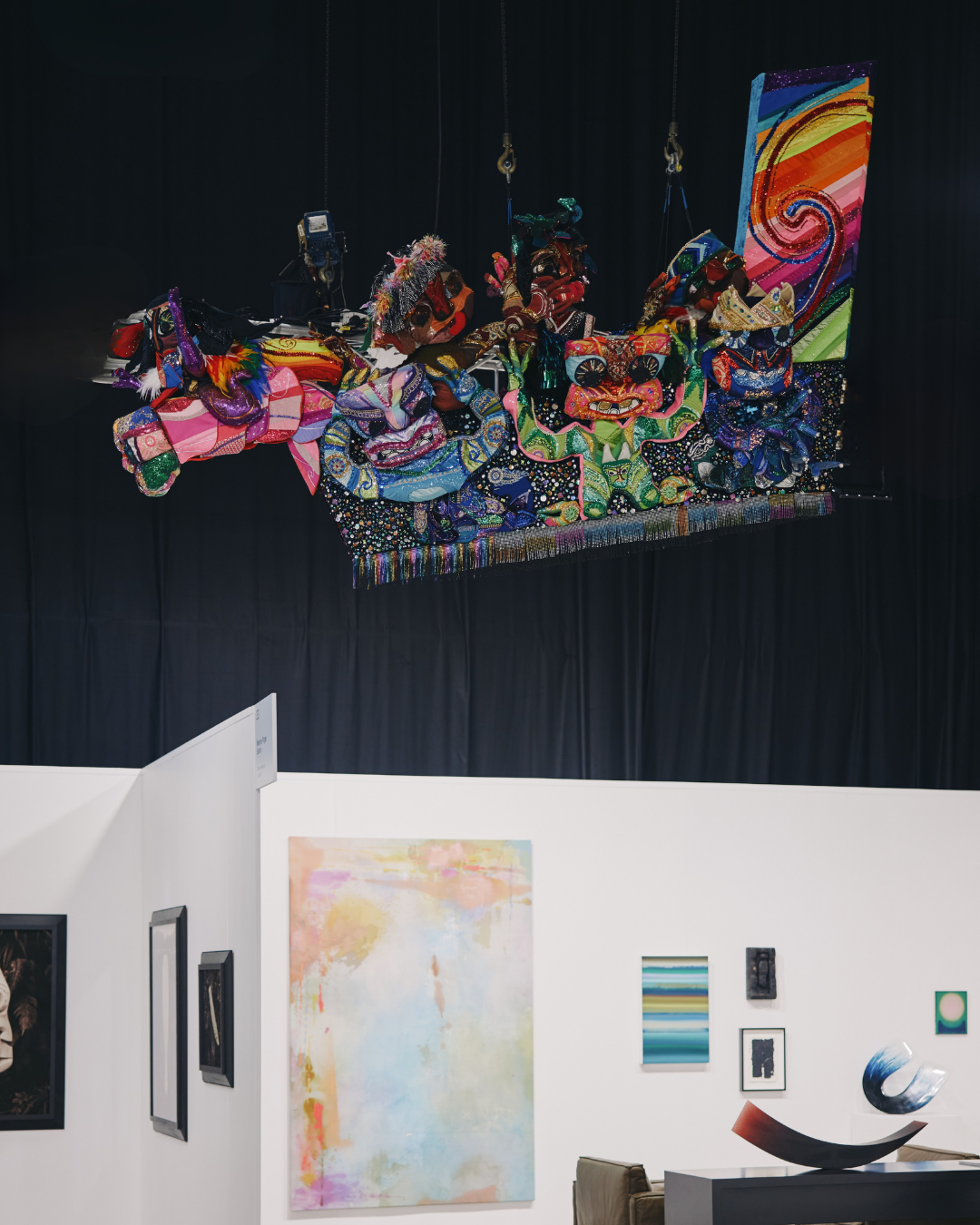
Maungarongo Te Kawa, Hine-Waiapu, 2025

This dazzling waka is a mihi to Hine-Waiapu, the powerful female taniwha who gives her name to the Waiapu awa in Te Tai Rāwhiti, the East Coast of the North Island. The Waiapu awa is the lifeblood of Ngāti Porou iwi and was once a thriving kai-gathering site. Now it is in crisis, having been devastated by erosion from deforestation and major weather events caused by climate change. As a result, large-scale sediment build-up has changed the depth and flow of the awa, impacting water-quality and the fish populations. Maungarongo Te Kawa’s joyful portrayal of Hine-Waiapu presents her aboard a bedazzled waka taua. She’s here to help protect the Waiapu awa from further human-induced deterioration, alongside her entourage of otherworldly attendants.

Maungarongo Te Kawa is represented by Season Gallery Level 1, Booth 35

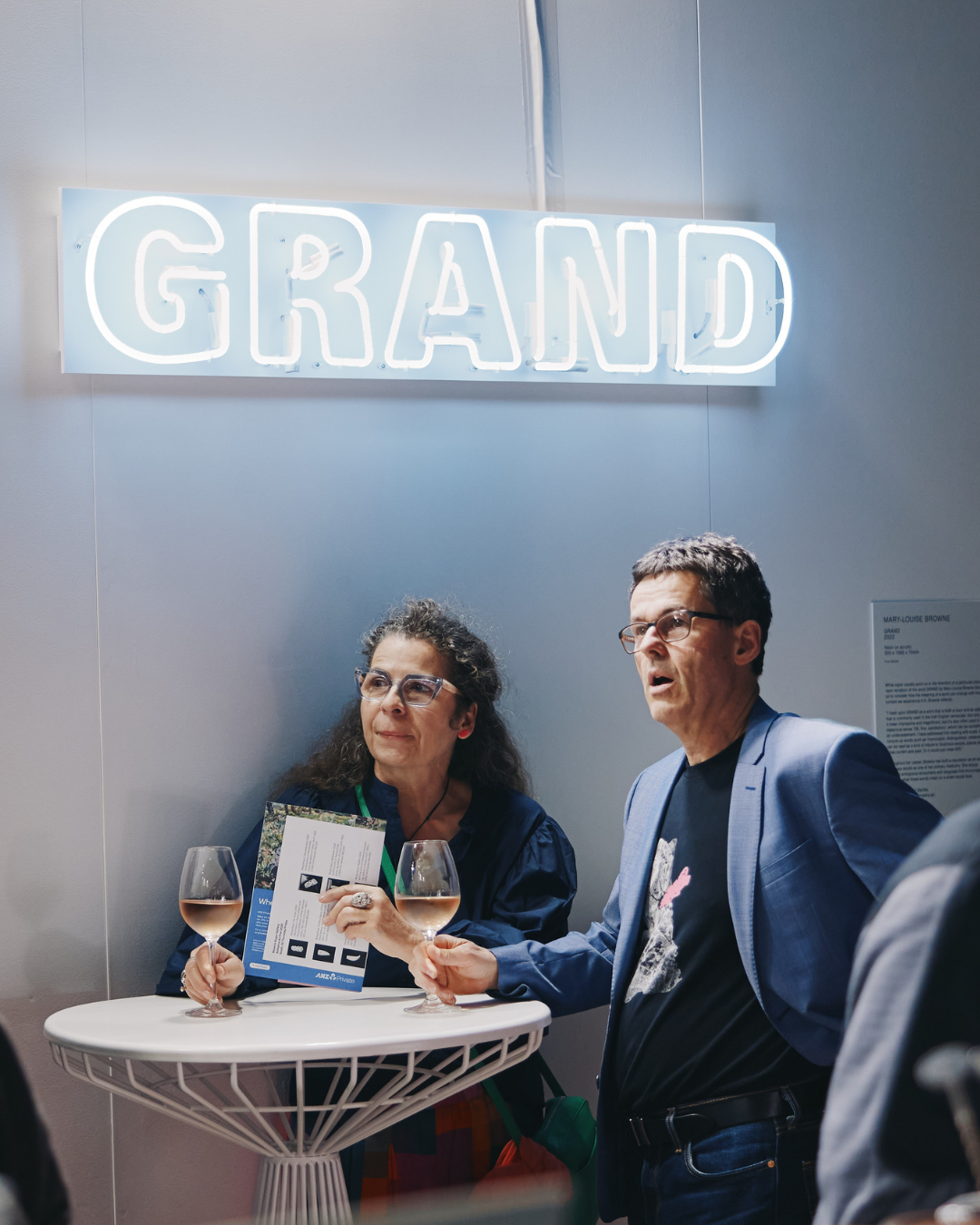
Mary-Louise Browne, GRAND, 2022

While signs usually point us in the direction of a particular place, this neon rendition of the word GRAND by Mary-Louise Browne beckons us to consider how the meaning of a word can change with the context we experience it in. Browne reflects:

“I fixed upon GRAND as a word that is both a noun and an adjective that is commonly used in the Irish English vernacular. Not only does it mean impressive and magnificent, but it’s also often used in the dialectical sense ‘OK, fine, satisfactory’, which  can be something of an understatement. I have addressed this reading with scale, to conjure up words such as ‘memorable, distinguished, celebrated’. It can be read as a kind of tribute to illustrious people, places and times current and past. Or it could just mean BIG.”

Throughout her career, Browne has built a reputation as an artist who uses words as one of her primary mediums. She enjoys creating ambiguous encounters with language that encourage us to consider what these words mean on a wider social level.