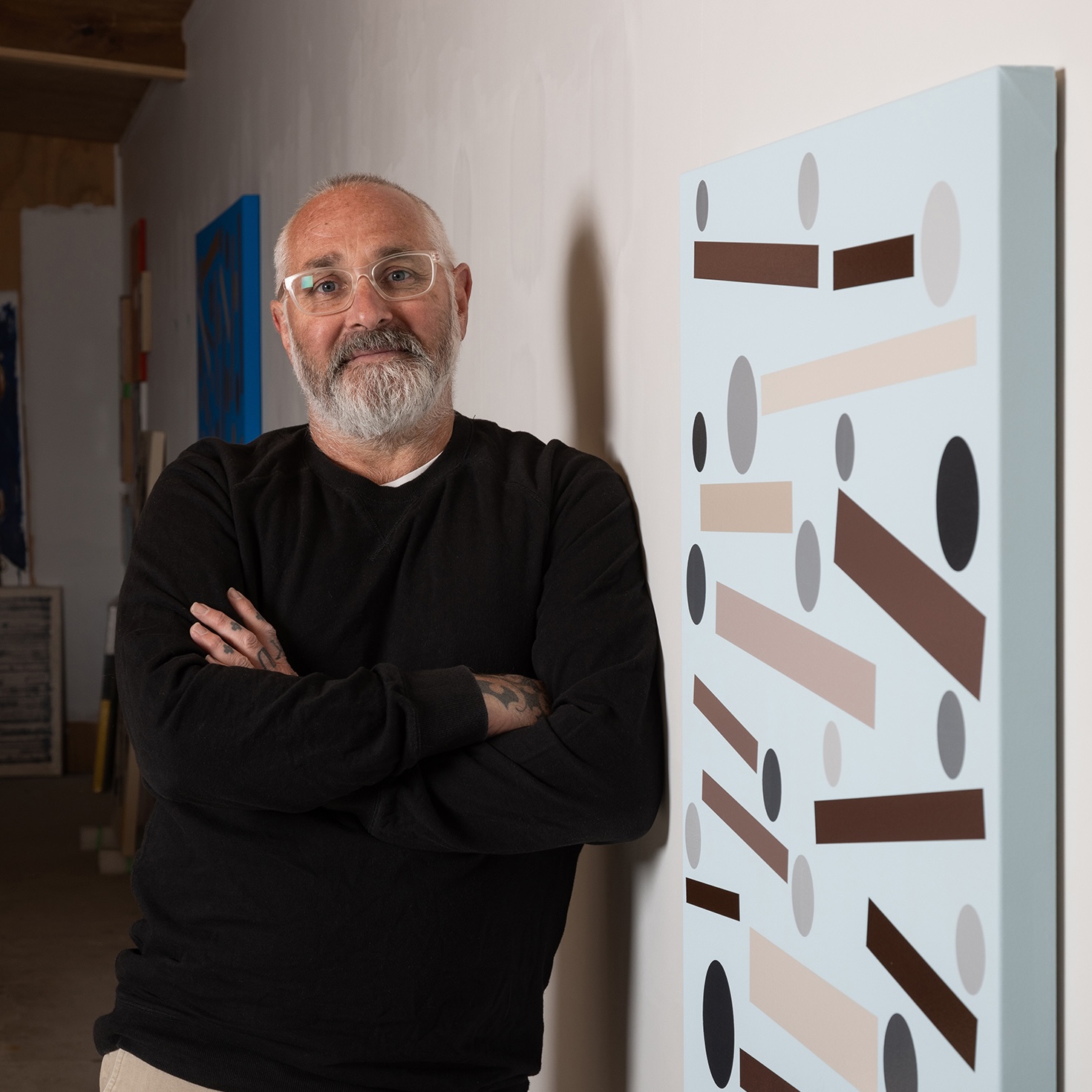
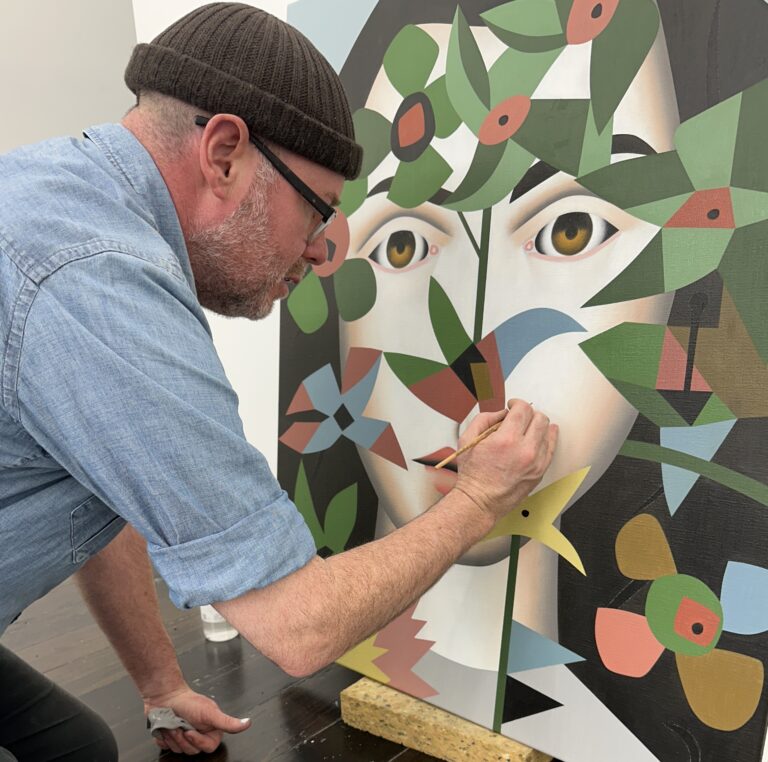
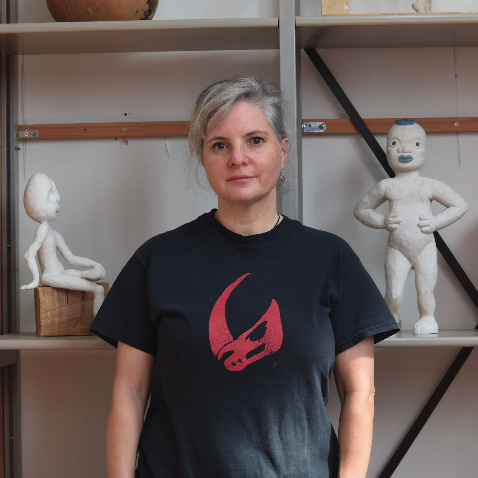
Wayne Youle (Ngā Puhi, Ngati Whakaeke, Ngāti Pākehā) moves between sculpture, painting and neon, using titles and humour as a way into heavy subjects like fatherhood, identity and whakapapa. On the occasion of Back in Five, his twenty-year survey at The Dowse Art Museum, we spoke with the artist about work ethic, the pull of wood, and continuing to make work with Ans Westra’s archive.
Your current exhibition at The Dowse Art Museum, Back in Five, covers twenty years of your sculptural practice. What was it like to see two decades of work together in one space, and did anything surprise you?
Exciting and humbling in equal measures… the most surprising thing was that the themes of most of the pieces align. There wasn’t a plan to have the works run thematic lines when Chelsea Nicholls (curator) and I started selecting the works. But it turned out that the themes didn’t really stray from whānau, culture, identity and frailty. We were able to place pieces so that certain works could talk to each other, bolster themes and force discussions. Surfaces could sing in spaces, the viewer could have quiet moments and be engulfed in the same show.
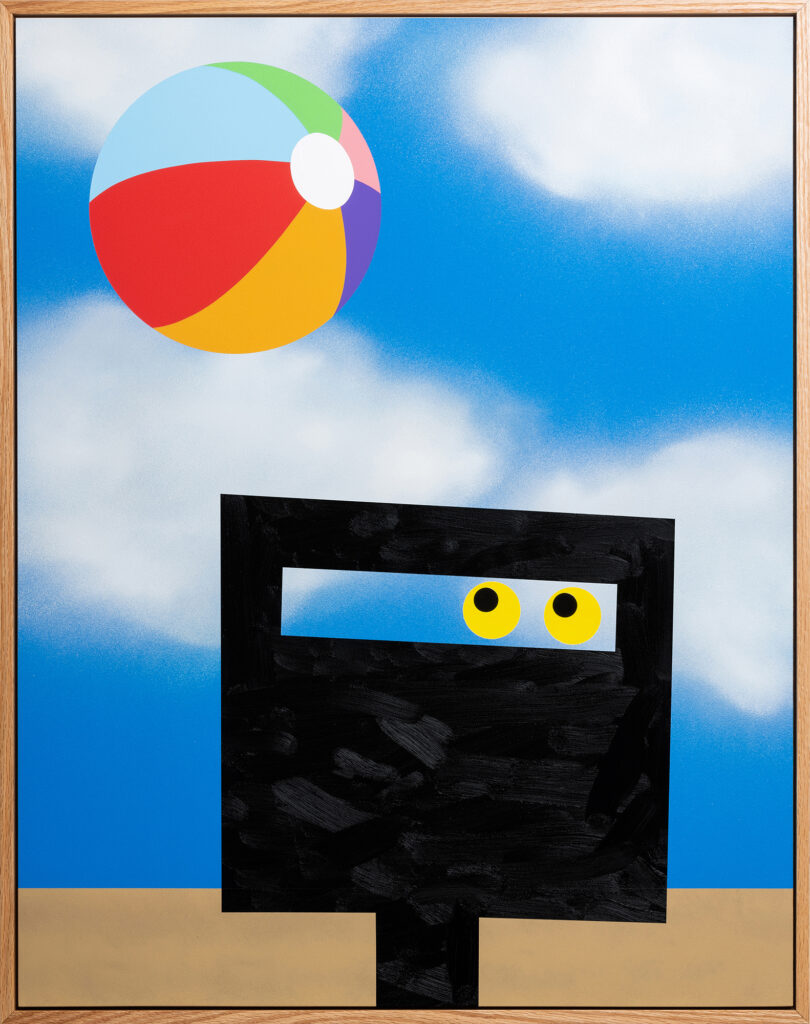
Wayne Youle, Day at the Beach, 2023. Courtesy of the artist and {Suite}.
Fatherhood and masculinity come up a lot in this exhibition. How has becoming a father changed what you make or why you make it?
It has had a profound change on my practice. First and foremost it makes you more aware of the time you have to “make” art. It makes you better with your time and it adds significantly to the reason WHY you make art. Whether rightly or wrongly, watching my father prepare for his job everyday with rhythm, routine, purpose and professionalism, without doubt rubbed off on me. Work ethic is important but it can be a curse too. Being an artist can be a lonely and selfish past time and sometimes parenting takes a backseat. I have made a number of works that address exactly that. In the Back in Five exhibition The Nurturer work is all about our fatherly short comings.
Your art is known for being subversive and often humorous. Why is humour such an important tool for you, especially when you’re dealing with serious subjects?
It’s an entry point, a starting point, a softener. You can’t just slap someone around the face with hard hitting ideas and heavy content if you want them to stick around and kōrero about said topics. A title can give the viewer clues, it can give them a opening line, a punch line even, and I use this approach a lot with my work. I recently spent 3 days adding to a work in the Back in Five exhibition where I had consistently wonderful conversations with visitors about certain work and themes. None were combative or dismissive, some didn’t agree of course with my thoughts as to why I made the work, but no one at all just cut the conversation off and every time they were drawn in by materials, juxtaposition and the title of the work. Sadly 99% of people commented on the fact that the themes I addressed 12 years ago in this specific work are still to this very day an “issue”.

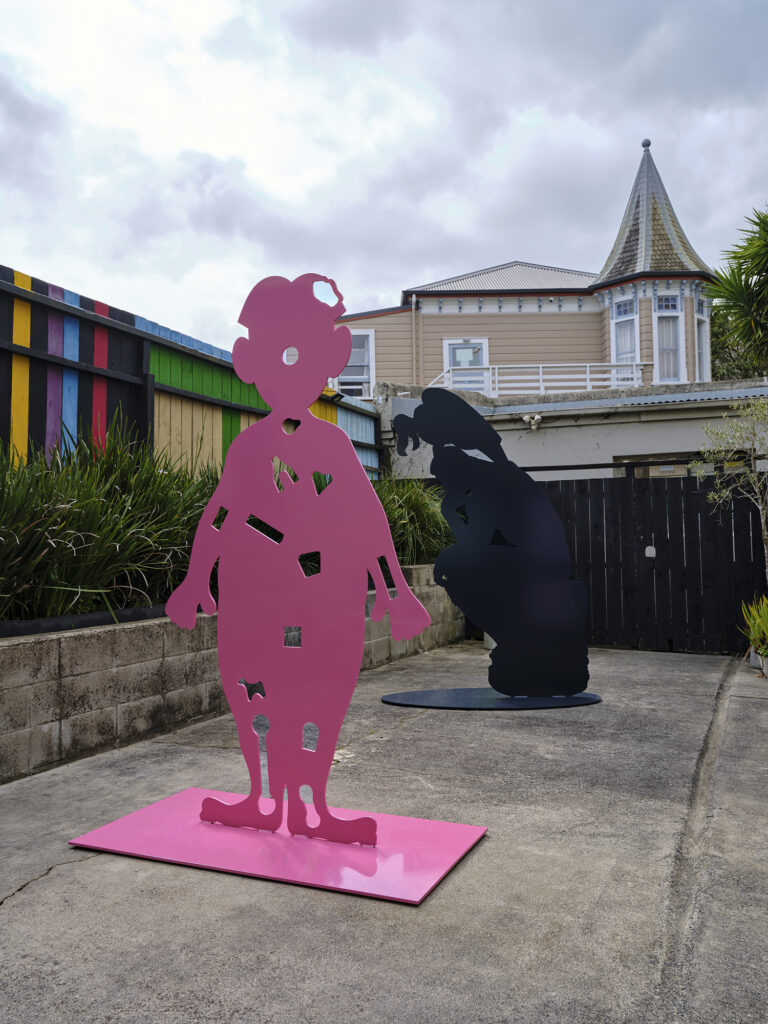
Wayne Youle, I was thinking about you just the other day… when suddenly (2026) and Major Operation (2026). Courtesy of the artist and {Suite}.
How does your bicultural whakapapa (Ngāpuhi, Ngāti Whakaeke, Ngāti Pākehā) shape the questions you ask in your work?
I get to play in both worlds, I get to ask the question of “where I fit” “how I fit” and even “should I fit” and how comfortable is that “fit”.
I look at our successes and our failures as Tangata Māori, I LOVE our Toi Māori, the points of reference and sense of place these artforms, patterns and surfaces give me. A licence to learn and respect it all is a blessing. But it always and will always come down to the people, and my whānau especially. My work is not consistently overtly Māori, it doesn’t always “appear” Māori, but it is never too far away, right at the ends of my fingertips…IN MY DNA.
How has your training as a designer impacted your art practice?
Again, it’s a work ethic thing when it comes to the way I was trained – with multiple jobs and deadlines at the same time there was no time to muck around. It might not be cool to think of art as a job but that is exactly how I treat it, studio everyday pretty much the same time always leaving the studio knowing what tomorrow brings. Aesthetically it gave me a love of colour and compositional rules, it taught me finish and a steady hand.

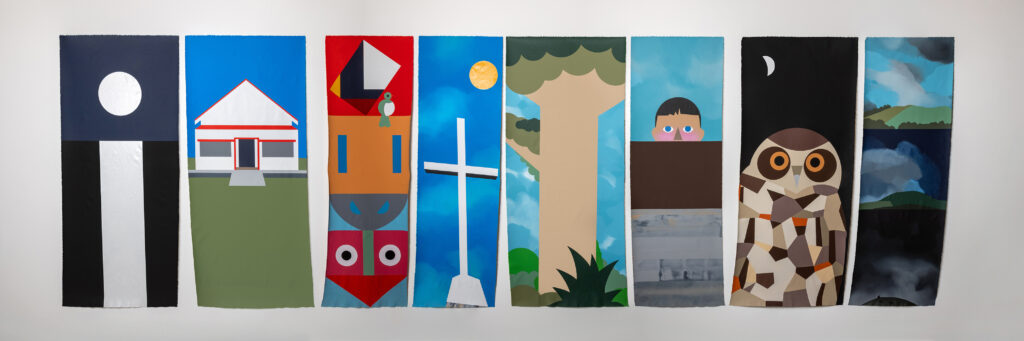
Wayne Youle, Te Tai Tokerau Chapters, 2025. Courtesy of the artist and {Suite}.
Your practice moves across sculpture, painting, neon, installation and more. How do you decide which medium an idea needs, and is there one you keep coming back to?
Idea first – get the material that will be the best and most interesting way of sharing that idea. Then learn how if I don’t have the skills, or work with others more talented than me to realise my drawings. Painting is an every day thing, if not every day certainly every week but I have always said that sculpture is the medium I love the most. It’s the medium I respect and fear the most and of all materials it’s wood that is my favourite to work with. I become obsessed with wood – I think that is the reason why even when I paint I still try to make all my own frames so there is some “craft” element to the work.
You were the McCahon House Artist in Residence in 2019. What did spending time in that space mean to you, and did McCahon’s legacy find its way into your work?
No distractions…until there were distractions, which meant I did longer hours. There weren’t the domestic commitments that my amazing partner Kelly had to now double up on at home. I could be in the studio for 12 – 15 hours a day and with that comes more work, more failures and more successes. It was the 100th birthday year too, so there was a lot on – I went to some wonderful homes and saw some outstanding McCahon works. I got to meet his daughter Victoria and talk about Colin as a man, a father – this was the part of his life that drove my application. As for his legacy and my mahi… that’s a tough one, I made some material choices that were McCahon-esk but I kept in my lane and worked with themes rather than aesthetics. I was, however, extremely tempted to have a crack at a waterfall painting.
You’ve made work with the late Ans Westra, whose photographs of Māori life, especially Washday at the Pa, are among the most celebrated and debated images in Aotearoa’s history. What was it like to put your work in conversation with hers, and what did you take away from that experience?
Well, I need to start with a shout out to David Alsop, Ans and my longtime dealer at {Suite}, who had the idea that she and I could work together and who continues to co-ordinate the whole thing with Ans. Getting to work with a friend that just happens to be one of Aotearoa’s greatest photographers, come on…. it’s like I said in the first line of the interview: humbling and exciting although I will add terrifying, especially when we first worked together. Ans gave me some of her silver gelatine prints and wanted me to collage them with hi tack sign writing vinyl. After a delay from me and a “hurry up” from her I got on a roll and we made some great work. The toughest part for me is being the one to add to what is already AMAZING, its about having both our voices heard. I get the luxury of adding to or changing the story Ans has already given us all.
I continue to collaborate with Ans, even though she is not here physically. Following the digitisation of the Westra archive I now work with her images digitally, and print them at scale. The debut of those works was an exhibition in New York last year, based on images she made in New York in 1987, and most recently at {Suite} a focused revisit of the 1965 school journal that Ans provided the photos for: ‘The Circus Comes to Town’.
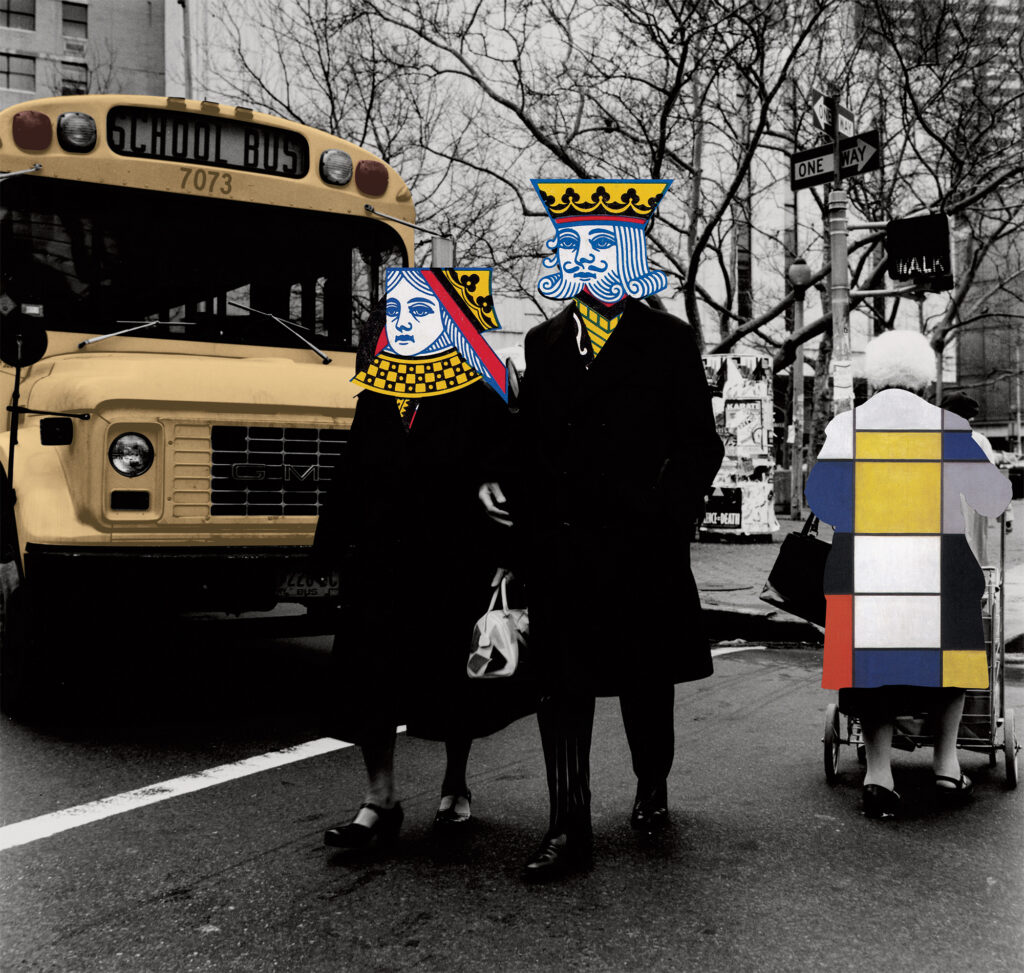
You’ve shown regularly with {Suite} at the Aotearoa Art Fair. What are some highlights from exhibiting there, and will your work feature at the 2027 fair?
It’s always a buzz to have work at the Art Fair – I’ve been involved with eight fairs with {Suite}, and in between times have helped out with the {Suite} presentations.
One of my highlights was showing the largest painting that I’ve ever made at the 2025 art fair. This was the major work in a body that I made about returning to Te Tai Tokerau. At nearly 6 metres long, we were glad the work went to a fantastic home!
This year I will be featuring in the Aotearoa Art Fair Sculpture Trail, presented by Viaduct Harbour. I’m also planning on sending some new work up to {Suite} ahead of the Fair, so that will be there when people visit {Suite} in Ponsonby.