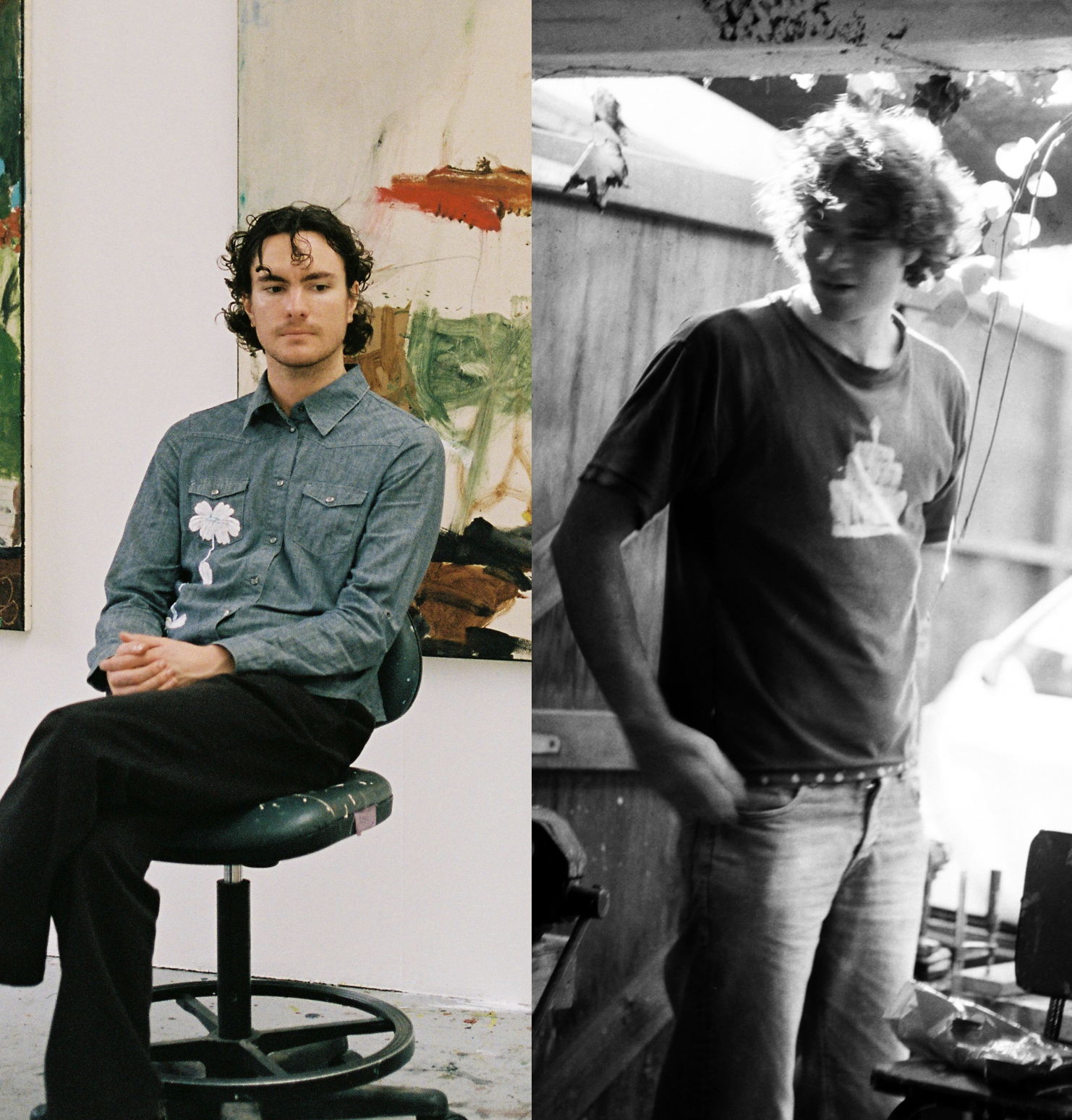
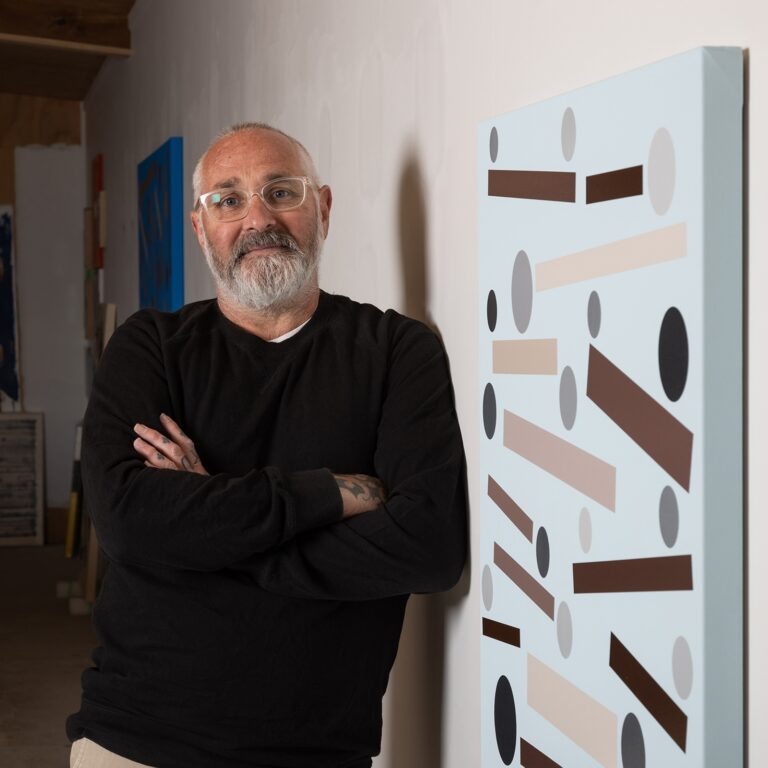
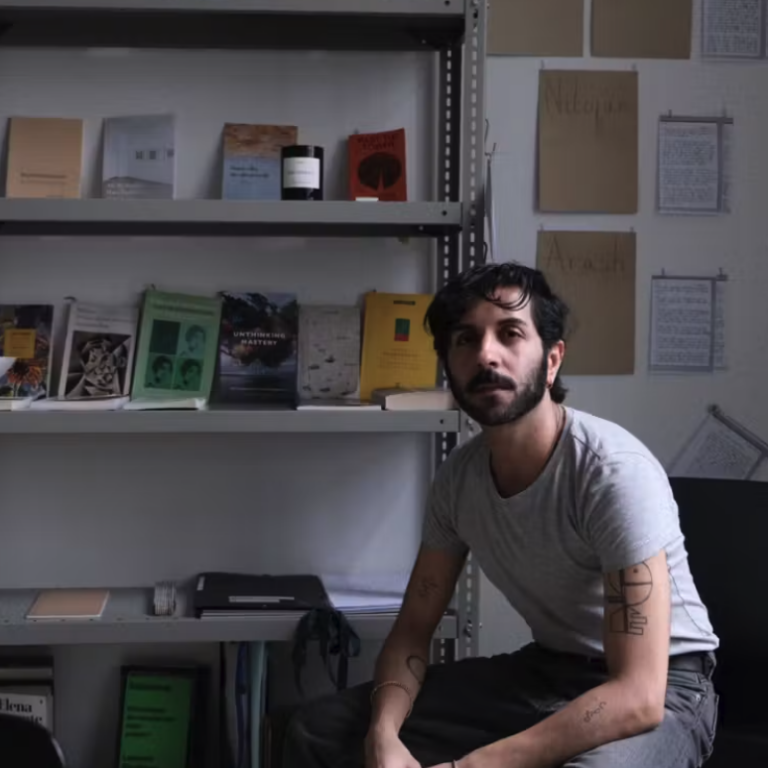
Household objects, fleeting memories and the unpredictable nature of making come together in Freeway, an exhibition by Christian Dimick and Joshua Taylor at Grace, Tāmaki Makaurau Auckland.
Working across painting and ceramics, Dimick and Taylor approach their materials in different ways, but share an interest in ambiguity, domesticity and the stories objects can hold. We spoke with the artists about working through instinct, knowing when a work is finished and the connections they find in each other’s practices.
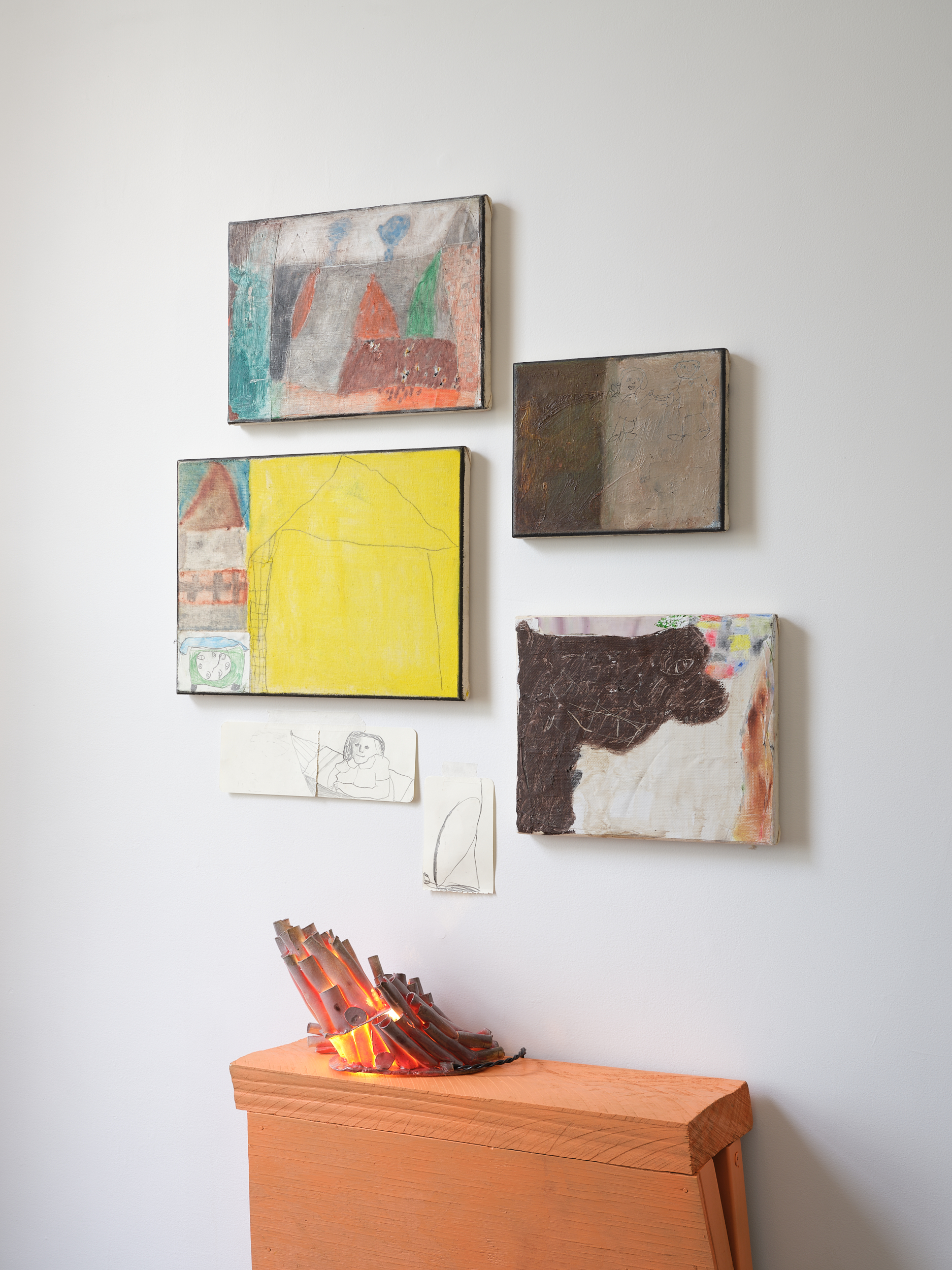 Freeway, 2026 (installation)
You’ve described your studio as a space where it’s safe to be messy, confused and physical with your work. How important is that openness to your process, and what happens when you try not to control where a painting might go?
CD: A feeling of openness is essential when approaching my work in the studio. To keep that space feeling fresh and confusing, I’m always engaging with new materials I do not fully understand, as well as irregular painterly actions. There is a constant falling in and out of conscious and unconscious passages of working-time in the studio, and hopefully, this is evident in the work. It would be misleading to say the work comes from a purely instinctual place or that it’s all about a lack of control. It is about a balance of presence and absence.
 Christian Dimick, When there is no stream to swim up, 2026, Oil paint, pencil, fibre ground on canvas, 200 x 150
 Christian Dimick, When there is no stream to swim up, 2026, Oil paint, pencil, fibre ground on canvas, 200 x 150
You describe your approach to making as physical and instinctive, often working through rapid trial and error across multiple pieces at once. How do you know when something is working, when does something stop being an experiment and become a finished work?
JT: When it’s working, I think the process is giving back some of the energy I’m putting in, because something new and exciting is happening. When I’m finished and happy with a work, I have the sense I’ve done the best with what I had.
Joshua Taylor, Bank, 2026 (Installation), Ceramic, Dimensions variable
 Joshua Taylor, Bank, 2026 (Installation), Ceramic, Dimensions variable
What do you see in each other’s work, and are there any unexpected connections between your practices despite the differences in materials and processes?
CD: I feel there are strong references to ideas of domesticity, impulse and maybe animism in Josh’s work. I also think about these things in the studio and feel our work connects somehow through these shared interests.
JT: Christian’s works can be so charged, chaotic and bristling with life. And other times gentle and really sensitive. It seems like he wants to try all the different flavours, but not in an overly shocking or extreme way. I think there’s a similarity between our practices in that way, where we enjoy this variety.
Christian Dimick, The Spilt, 2026, Oil paint, acrylic, pencil, collage on canvas, 1600 x 1300
 Christian Dimick, The Spilt, 2026, Oil paint, acrylic, pencil, collage on canvas, 1600 x 1300
Joshua’s work often results in objects that can be handled and used, while your paintings invite a different kind of engagement. When you encounter an object made by another artist, what makes you want to spend time with it?
CD: Yes, Josh’s work has an immediate functionality and sense of play to it, in such an incredible way. But he also has this beautiful way of working with ceramics where he can make an object feel as if it’s unfolding or materialising in front of you. I like to spend time with artworks that burn slowly or reveal slowly. Josh’s work does this beautifully.
Christian’s paintings can move between the recognisable and the ambiguous, leaving room for different interpretations. Do you think about ambiguity in your own work, or is your approach more about discovering a form through the act of making?
JT: Yeah, this is definitely something I think about. Similar to Christian, I like to initiate the process in different ways. Sometimes this is discovering a form, other times it is a more direct pathway. Generally, a sense of resolution comes from finding the right balance of what is recognisable and ambiguous. If the objects form part of a group, this can also affect things, as the way the works are going to operate collectively can really shift what’s happening.
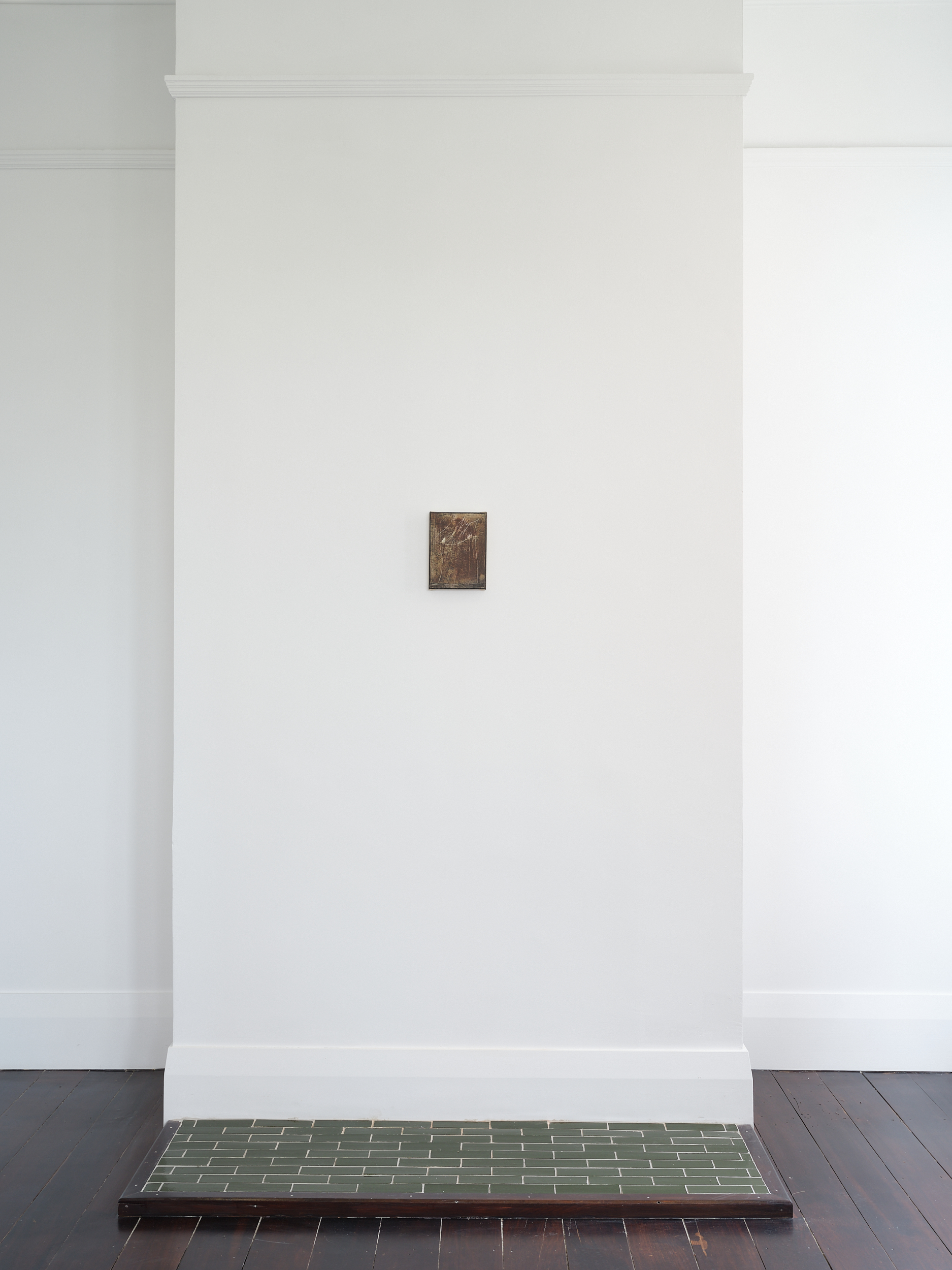
Christian Dimick, When there is no stream to swim up, 2026 (installation), Oil paint, pencil, fibre ground on canvas, 200 x 150
Personal memories and everyday experiences sometimes find their way into your paintings, while your titles can be playful and unexpected. How do these fragments of life enter your work, and do you think about how much of the story a viewer needs to know?
CD: Yeah, there is a mixing of memory and pulling in the present in my work. I like writing down little things I hear or odd thoughts I am having. I also like saving photos from when I walk. These things act as little springboards to start the painting process in the studio. For example, the painting of the little tree we used as a promotional image for the show. I found that on a walk and found it deeply inspiring.
How much a viewer needs to know about the content of my work is definitely something I think about. Titles can be useful here to prompt or even misguide the viewer. I am interested in the narrative a viewer may bring, that is of their own making. I like a kind of art that doesn’t do all the thinking for you.
Your work often takes the form of familiar household objects, including lamps, clocks, bowls and teapots. What interests you about making things that have a practical function, and how do you approach the relationship between usefulness and sculptural form?
JT: I think I’m interested in how household things tell stories and hold connections to people. Pottery is so old and can even express what life may have looked like long ago. It helps us image the past. It’s an accessibility thing as well. I like how these are things everybody knows how to engage with.
For the work in Freeway I went a slightly different direction. I was at home while I was working on the show and my dad was working on a lecture called Harmonies of the Universe about how music relates to space. I was thinking about how energy is never created or destroyed, it just transforms, so the work ended up more abstract and less in the domestic realm.
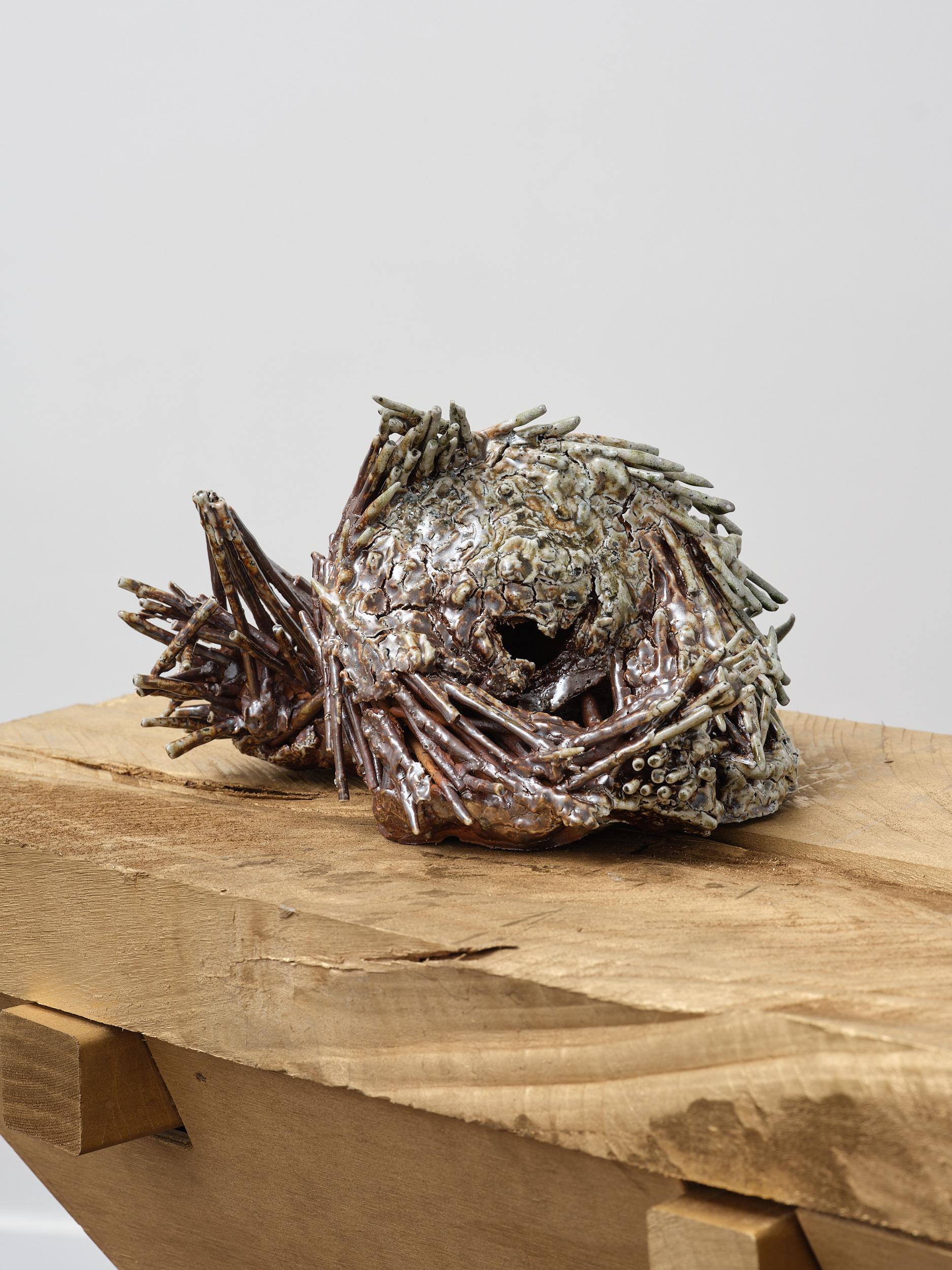
Joshua Taylor, Shack, 2026, Ceramic, Dimensions variable
How has working with Grace shaped your practices, and what does it mean to be exhibiting work in Tāmaki Makaurau, within Auckland’s wider contemporary art scene?
CD: Working alongside Emil and the team at Grace is the best, and I really appreciate the gallery’s focus on early career practices. I have had so many opportunities to show work in ways I never would have thought possible, such as at the Melbourne Art Fair earlier in the year.
I think showing work in Tāmaki Makaurau currently means being surrounded by a lot of driven and very thoughtful artists. I have a studio in Anzac Ave alongside so many incredible artists, so it’s an art scene I feel lucky to be part of.
JT: This is my first time working with Grace and also showing in Tāmaki Makaurau. The space at Rationalist House is impressive, and its domestic tone suits my work quite well I think. Grace has had a great programme of shows recently, with artists I really admire, so I’m happy to be a part of it. There seems to be a lot of good art being made in Auckland at the moment. There’s also a good variety of new spaces. It feels sort of competitive but also supportive, which I think is a really good thing.
Christian Dimick & Joshua Taylor
Freeway
Until 28 November
graceaotearoa.net
@grace_aotearoa