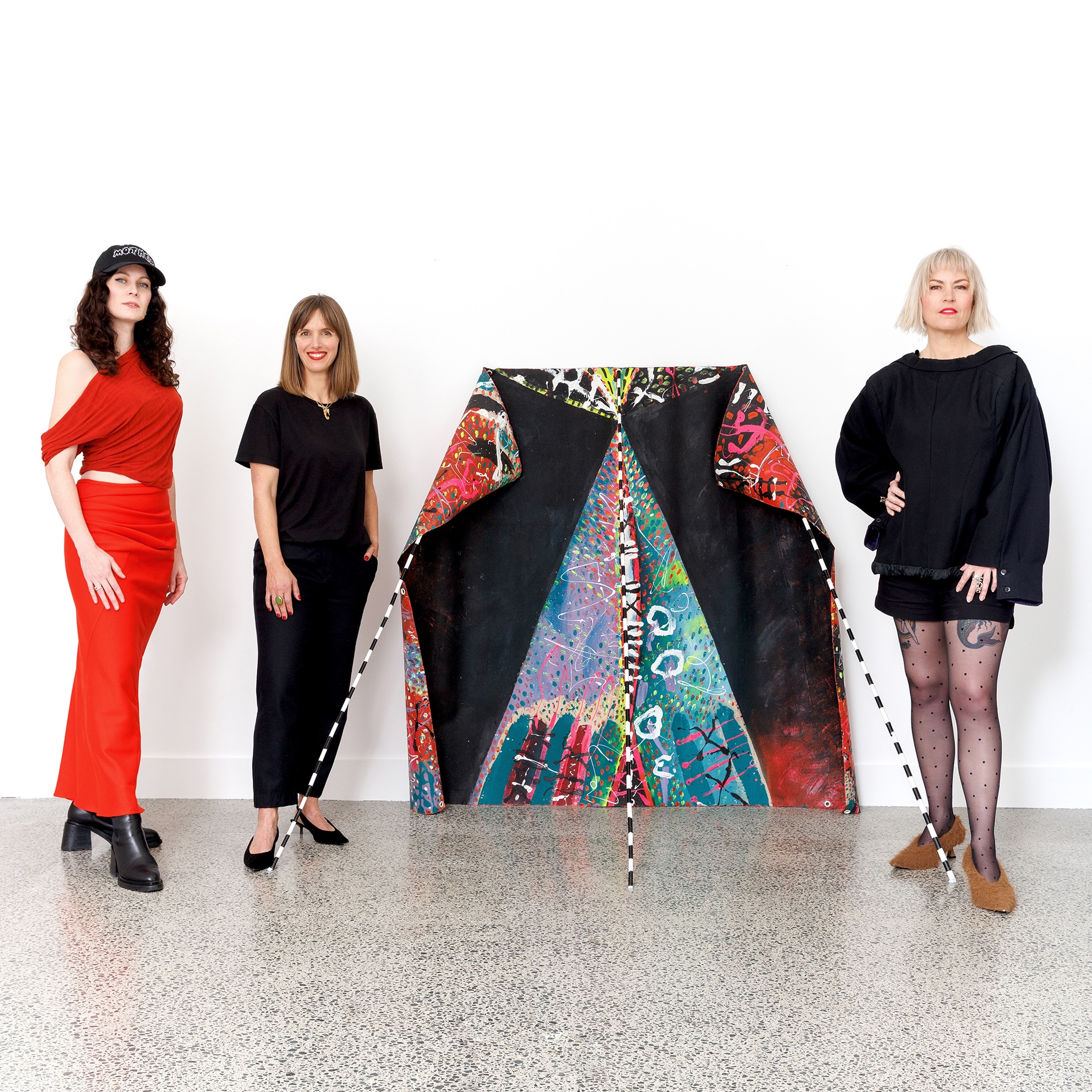
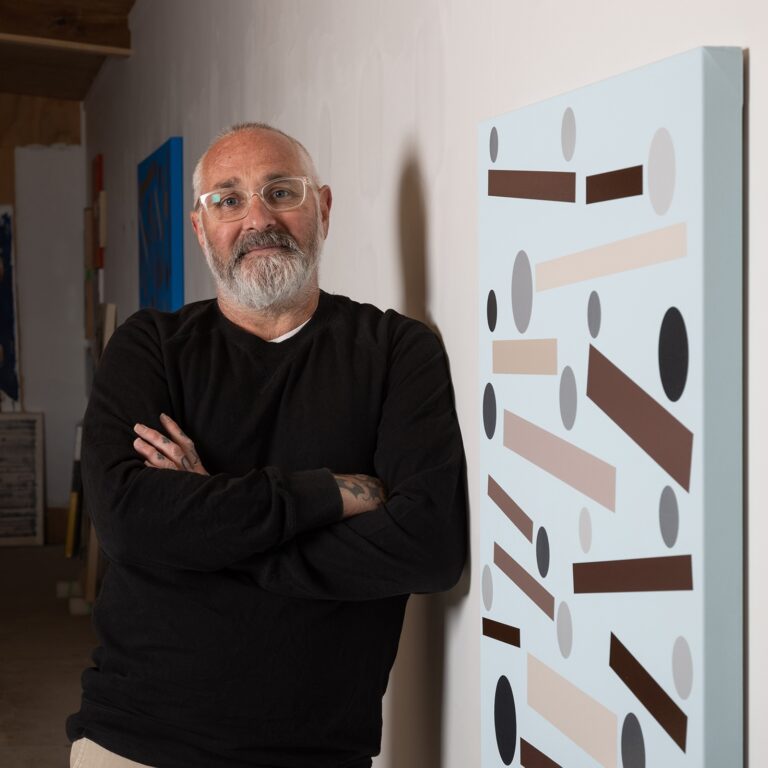
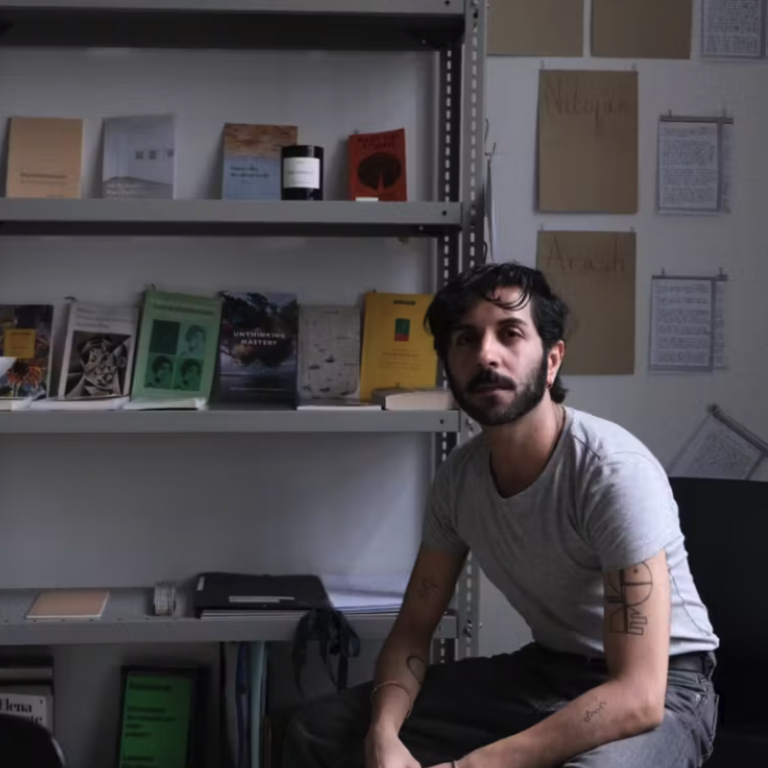
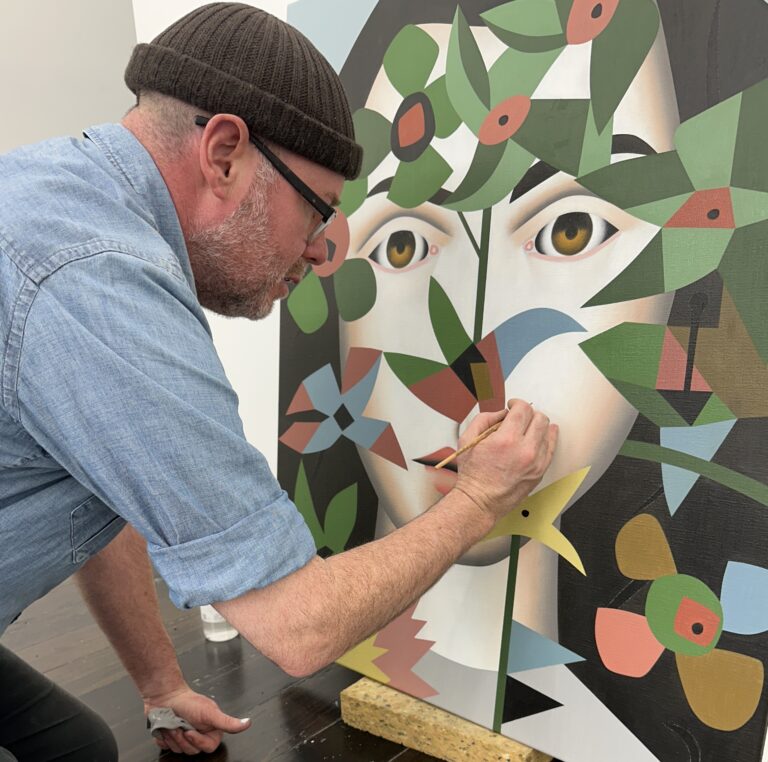
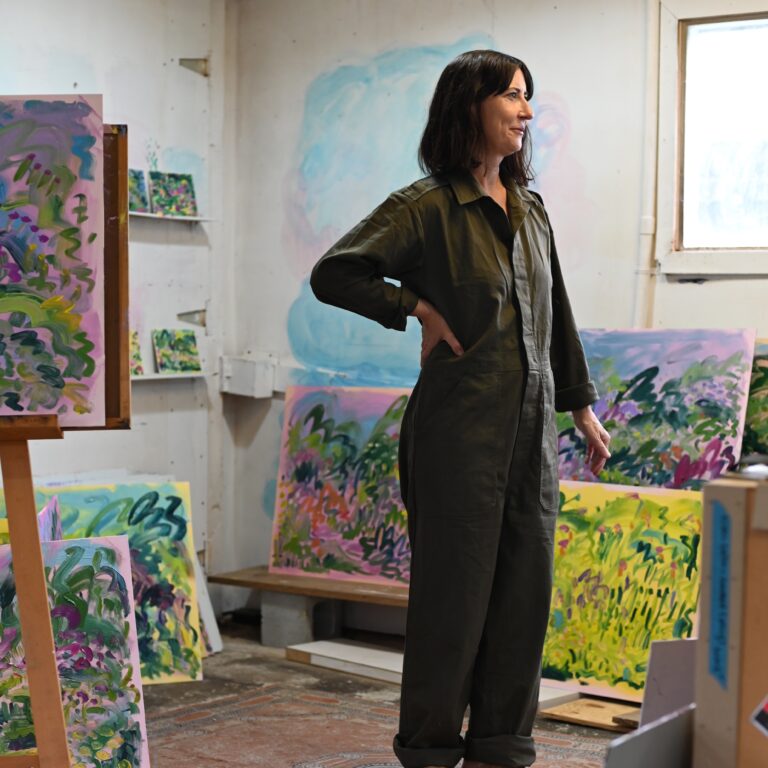
SANDERSON & mothermother present an intergenerational exhibition investigating mother-centred frameworks and matriarchal futures. We spoke with Lydia Cowpertwait (SANDERSON), Nat Tozer and Michelle Reid (mothermother) about collective curation and why community beats competition.
Sanderson has opened its doors to MOTHERMOTHER, a collaborative project developed with an external collective. What made this the right exhibition to host, and what drew you to the partnership?
Lydia: As a mum and director of a gallery, I have seen how transformative it can be when people are supported and given the confidence to be seen. To me, mothering is about nurturing potential, providing opportunities and helping others to flourish. I was naturally drawn to the mothermother collective because of their kaupapa, their ethos. Put simply – mothermother supports those who may not normally get support. Whether it’s emerging artists, women artists, queer artists or artists that feel like they don’t ‘fit in the box’. These values are deeply important to me and something I want to continue to foster at Sanderson so I wanted to collaborate and share their approach with our audience.
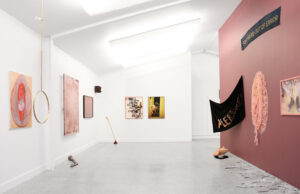
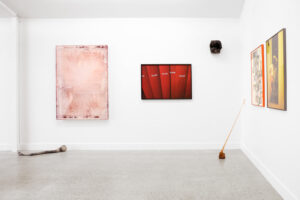
MOTHERMOTHER (Installation View), 2026

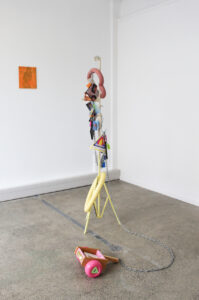
Elise McDermott, Big Chain, 2026
As a gallery known for championing contemporary practice, what opportunities does a collaborative, collective-led exhibition like MOTHERMOTHER create for both the artists and your audience?
Lydia: One of the greatest opportunities a collaborative exhibition like MOTHERMOTHER creates is the chance to present a much broader and more layered conversation than a traditional exhibition might allow. Rather than experiencing an individual artist’s work in isolation, audiences are being invited into a dialogue between diverse voices, generations and varied creative practices. I think that creates a rich and immersive experience where people can make unexpected connections between works and ideas.
For the artists, it offers something equally valuable. They become part of a collective conversation, where emerging and established practitioners sit alongside one another, each strengthening the impact of the others’ work. This creates visibility, encourages collaboration and fosters a sense of community rather than competition. As a commercial gallery, it’s a privilege to support the ecosystem and platforms like mothermother. I think contemporary art thrives when artists feel supported to take risks, share ideas and engage with audiences in meaningful ways like this.

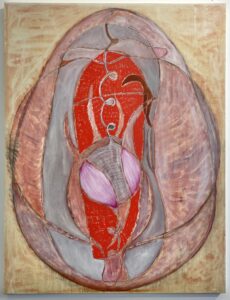
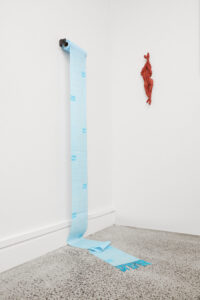
Michelle Reid, Kernel, 2025 – 2026
Hosting an exhibition of this scale brings together artists from multiple generations and communities. How does MOTHERMOTHER reflect the kind of conversations you want Sanderson to foster?
Lydia: MOTHERMOTHER creates space for complexity, generosity and different ways of seeing the world. Bringing together artists from multiple generations, backgrounds and lived experiences, it shows that there is no single story of motherhood, care or identity. Instead, it celebrates the richness that comes from many perspectives sitting alongside one another. For me, galleries should be places where people feel welcome to ask questions, challenge assumptions and discover concepts they may not have encountered before. I think the MOTHERMOTHER exhibition does exactly that – It invites conversations about creativity, kinship, gender and belonging, while remaining deeply rooted in the artists’ own experiences. I hope visitors leave feeling that contemporary art can be both intellectually engaging and emotionally accessible, and that Sanderson Gallery is a place where conversations like this happen with curiosity, openness and respect.

MOTHERMOTHER (Installation View), 2026
The exhibition explores themes ranging from ecology and kinship to grief, identity and matriarchal futures. Was there a particular work or pairing that crystallised the exhibition’s central ideas for you?
Nat: Melanie Ross’ work quietly grapples with aspects of reproductive labour. Formally, it is a highly dynamic work: it can go on the floor, wall, or in space; it can be oriented up or down; it is both delicate and metal, elemental. Conceptually, it has evolved through several titles: first Feminist Wave, then Dirty Leak and Free Pour, to Undercurrent. Materially, it is made from cast-off, discarded foundry remnants that Ross melted down—her way of nurturing and caring, to reposition the material into the world as an artwork. All these complex aspects feel like real life to me: the way, as women, we must adapt to survive, and the way, as mothers, we need to be ‘several’—identities, ideas, and personas—to others, whilst we move into motherhood and must remake ourselves.
Michelle: During curatorial discussions small pairings of work began to harmonise between each other through material refinement, artist practises, and thematic conversations. The more tender, organic and ephemeral moments for me are at the start of the show between Esther Stone’s Compulsion, Michelle Mayn’s Kuruwaka and Sack, and Sarah Smuts-Kennedy’s inquiry into divination through her Eclipse Portal. These artists have found ways to dedicate their wider artistic practices to ecological regeneration, whanau, and whakapapa, reaching far beyond gallery spaces by working with ecology and care. These artists engage in material relationships specific to Aotearoa in a nurturing way, through both material and immaterial possibilities.

Robyn Walton, Make Work, 2024-2026
Co-curating an exhibition of this scale requires balancing many voices. How did your own perspectives complement one another, and what did each of you bring to the development of MOTHERMOTHER?
Nat: mothermother has been going for seven years now; we have been in several art fairs and held 35 exhibitions, but this exhibition is unique as we addressed the challenging theme of motherhood itself. Yes, we have performed mothering through the core functions of the mothermother project, but we have not portrayed mothering before, and the responsibility of this felt very heavy. What if we got it wrong, weren’t feminist enough, or missed something important? What if we failed?! But, that is mothering. It is messy, imperfect, always out of time, always out of place, and certainly includes mistakes and failure. What made it possible was sharing the weight of it all. Michelle and Lydia brought the safety that comes with collectivity, and we turned to our manifesto and looked to those who have come before us.
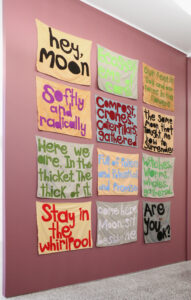
Michelle: An unexpected moment during curatorial decision making was recognising the borderline absurdity during caregiving that crosses between labour, humour, domesticity, sexuality, broken hearts, and unexplainable misfortunate events. We loved the pairings of Robyn Walton’s Make Work together with Caitlyn Devoy’s Canons, Hanna Shim’s cushion Mistake, Natalie Pryor’s A Long Thought, and smattering the surrounding wall with Aria McInnes Napkin Chicken’s. Nearby are Jacquelyn Fahey’s That Is Life, Judy Darragh’s No Shit, and Layla Rudneva Mackay’s Worry Green. These artist voices contributed to enriching the experiences of mothering rather than romanticising or solely depicting it. Intergenerational conversations can be thoughtful and invigorating this way.

MOTHERMOTHER (Installation View), 2026
What do you hope audiences carry with them after experiencing MOTHERMOTHER, particularly at a time when conversations around care, community and intergenerational connection feel increasingly urgent?
Nat: Middle-aged emerging mutha-artists are hot af. Support us!!
Michelle: Mothermother has been considering modes of sustainable practice for some time including being on the receiving end of funds and spaces that are so squeezed they need reform or dematerialise. Artists are familiar with proposal sending being closer to a magical Hogwart’s carrier post by owls than a real possibility in recent times. It feels better to synchronise, it’s far warmer to work with a community than individually. We are grateful to Lydia for opening up Sanderson and contributing to alternative ways of working in her gallery.

Sophie Bannan, Untitled, 2019

Learn more about the exhibition here.
sanderson.co.nz
mothermother.co.nz
@sandersoncontemporaryart
@mothermother_archive