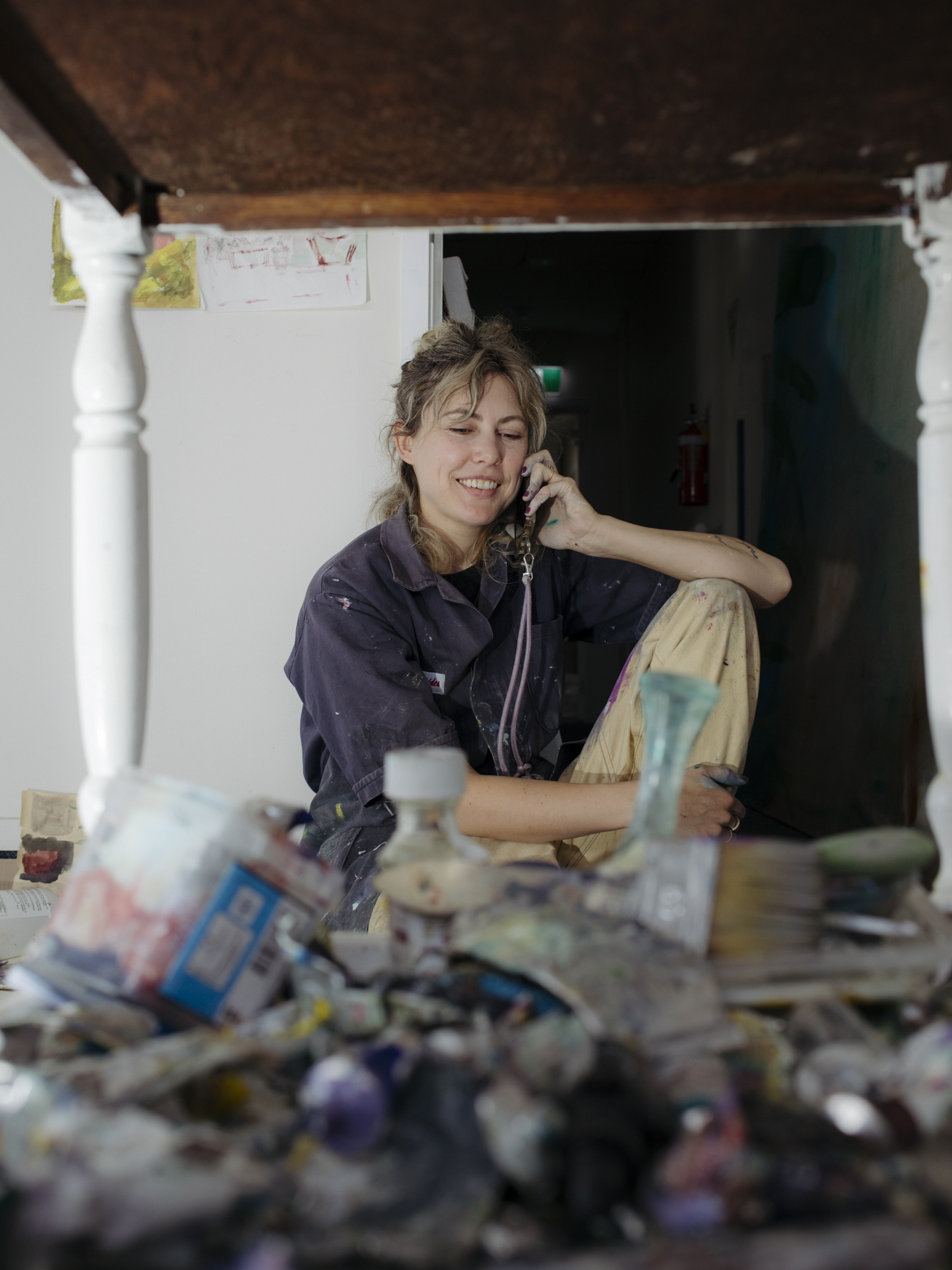
Painter Milli Jannides draws on fiction, memory and imagination in her practice. In her own words, she often begins with fragments of text, usually fiction, and allows the painting to develop through the process of making.
In Fool for You, showing at Robert Heald Gallery in Te Whanganui-a-Tara, Wellington, Jannides returns to familiar themes of death, desire and day-to-day life. We spoke with the artist about her approach to painting, the role of fiction in her work, and the modernist painters who continue to influence her practice.
You’ve recently opened a new show at Robert Heald Gallery in Wellington. What are you exploring in this exhibition – any new themes, materials, or processes?
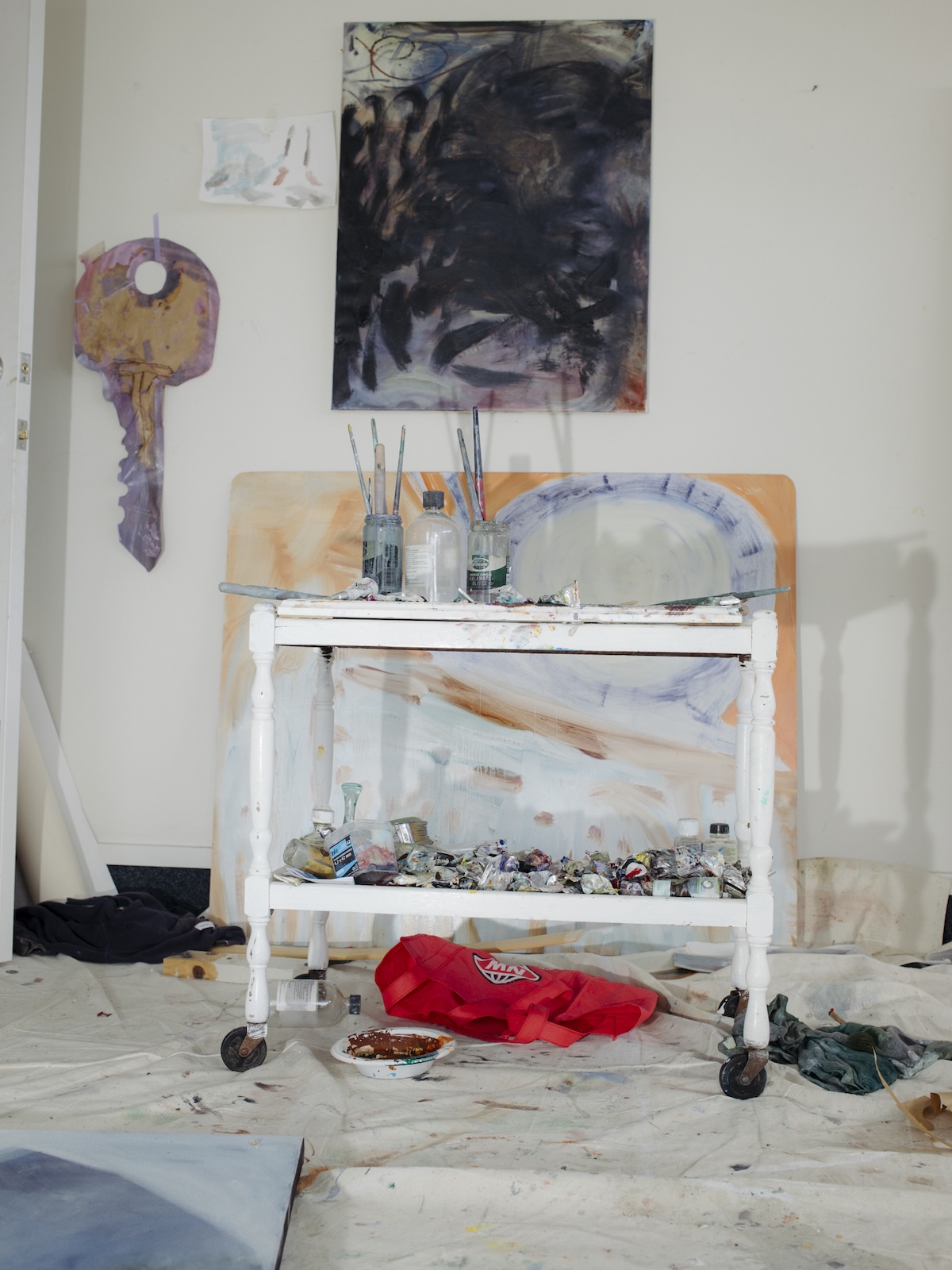
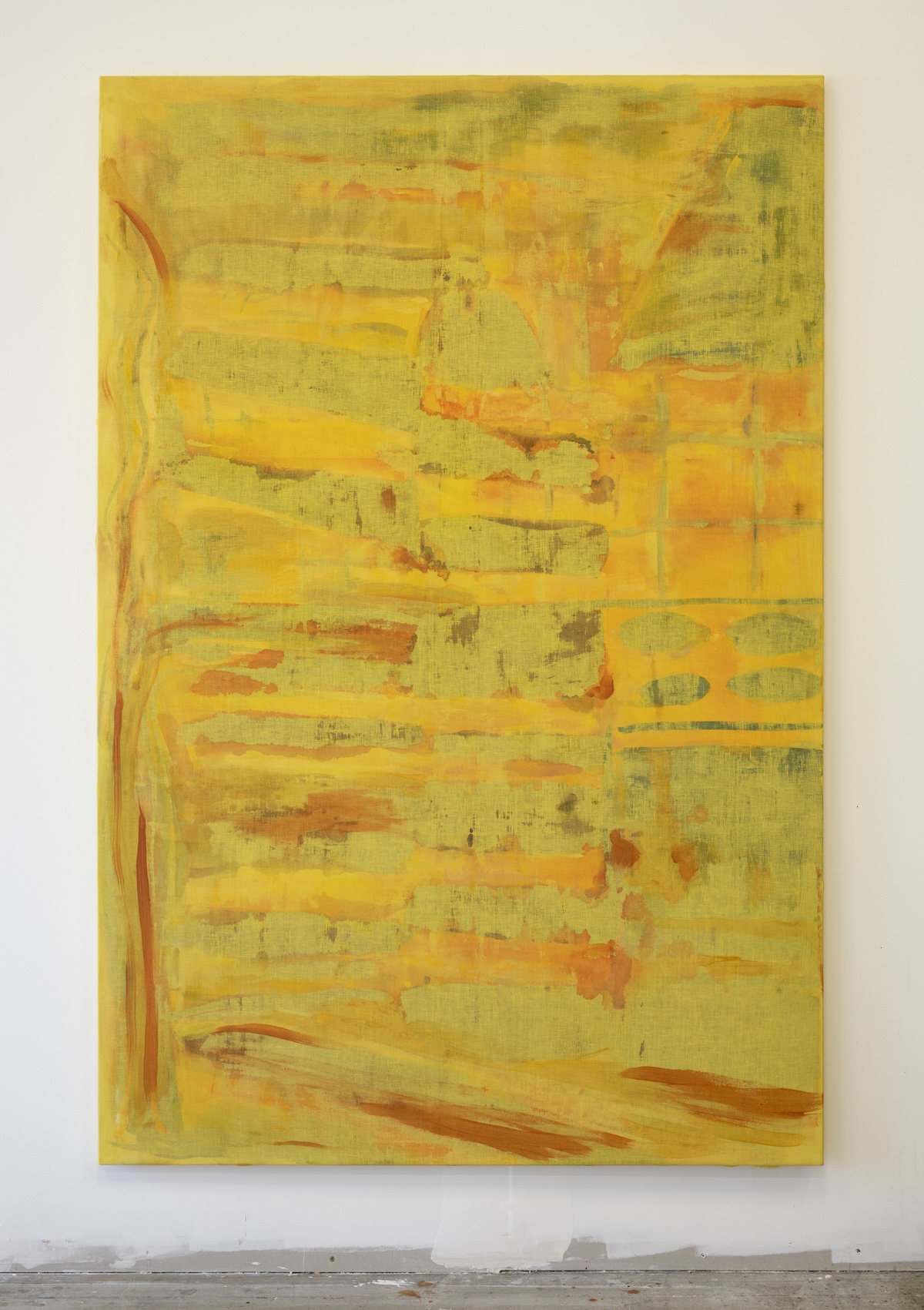
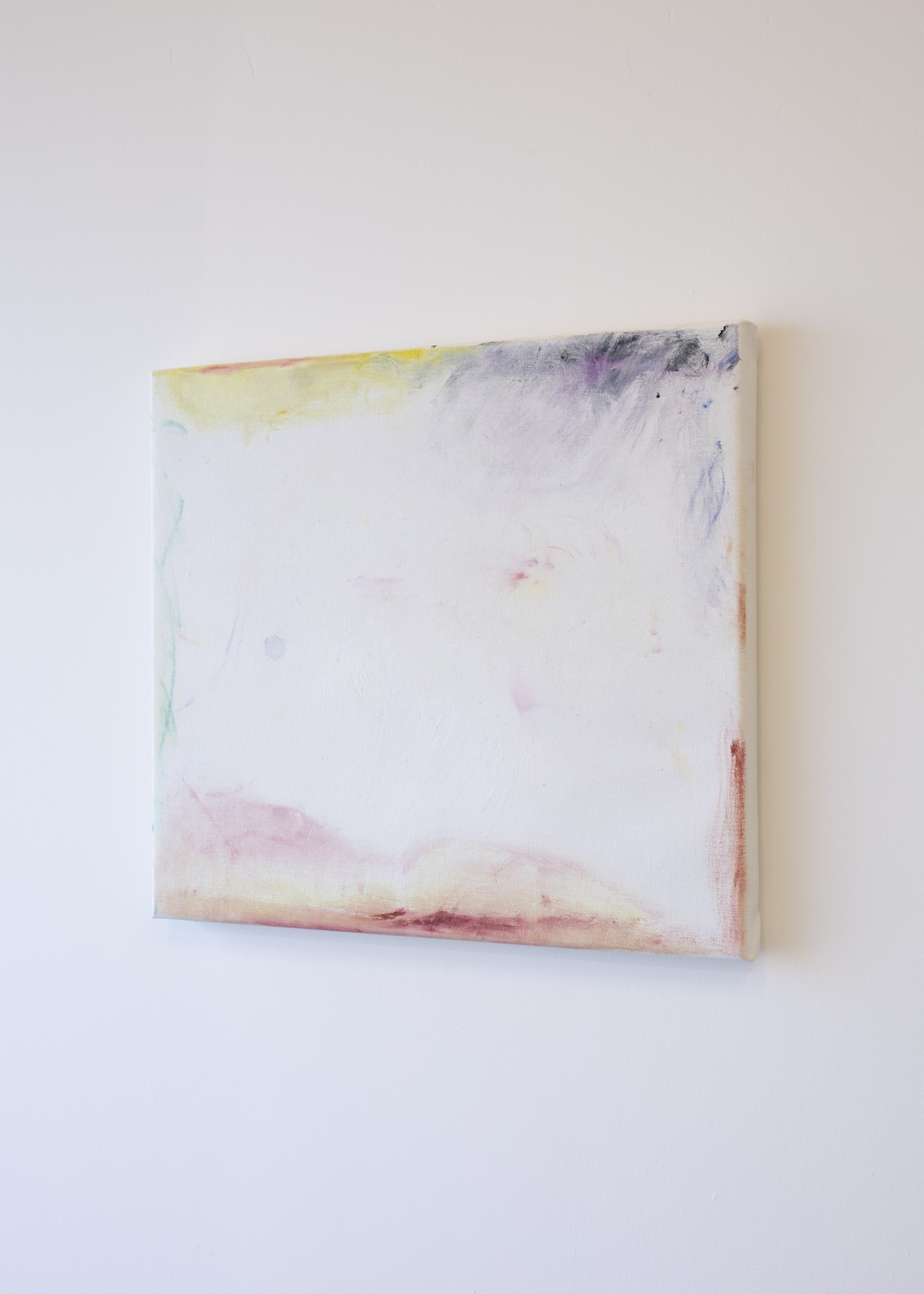
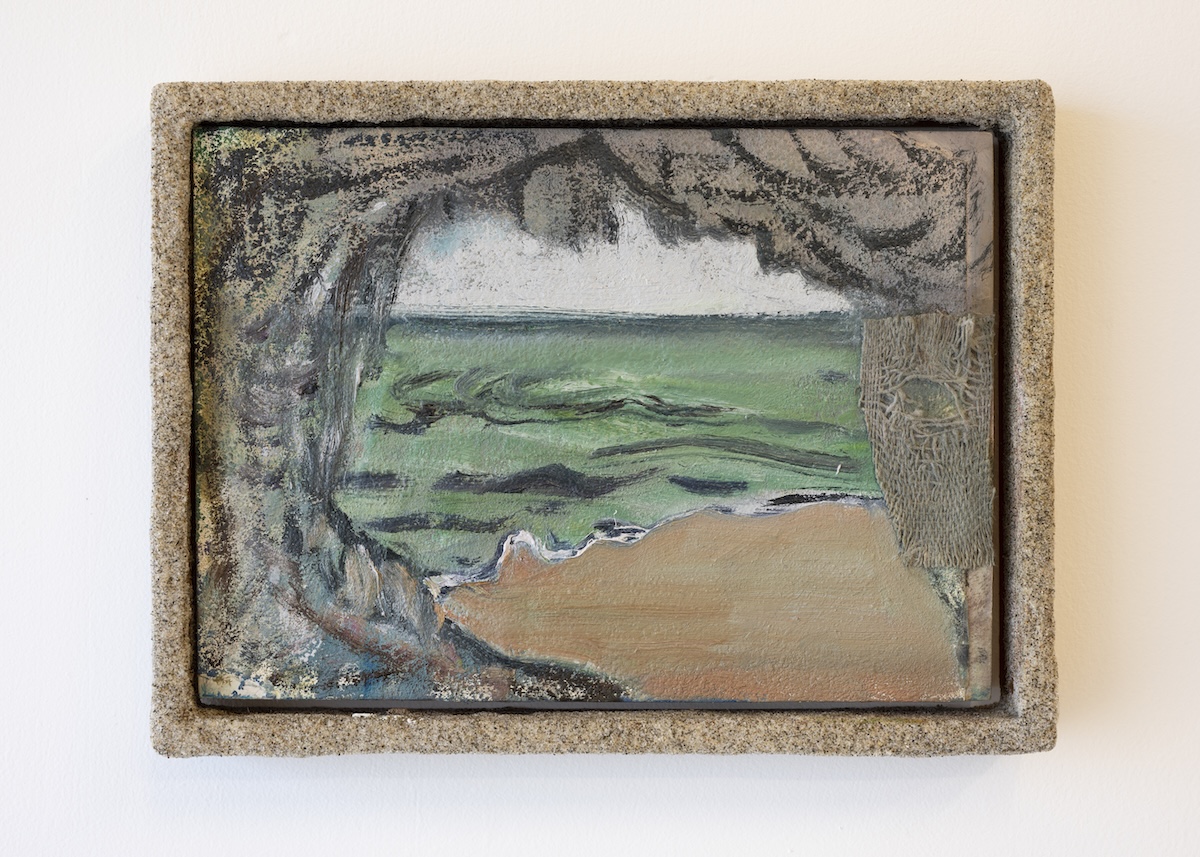
The show, which is called Fool for you, explores familiar themes: death, desire and day-to-day life. There are returns and nods to my symbolic weaknesses (the sea, curtains, shells) which are brought into new perspective. The palette is both murky and light. Out of the murky lightness: a beach painted on sandpaper; a canvas that wants to change its shape; roosters.
When viewers encounter this new body of work, are there particular ideas, connections or ways of looking that you hope they might take away?
I always hope that a work of art will allow me to see the world differently afterwards, even if just for the briefest moment. A colour might linger or jump out at me later in the day; I’ll see an object, place or person in a new light; sometimes it’s an idea or a thought, completely unconnected to the artwork but somehow stirred up by it. I hope that the viewer’s eyes feel invited to take a little of the painting away with them when they leave.
Your paintings explore the relationship between fiction, memory and imagination. How do these different elements influence the way a work develops?
I often like to start from fragments of text, usually fiction, because it operates as a detour. The impulse to make work starts with me, but takes the detour, away from myself, seeing other things on the way, getting distracted or frustrated, then connecting back onto the main road, which is perhaps me in full painter-mode, driving along a highway. In this (very fresh to me) metaphor, imagination, memory and fiction could be the view out the window, or maybe the road itself. But equally materiality itself is suggestive, luminous, and stubborn, and often it is the paint that could be both view and road. I’m the driver, probably.
You describe your process as being driven by the act of painting itself. How much do you plan a work in advance, and how much do you allow it to evolve on the canvas?
Sometimes I have a rudimentary sketch, an image reference, or a simple impulse, but it mostly happens on the canvas. I need to watch as the painting plays itself out to stay interested. Perhaps I am easily bored and/or hoping to be surprised. It’s a conventional way of painting now, but I still love it.
Your work references modernist painting traditions while shifting between different scales and imagery. Which artists or movements have influenced your practice, and how do you make these references your own?
Modernism is pick’n’mix for me, I usually take the melancholy, experimental dreamers over those devoted to progress and modernity. I love Vincent van Gogh as a pre-modernist, Eileen Agar, Lee Krasner, Edvard Munch, Alice Rahon, and many more. I don’t think I make them my own, but I happily continue their work today. A sense of playful seriousness is important to me, and I see that in their approach. There is also that modernist desire to portray an inner life, which is an attempt to share something that is private, moody, deep, imaginative, predictable and slightly unknowable. A mixture of veneration and irreverence for the conventions of painting is in there too. Perhaps I add a sly wink.
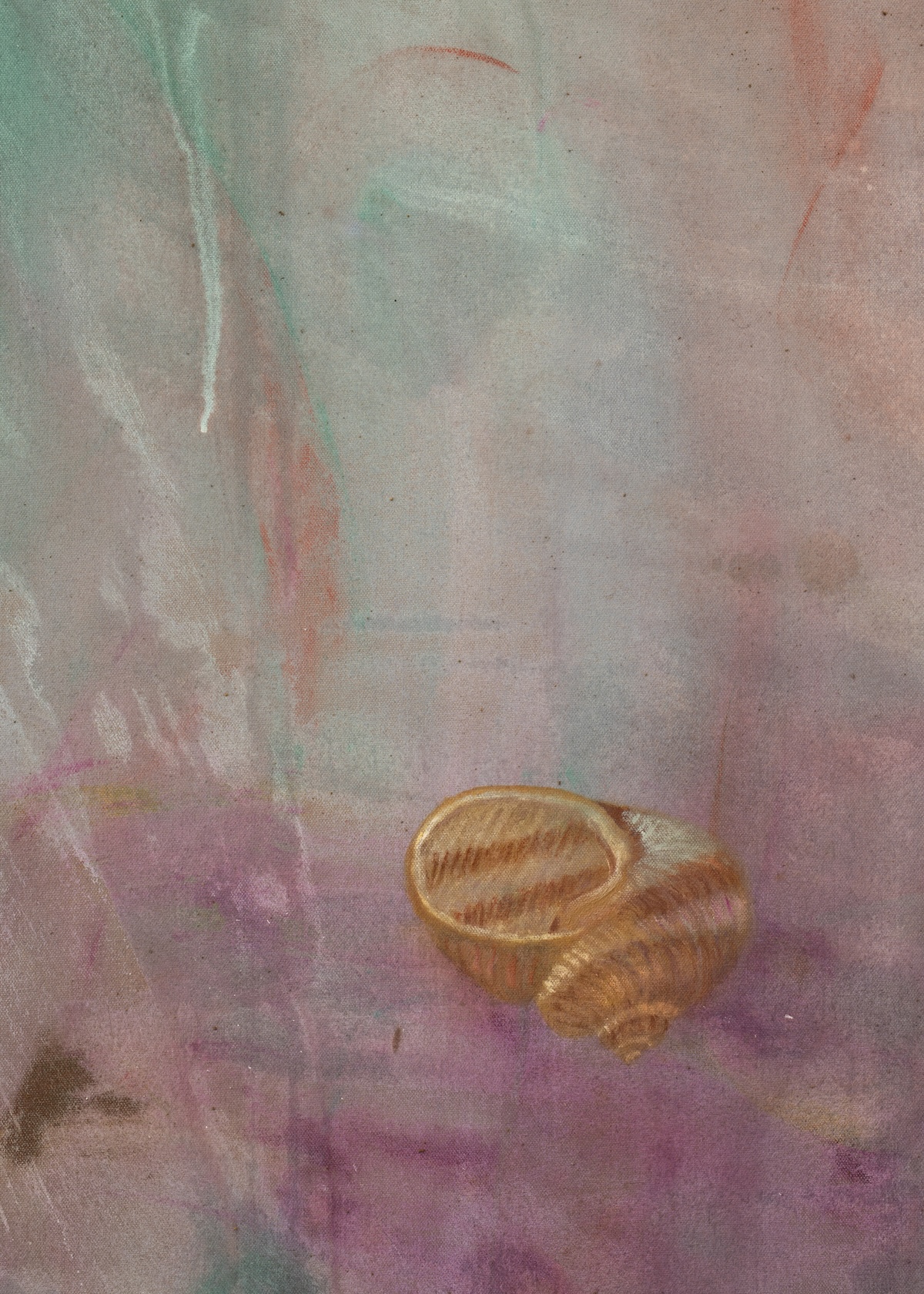
Milli Jannides
Fool for you
Until 21 November 2026
roberthealdgallery.com